
U.S. EUCOM Commander Warns Navy Can’t Continue to Protect Israeli Airspace Due to Acute Missile Shortages
Military Watch Magazine Editorial Staff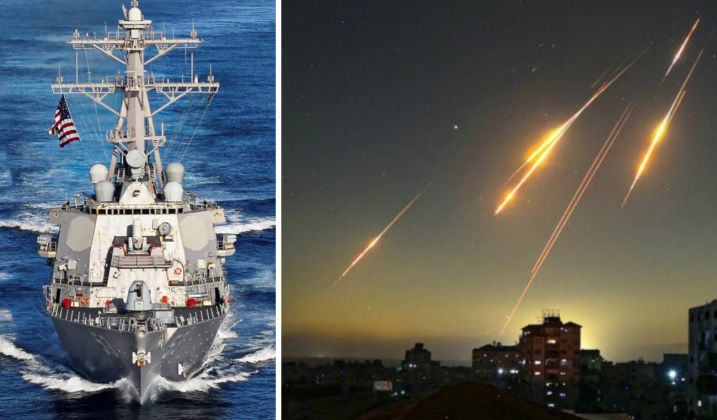
Arleigh Burke Class Destroyer and Iranian Missile Strike on Israel
Commander of U.S. European Command (EUCOM) General Alexus Grynkewich has informed senior defence leaders in writing that the Navy may not be able to continue support for Israeli air and missile defence operations. The warning highlights the mounting strain that sustained missile defence operations in the Middle East have placed on the U.S. Navy’s surface fleet. American destroyers equipped with the Aegis Combat System and SM-3 and SM-6 interceptors have formed a critical component of Israel’s layered missile defence architecture during periods of heightened regional tensions, providing an additional layer of protection against long-range ballistic missile attacks alongside Israeli-operated systems, and U.S. Army THAAD systems on the ground in Israel and Jordan.
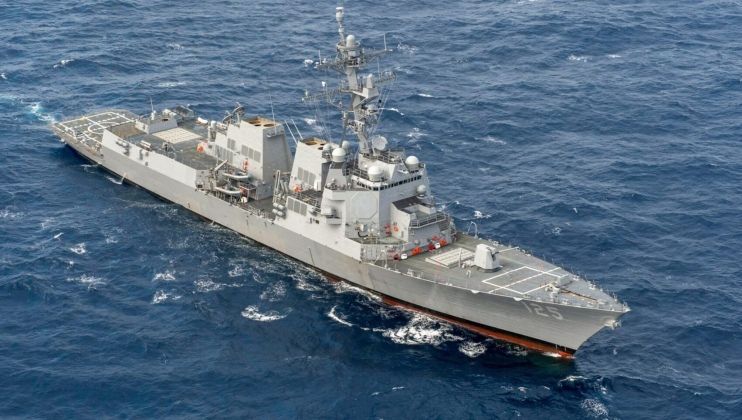
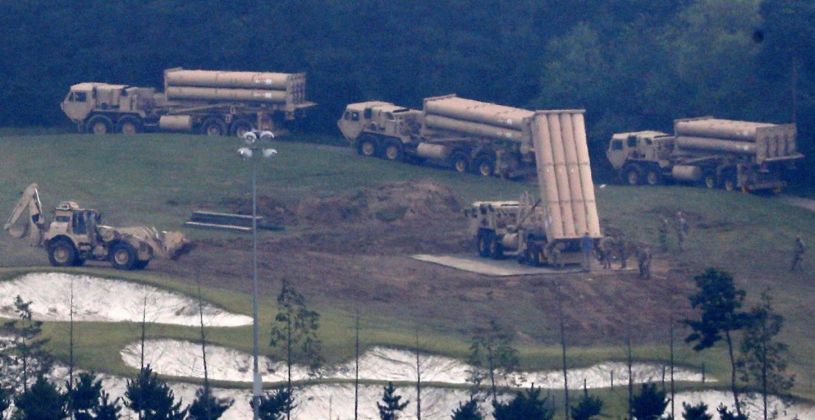
The U.S. Navy’s missile defence burden has expanded considerably in recent years as regional adversaries have fielded increasingly sophisticated ballistic missile arsenals. Destroyers deployed to the eastern Mediterranean and Red Sea have repeatedly intercepted missiles launched toward Israel, requiring large expenditures of SM-3 and SM-6 interceptors. Replenishing these interceptors remains considerably slower than the pace at which they can be expended during major missile barrages, while the number of available destroyers has also become an increasingly significant limiting factor. Acute shortages of interceptors have similarly constrained the U.S. Army’s ability to use the THAAD air defence system effectively, and forced it to withdraw interceptors from across the world including key forward positions in South Korea.
General Grynkewich’s reported warning comes amid broader concerns regarding the availability of high-end U.S. naval assets worldwide. The Arleigh Burke class destroyer fleet is tasked simultaneously with ballistic missile defence, carrier escort duties, anti-submarine warfare, long-range strike missions, and other operations across multiple theatres. Maintaining persistent missile defence patrols around Israel ties down ships that could otherwise reinforce U.S. forces in the Pacific or support NATO operations in Europe. His concerns may further strengthen arguments within the Pentagon and Congress for accelerating procurement of additional Arleigh Burke class destroyers and their eventual successors being developed under the DDG(X) programme. They may also increase pressure to expand production of SM-3 and SM-6 missiles.
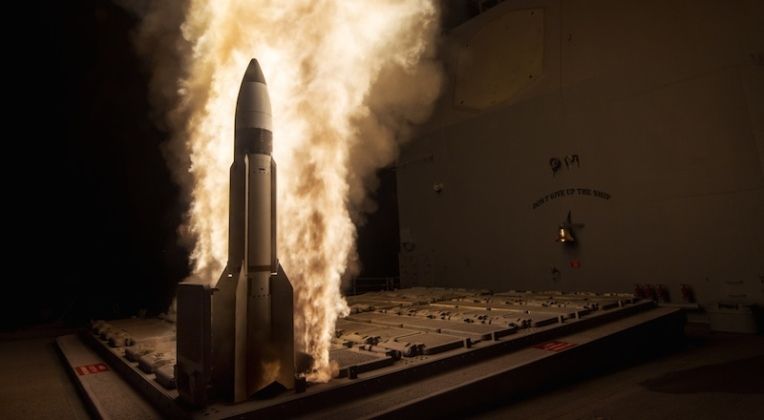
In May U.S. officials speaking to the Washington Post reported that the Israel Defence Forces conserved its stockpiles of anti-ballistic missile interceptors during hostilities with Iran, which placed more pressure on U.S. forces to expend very high portions of their own stockpiles. According to three officials who spoke to the outlet, the U.S. Army expended over half its stockpile of interceptors for the THAAD system, making around 200 launches, while the Navy expended over 100 SM-3 and SM-6 anti-ballistic missiles during the first 39 days of hostilities. Israeli forces, by contrast, used only 100 Arrow interceptors and 90 David’s Sling interceptors, many of them against less advanced missiles fired by the Yemeni Ansurullah Coalition and the Lebanese paramilitary group Hezbollah, rather than by Iran itself.
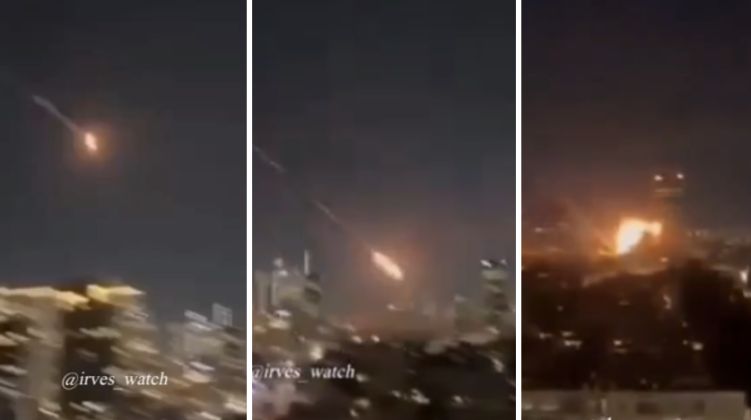
Despite a significant concentration of missile defence assets around Israel, Iran has sustained an ability to strike targets with high success rates. Factors have included Iran’s destruction of U.S. forward radar systems in allied Arab states such as Qatar, Jordan, and the United Arab Emirates in the war’s early stages, and the country’s use of advanced missile types with manoeuvring reentry vehicles, multi-warhead capabilities, and in the case of the new Fattah-2 missiles hypersonic glide vehicles. Israeli paper Haaretz in March confirmed that 8 out of 10 Iranian missiles launched against Israel were reaching their targets. Despite its limited effectiveness, U.S.-led missile defence efforts have been among the most costly aspects of the broader war effort since attacks on Iran were first launched on February 28.
