
Ukrainian President Confirms Russian Strikes Destroyed Key Cruise Missile Production Line
Military Watch Magazine Editorial Staff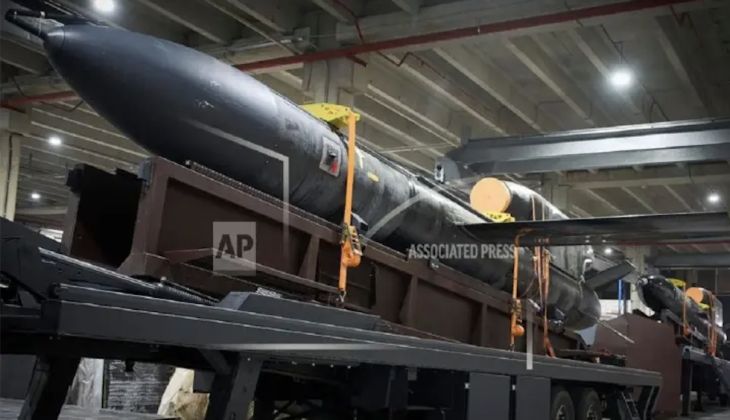
Flamingo Cruise Missile
AP
Ukrainian President Volodymyr Zelensky has confirmed that one of the production lines of the new domestically developed FP-5 Flamingo long range cruise missile was destroyed as a result of a Russian strike, forcing production to be moved to a new location. This follows reports in August that Russian forces had successfully targeted four Ukrainian defence industrial facilities contributing to producing long-range missile systems, marking a major setback to the Ukrainian Sapsan ballistic missile program among others. The Russian Federal Security Service (FSB) reported at the time that the damage to Ukraine’s military industrial complex was “colossal,” adding that Ukraine had planned to use Sapsan missiles for strikes deep into Russian territory. “Thanks to the joint efforts of the FSB and Russian Armed Forces, Ukraine’s missile program plans have been thwarted,” it concluded. Sites targeted during attacks at the time included chemical and mechanical plants in Pavlograd, as well as the Zvezda plant and State Scientific Research Institute of Chemical Products in Shostka.
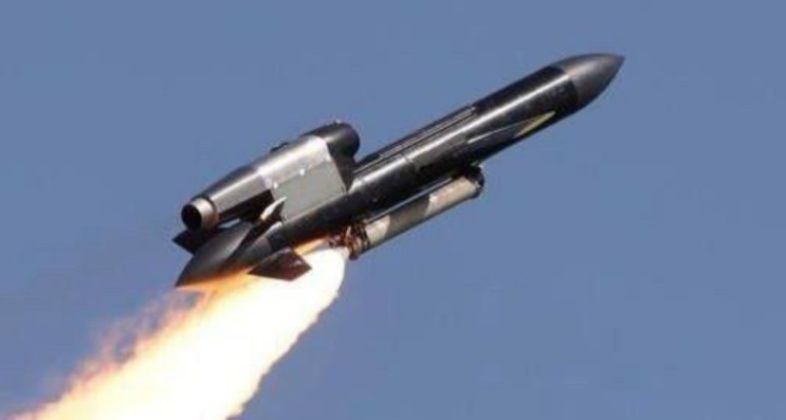
Ukraine’s defence sector was reported in August to have begun serial production of the Flamingo, which was seen to have the potential to revolutionise the armed forces’ ability to launch strikes deep into Russian territory due to the missile’s very long range of over 3,000 kilometres. The subsonic missile has a speed of Mach 0.75, making it one of the slowest in the world, although it carries a large 1000 kilogram warhead. The Ukrainian Armed Forces and the country’s supporters in the Western world have placed a significant emphasis on the ability to strike high value targets deep inside Russian territory, with the most successful deep strike operation being conducted on June 1 when a large scale drone attack on multiple airbases across Russia’s northern and western regions was launched from inside Russian territory under Operation Spider’s Web. The attacks were the most destructive in history ever launched against a strategic bomber fleet.

Ukrainian missile programs have relied particularly heavily on German funding, with German Chancellor Friedrich Merz having announced in May 2025 that Berlin would finance Ukrainian production of long range missiles. Russia’s ability to launch strikes across Ukraine using a wide range of missile and drone types, and Ukraine’s relatively limited ability to strike targets deeper inside Russia, has left Ukraine and supporting foreign forces at a significant disadvantage since the outset of full scale hostilities in early 2022, with programs like the Flamingo intended to narrow the current vast gap in capabilities in this regard. Strikes into Russia have benefitted extensively from both the support of Western specialists and advisors on the ground, and from access to NATO members’ vast satellite network for target selection, targeting, and damage assessments.
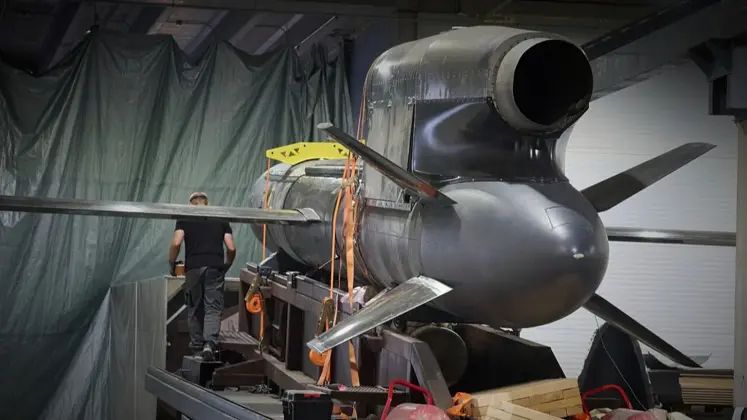
Analysts have raised questions in the past regarding whether the Flamingo cruise missile program indeed exists, or whether it is one of the multitude of fabricated constructs of Ukrainian state public relations efforts, the most prominent of which was the ‘Ghost of Kiev’ MiG-29 fighter pilot in 2022. When Ukrainian government sources in early February claimed that the missile was used to launch successful deep strikes against infrastructure at the Kapustin Yar Test Range, Western analysts widely questioned these claims, with satellite imagery showing no damage to the facility. Nevertheless, the reported strike boosted the prestige of the Flamingo cruise missile program, due to the close association of the test range with the testing and launches of Russia’s newly operationalised Oreshnik intermediate range ballistic missile system.
