
U.S. Navy Could Develop a Lighter Cheaper Version of its Gerald Ford Class Supercarrier
Military Watch Magazine Editorial Staff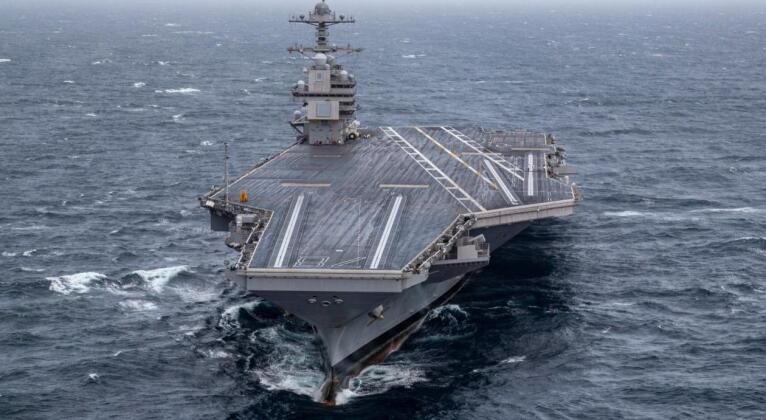
U.S. Navy Supercarrier USS Gerald Ford
The U.S. Navy is reportedly considering the feasibility of a new class of aircraft carrier derived from the Gerald Ford Class supercarriiers currently under construction, which would be considerably lighter and cheaper both to construct and operate and would require less crew. The Gerald Ford Class supercarriers are currently the most expensive warships in the world, with the first of the class the USS Gerald Ford costing over $13 billion to commission excluding the multi billion dollar cost of its air wing and billions of dollars worth of operational costs over several decades. Ongoing problems with the USS Gerald Ford, which was commissioned almost four years ago in 2017 and is still very far from ready for combat missions, have led to the cost effectiveness of the supercarrier program being increasingly brought to question. With the Navy very possibility cancelling 60% of planned Ford Class carriers, the development of a lighter carrier class could allow it to more cost effectively meet its requirements for overseas power projection.
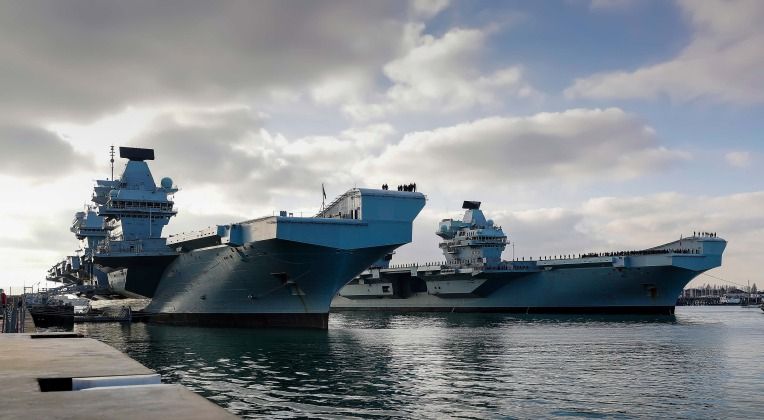
It remains unclear whether a lighter carrier will be able to operate aircraft built for standard carrier landings such as the F-35C, F-18E and E-2 Hawkeye, or whether they will rely on specialised F-35B fighters which are built for vertical landings. Although vertical landing capable fighters are generally much less capable in combat, are more expensive to operate and require more maintenance, they reduce the need for a large crew on carriers and for costly arresting gear and electromagnetic catapult launch systems. It is also highly possible that the U.S. Navy’s new lighter carrier would use a conventional rather than a nuclear propulsion system - which would reduce endurance but would also significantly reduce costs and maintenance requirements. Britain has taken a similar approach with its Queen Elizabeth Class carriers, which although relatively large at around 65,000 tons have no nuclear propulsion systems, catapults or arresting gear and cost less than a third as much as the Ford Class. The ships are far less capable than the Ford Class, lacking E-2 airborne early warning aircraft or fighters on par with the F-35C, but they may well be considered more cost effective particularly considering the growing deployments of ‘carrier killer’ weapons by America’s peer level adversaries.
