
U.S. Expands Operational Options For Supposedly Retired F-117 Stealth Fighters With Aerial Refuelling Clearance
Military Watch Magazine Editorial Staff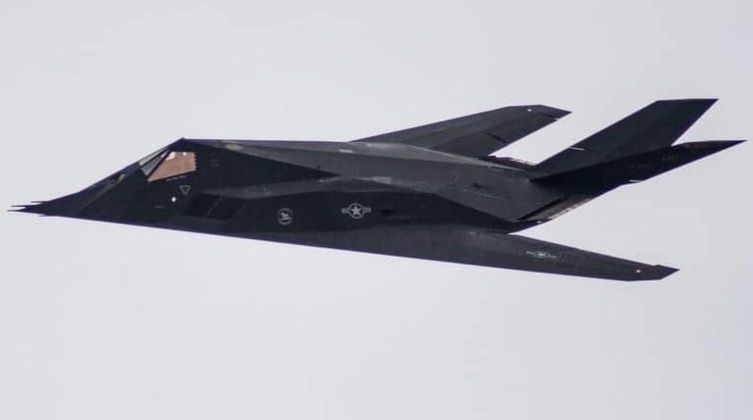
F-117 Stealth Fighter
Despite officially having been retired in 2008, the U.S. has expanded operations for the world’s first radar evading jet aircraft the F-117 Nighthawk. Only 59 airframes ever entered service in the U.S. Air Force despite a major spending boom in the early 1980s during the height of the Cold War - an indicator of how impractical the aircraft were to operate due to their very high maintenance requirements particularly in their early service years. The fighter retired just 25 years after entering service in 1983, with its high operational costs and increasingly obsolete capabilities meaning it was no longer cost effective to operate - particularly during a War on Terror when the U.S. faced no peer level challengers. A shift in the focus of the U.S. military towards countering peer and near peer level challengers has made deploying stealth aircraft far more relevant than it was 13 years ago, and although the F-117’s capabilities are too old and the design too inefficient to be restored to frontline service many of the aircraft in storage have played increasingly important roles. Although fighter has a similar radar cross section to the F-35A - the only Western manned stealth fighter currently in production - its speed, sortie rate, electronics, avionics, sensors and general flight performance are all far inferior. The aircraft is considered important enough, however, that the U.S. Air Force issued a formal order that its KC-135 Stratotankers designed to refuel aircraft in flight, were cleared to execute aerial refuelling operations with the F-117. This indicated that the 1980s stealth jets will be performing more operations for years to come.
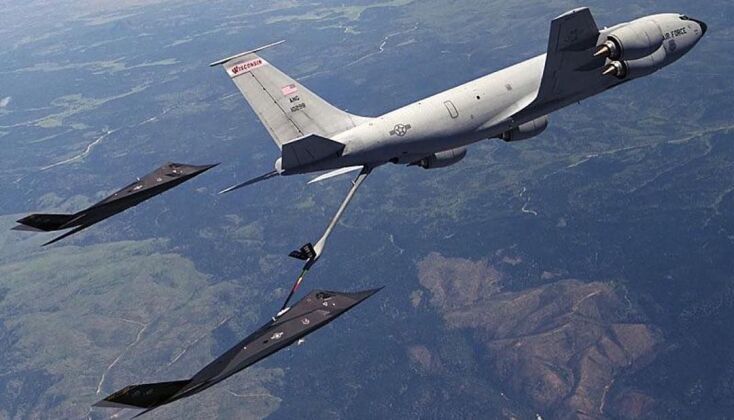
The F-117 is thought to have primarily been used since its retirement as a testbed to develop countermeasures against stealth aircraft - namely by training fighter units on how best to engage stealth targets with the Nighthawk simulating the capabilities of enemy aircraft. This has become particularly critical as stealth technologies have proliferated, with China in particular emerging as a world leader rivalling the U.S. in stealth technologies and Iran fielding a formidable fleet of combat tested stealth drones thought to have been developed with Chinese support. The J-20, FC-31 and GJ-11 are among the foremost Chinese stealth designs which have been cause for concern in the U.S., alongside the upcoming H-20 strategic bomber. The F-117 is also widely reported to have been deployed for combat missions to the Middle East, with the aircraft speculated to have been used as a testbed for new technologies that were being combat tested during that time. With the F-35 still far from ready for high intensity combat and facing multiple serious reliability issues, and the F-22 poorly suited to an air to ground role, the tried and tested F-117 which first flew over 40 years ago could serve as the ideal testbed for such technologies. With the older aircraft having a much larger twin seat cockpit, it can also accomodate a weapons systems officer in a way the F-35 and F-22 cannot. It remains uncertain how many F-117 aircraft are currently operational or how the U.S. Military plans to utilise them in future, but the decision to expand their capabilities by allowing them to conduct aerial refuelling operations strongly indicates that there are further plans in the making to utilise these venerable jets.
