
America’s Nighthawks Still in Service; Why the F-117 Continues to Fly Ten Years After Supposed Retirement
Military Watch Magazine Editorial Staff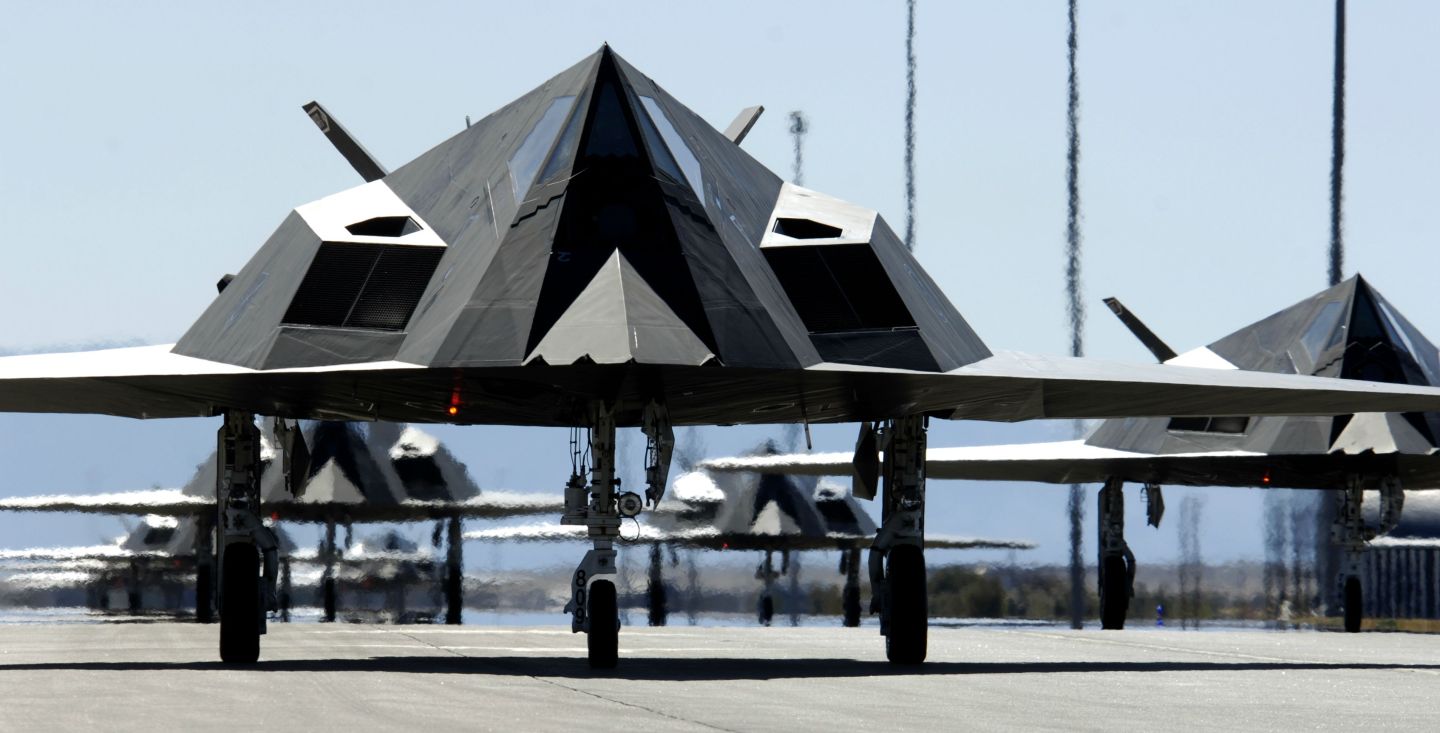
F-117 Stealth Fighters
Entering service in 1983 as the first modern stealth jet, the U.S. Air Force’s F-117 Nighthawk strike fighter was designed to evade enemy sensors and penetrate deep into the Warsaw Pact’s aerial anti access are denial zone in the event of open conflict with the Soviet Union. Developed in response to fast growing strength of the Soviet Union’s surface to air missile network, the fighter's role was to conduct early strikes on enemy radar and missile installations in a war's early stages to reduce the threat to NATO aircraft of operating in eastern European airspace - thus serving as a highly specialised force multiplayer to counter the communist bloc's air defences. The Nighthawk would be revealed to the public in 1988 and would see service in American interventions in Iraq and Yugoslavia during the 1990s. A subsonic aircraft flying at extremely low altitudes of under 14km, the F-117's specialisation was extreme and, other than stealth, it was near defenceless against enemy air and missile attacks - leading to two of the jets being successfully targeted by Yugoslav forces once proper countermeasures to its relatively basic stealth capabilities were developed and applied to Vietnam War era missile platforms. Combined with the jet’s extreme maintenance requirements, even by the standards of stealth aircraft, and the rapid development of more sophisticated stealth capabilities, the Nighthawk saw a relatively short active service life of just 25 years and was retired in 2008. The induction of the F-22 Raptor in 2005, a fighter which despite being heavily specialised for air superiority was still more capable than the F-117 when pressed into a strike role, and the planned induction of the F-35 Joint Strike Fighter, were both key factors which spurred the military to decommission the Nighthawk fleet.
Produced in extremely small numbers due to their immense cost, little under sixty jets in total, and sharing an engine design with the F-18 Hornet to reduce development costs, the F-117 was in many ways an advanced technology demonstrator which pioneered the development of stealth technologies rather than a feasible long term strike fighter program. Ten years after their retirement however, the U.S. Air Force has continued to find uses for the combat platform. Fighters have been sited flying at airbases in the United States near Area 51, a site where experimental new weapons are reportedly tested, and have conducted aerial refuelling missions among a number of other tasks. While the Nighthawks were retired a decade prior, they have been kept in "flyable storage,” also known as "Type 1000" storage, which means the fighters are constantly maintained and ready to deploy in case they are ever called into active service. As such, ‘in reserve’ may well be a more appropriate term to describe the F-117's current status rather than fully decommissioned.
The America F-117 fleet is currently in storage in Tonopah, Nevada, in a low humidity environment which mitigates the risk of corrosion to their delicate stealth airframes. Reports indicate that the Nighthawks are flown regularly by Lockheed Martin and contractor pilots, and that they are likely used for the testing of new technologies - possibly anti stealth systems being developed in response to the deployment of stealth fighters and drones by a number of America’s leading near peer adversaries. Testing upgrades for the F-22 Raptor, F-35 Lightning II, or technologies for the upcoming B-21 Raider stealth bomber, all remain other potential roles for the Nighthawks. Ultimately while the United States has lost its monopoly on advanced stealth fighter technologies, it remains the only power in the world to retain a sizeable fleet of stealth fighters retired in in reserve - and it is likely to make full use of this asset when attempting to develop new technologies for its existing stealth fleet or to develop countermeasures against stealth technologies.
