
Serbia’s Long Rumoured Second Hit On American Stealth Fighter Now Confirmed - Why it Matters
Military Watch Magazine Editorial Staff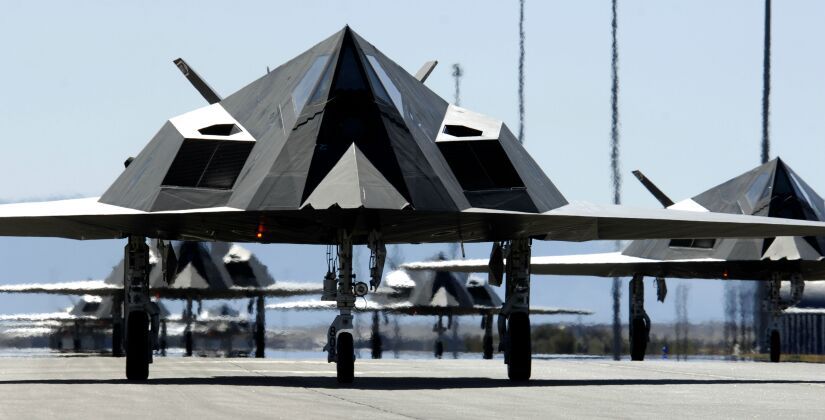
F-117 Stealth Fighters
The successful shootdown of a U.S. Air Force F-117 Nighthawk stealth fighter over Yugoslavia in 1999 quickly became well known as the only successfully attack on a manned stealth aircraft using surface to air missiles - a feat Israel would later unsuccessfully attempt to replicate using its own U.S.-supplied air defences against Iranian stealth aircraft. The F-117 shootdown incident shook faith in stealth technologies which had previously been portrayed as almost invulnerable, at a time when the U.S. was investing heavily in very costly stealth aircraft from the recently commissioned $2 billion B-2 Spirit bombers to the Advanced Tactical Fighter program which would produce the F-22 Raptor. The fact that the feat was achieved by Yugoslav forces using an S-125 air defence system from the early 1960s, which was widely considered obsolete in the West, heightened fears that stealth aircraft could be vulnerable in the case of a major conflict in theatres such as Korea, Eastern Europe or the Persian Gulf, where much newer air defence systems such as the S-300PMU-2 were expected to be deployed.
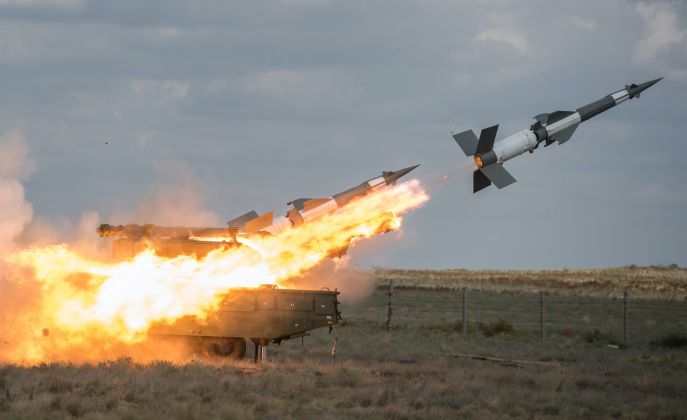
While images of the crash site confirmed the loss of a single F-117, it was long reported but not officially confirmed that Yugoslav air defences had neutralised another one of the stealth jets. This had particularly serious implications for the American defence sector, with Western sources widely portraying the first shootdown as a ‘one off’ or ‘fluke’ incident rather than an indicator of the genuine vulnerability of stealth aircraft. The recent confirmation of the second shootdown over two decades later represents one of several cases where an important victory against Western aircraft was widely suspected but claims were either ignored or denied. Retired U.S. Air Force Lieutenant Colonel Charlie Hainline confirmed on an episode of The Afterburn podcast that a second F-117 had been neutralised from the ground. “I kind of looked to my right over Belgrade, and [saw] this huge missile coming up - it looks like a Saturn V thing,” Hainline recalled. “I knew my number two guy was over there somewhere. Then I see another launch - this big glow, and even from that far away you can see a lot of detail. The plume, the smoke going, and then just this ball of fire coming up towards you … As I’m heading towards this target, one missile explodes and the other one kind of goes up into space.”
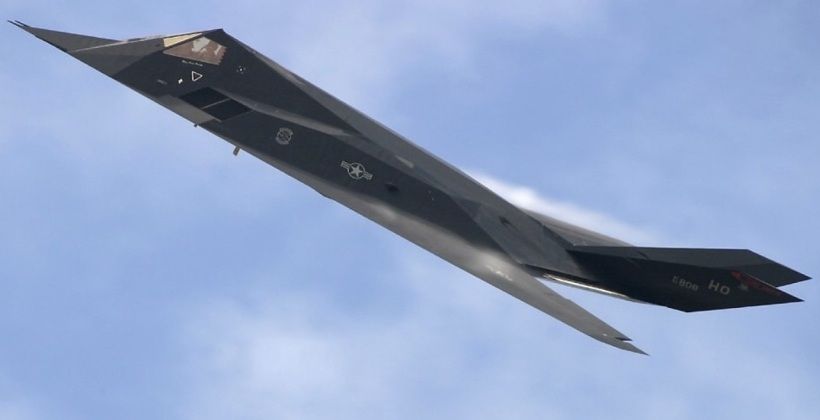
Hainline reportedly lost track of his wingman until the aircraft reappeared at a tanker rendezvous with all lights off and unable to match the speed of the tanker to refuel. “His airplane wasn’t in really good shape,” the officer recalled, with the heavily damaged F-117 eventually limping back to base. The shootdown is thought to have taken place on April 30th, 1999, and the damaged stealth fighter war irreparable and had to be immediately retired from service. As the F-117 was a twin engine design, using the same configuration of dual F404 engines as the U.S. Navy’s F-18 Hornet fighters, it could survive many kinds of hits and the loss of an engine and still return to base in tact. This benefit of twin engine jets is one of the key reasons why the U.S. Navy for years refused to deploy single engine designs, and a reason why Russia today fields no single engine fighters despite aircraft with single engines usually being much easier to maintain and cheaper to operate. The destruction of a second F-117 fighter is one of several suspected Yugoslav hits against NATO aircraft using air defences from the 1960s or earlier with modernised electronic warfare systems, which when also considering the poor state of the country’s defences during a state of effective civil war reflects poorly on how NATO air units would have fared against a modern Soviet air defence force orders of magnitude larger and several decades ahead in terms of sophistication. With the F-117 being considered by far the most survivable Western fighter in the world, the implications of its loss to very meagre defences were serious.
