
Strike Ready For Iran? Israeli Order For New F-35s and Aerial Refuelling Tankers Confirmed
Military Watch Magazine Editorial Staff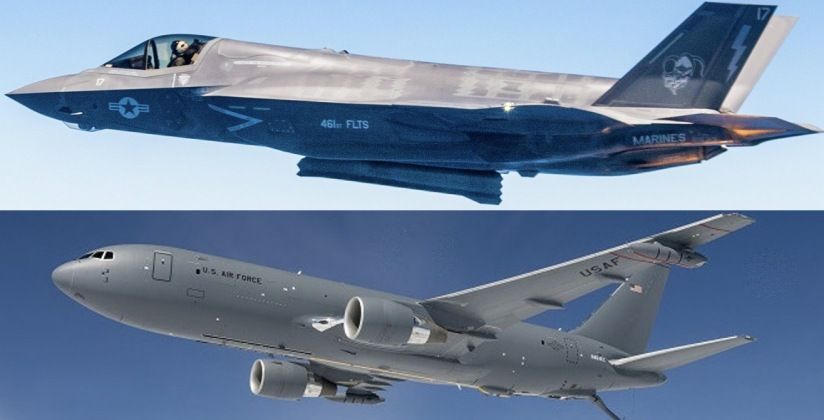
F-35 Fighter and KC-46 Tanker
Following weeks of speculation as to the possibility of a major Israeli order for new American military aircraft, it was confirmed that Israel formally approved plans to purchase both a new squadron F-35I stealth fighters and a unit of KC-46 Pegasus tanker aircraft for aerial refuelling. The Israeli government has also approved the purchase of a new heavy lift helicopter, although the class of helicopter it intends to purchase remains uncertain with both the Chinook and King Stallion being leading contenders. Tensions with Iran have been highlighted as a leading factor shaping how the Israeli Air Force has chosen to modernise its arsenal, with the large majority of Iranian territory being beyond the reach of Israeli fighters with the exception of the F-15I strike platform - of which only 25 are in service. The KC-46 will allow the country’s fighters which are fielded in larger numbers, such as the F-16 of which it fields approximately 200 and the F-35 of which it previously ordered 50, to reach Iranian targets — thus maximising options for offensive operations.
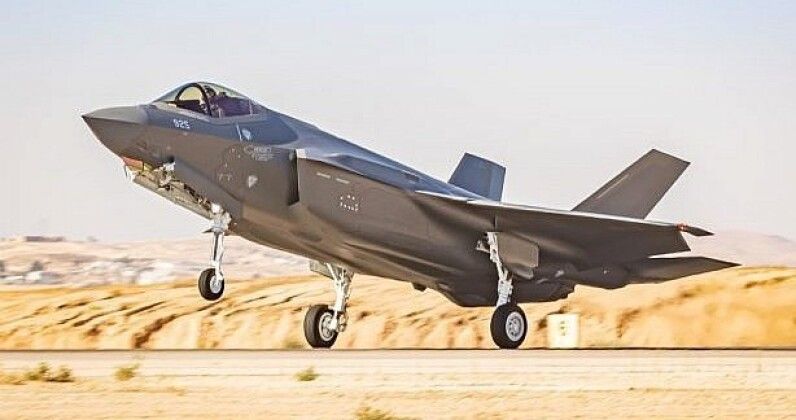
The fact that Iran fields one of the most capable air defence networks in the Middle East, which its built around the Russian S-300PMU-2 and the indigenous Khordad 15 and Bavar-373 long range surface to air missiles systems, is thought to have influenced the decision to invest in the F-35 rather than in the heavier F-15EX which has similar acquisition and operational costs but is better optimised for air to air combat and has a significantly longer range. The F-35 is better suited to tackling ground based air defence systems such as that of Iran and, with the Iranian Air Force posing only a limited threat in air to air combat, acquiring an aircraft with stealth capabilities optimised for air to ground missions like the F-35 was a more likely choice.
The F-35 is still very far from fully combat ready, however, and has been harshly criticised by multiple figures in the U.S. Military leadership for ongoing delays and serious performance issues which have prevented the Pentagon from certifying its for full scale production. These have included very low mission readiness rates, engine problems, and maintenance requirements and operational costs which far exceed those the fighter was initially projected to have - which among other issues have led the U.S. Air Force to consider cutting approximately 40% of planned orders. Iran has reportedly previously tracked F-35s operating near its airspace with Russian assistance using a Russian-supplied Rezonans-NE radar system, which is optimised for defence against stealth aircraft.

The Israeli purchase follows the approval in 2020 by the Donald Trump administration for provision of $3.3 billion worth of aid to Israel under the Foreign Military Financing (FMF) initiative, which grants of money for purchases of arms and other military equipment on the condition that a certain proportion of this - which amounts to the overwhelming majority - is spent on American hardware. Providing Israel with such aid has strengthened it considerably to pursue joint interests shared by Tel Aviv and Washington in the Middle East, but has also ensured that the U.S. will maintain a dominant market share in the country’s arms market. Israel reportedly sought to acquire its first pair of KC-46s from a batch the U.S. Air Force had previously contracted, which would allow the Israeli Air Force to begin fielding them sooner. The The U.S. State Department approved the potential sale of eight KC-46As to Israel in 2020 at an average cost of $300 million per aircraft.
