
South Korea Almost Bought Russian S-300 Air Defences: Massive U.S. Pressure Made it Choose Patriot Systems Instead
Military Watch Magazine Editorial Staff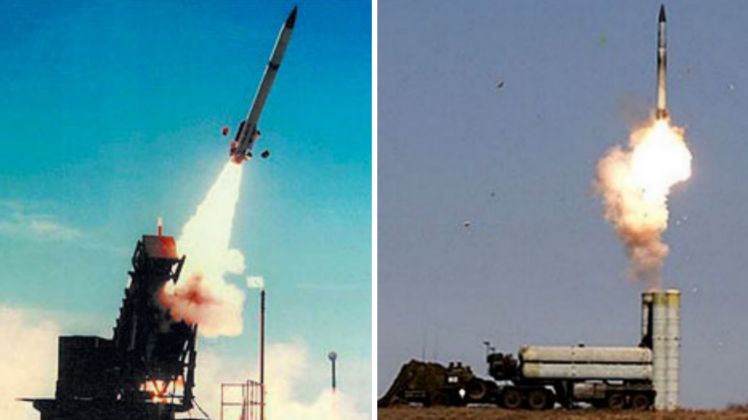
Patriot (left) and S-300 Surface-to-Air Missile Launches
The large scale withdrawal of U.S. Army MIM-104 Patriot and THAAD long range air defence systems from South Korea have drawn significant attention to the extent of the East Asian country’s reliance on the United States for the security of its air space, while raising calls in Seoul, including from President Lee Jae Myung, to reduce this dependance. While South Korean forces currently rely on their own Patriot systems procured from the Untied States, which are gradually being supplemented with indigenous systems, during the 1990s the Patriot appeared poised to be sidelined as post-Soviet Russia offered systems that were widely considered more capable, and did so at much more affordable prices. The result was a period of tensions between Seoul and Washington, which highlighted the extent to which the U.S. has used political pressure to secure market share for its defence products.
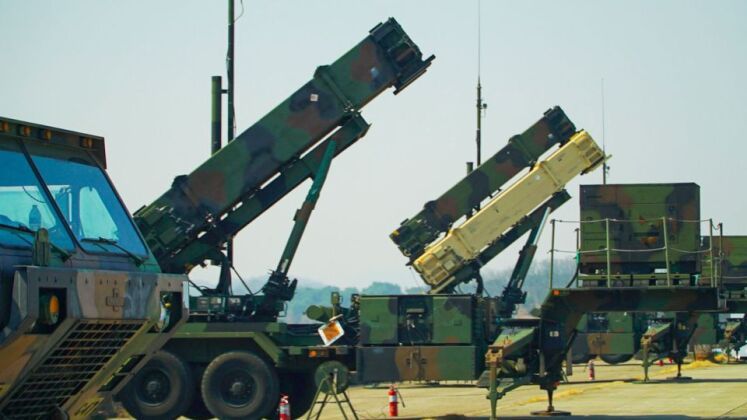
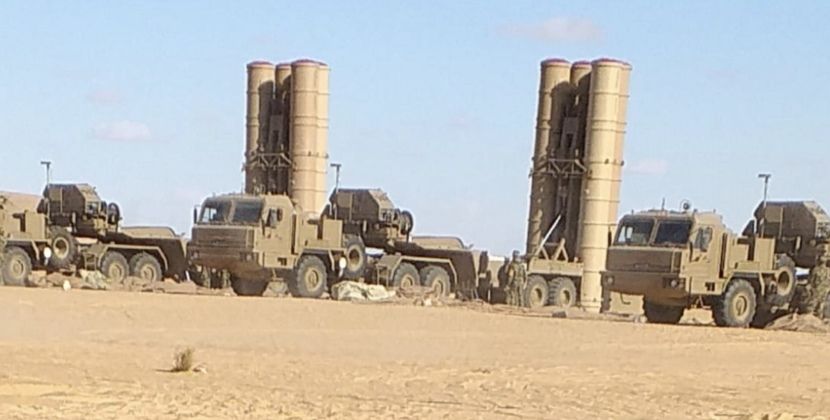
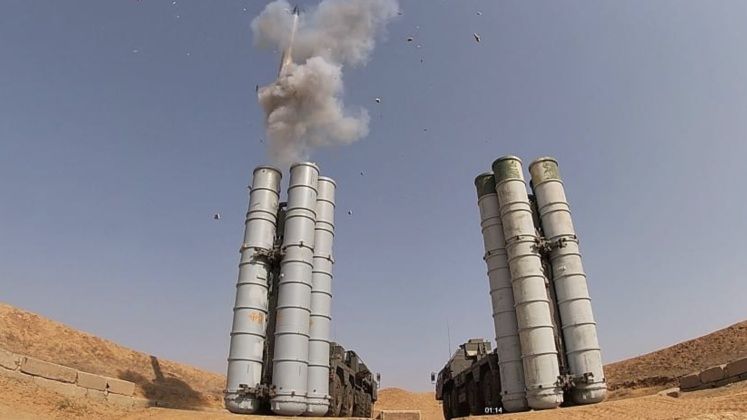
South Korea in the 1990s was seen as a potential leading client for Russian military equipment, as ties rapidly improved in the immediate post-Soviet years. The first procurements were made in 1992, namely of Russian radar technologies. Under the SAM-X long-range air defence project, the Russian S-300 and the U.S. Patriot were chosen as the final candidates, with analysts widely predicting that the former would prevail. Not only did the system appear to be significantly more capable, but it also cost 30 percent less and could be partially paid for by Russia’s outstanding debt. The Patriot’s throughly underwhelming performance in the Gulf War in 1991 against very basic missile attacks was a further significant factor that was expected to incline South Korean defence planners towards the S-300. The Patriot’s limited 120 degree arc of fire compared poorly to the more mobile S-300’s 360 degree firing arc, and was an issue which funding would be provided to address only three decades later in 2026.
In April 1997, U.S. Secretary of Defence William Cohen warned that a South Korea purchase of the S-300 “won’t play well in Congress at all,” which was criticised as blatant interference and aroused public outcry in the East Asian country. Russian ambassador in Seoul, Georgi Kunadze, responded by denouncing the U.S. for steering the competition away from system performance and free trade principles. The U.S. Congress House Committee on Appropriations voiced strong opposition to the possible S-300 sale, stressing its “deep concern over the possibility that South Korea may procure Russian S-300 systems for air defence as opposed to the U.S. Patriot system.” “Considering the almost half century relationship between our two countries, and the closeness with which our troops train together, it would be most unfortunate for South Korean allies to procure a non-U.S. air defence system,” it added.
South Korea’s reliance on its trade and strategic ties with the Untied States led to a decision to select the Patriot, against prior expectations, after which signs of interest in other Russian equipment such as MiG-29 and Su-37 fighters rapidly diminished. To avoid the penalties that came with a conspicuous direct purchase, South Korea’s defence sector would instead purchase extensive access to Russian air defence technologies to enhance the country’s indigenous systems such as the KM-SAM. The South Korean case was far from isolated, with potential clients for armaments from non-Western countries consistently facing considerable pressure. This escalated considerably from 2017 as the U.S. passed the Countering American Adversaries Through Sanctions Act (CAATSA), which required Washington to sanction any major clients for Russian, North Korean, or Iranian armaments. Threats of political and economic repercussions have radically reshaped global arms markets, in some cases leading countries to abandon major procurement plans, and in other deterring them from making such plans from the outset. The result has been a much lower market share for Russia, Chinese, North Korean and other Western adversaries’ defence exports, and a much greater market share for the U.S. and other Western Bloc states.
