
South Korea Begins Procurement of First Nuclear Powered Attack Submarines: Are They Useful?
Military Watch Magazine Editorial Staff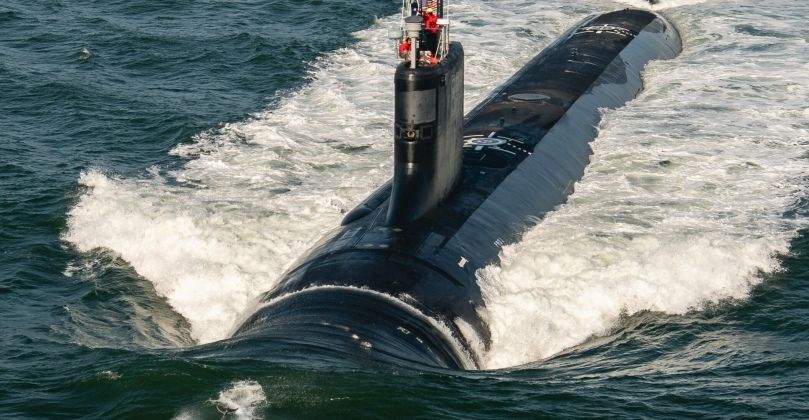
U.S. Navy Virginia Class Nuclear Powered Attack Submarine
The South Korean Defence Ministry has initiated the formal process to procure nuclear powered attack submarines, after the Navy submitted relevant documents to the Joint Chiefs of Staff outlining the need for the program and specifying requirements. The Joint Chiefs are now reviewing the Navy's proposal, and are expected to hold a meeting before the end of the month to finalise the requirements for the program. Currently only nuclear weapons states field nuclear powered submarines, although non-nuclear weapons states Australia and Brazil have both invested in procuring such capabilities in partnerships with the United States and France respectively. South Korea is expected to rely on support from the United States to produce such ships.
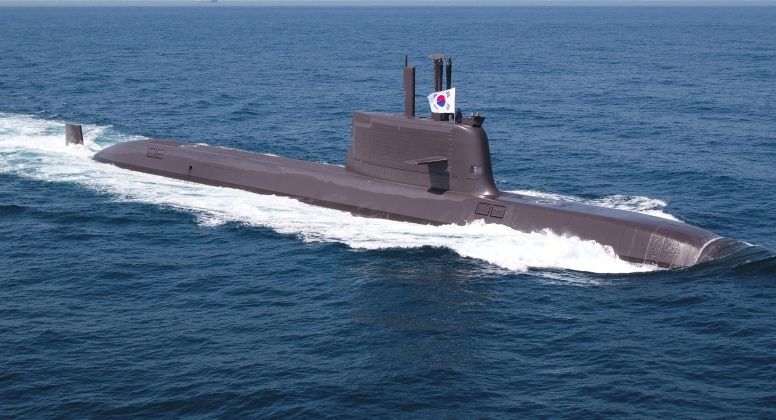
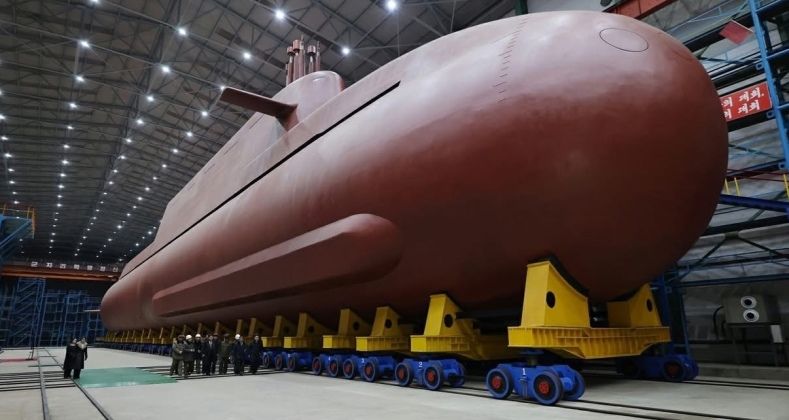
The Navy has reportedly been conducting a preliminary review to build at least four 5,000 ton nuclear-powered submarines from the mid-2030s. Currently only the United States, China, Russia, India, the United Kingdom and France field nuclear powered submarines, with North Korea constructing its first ship of this type with reported Russian support. The United States gave approval for South Korea to build nuclear-powered attack submarines, and committed to working with Seoul to advance requirements for the project, including cooperation on finding avenues to source fuel. Talks have specifically focused on spent fuel reprocessing and building nuclear-powered submarines. North Korea’s work developing such ships is considered a major factor stimulating interest in Seoul in matching this capability. This, in turn, is expected to prompt Japan to seek to develop a similar capability, according to multiple Japanese sources.
The rationale for South Korea's development of nuclear powered attack submarines remains in question. Such ships are in many cases much louder and less survivable than diesel electric submarines, while South Korea’s global leadership in diesel electric submarine propulsion technologies has already palced it in a stronger position to build submarines for contingencies in East Asia. Nuclear powered ships are valued primarily for their ability to operate over vast distances, which is critical for the United States due to its forces’ primary focus on projecting power across oceans. With North Korea remaining in a state of war with the United States, the ability to operate submarines across the Pacific could be invaluable, allowing for strikes on ships across the Ocean, and on U.S. bases both on the U.S. mainland and anywhere in between there and the Korean Peninsula.
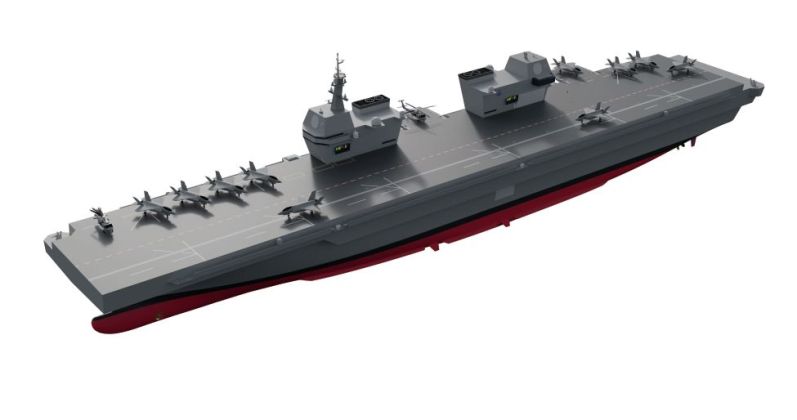
For South Korea, which has a doctrine focused on countering North Korea, China, and to a lesser extend Japan, the utility of fielding very long range submarines is expected to be limited. One possibility remains that the submarines could be intended to allow South Korea to rapidly field a nuclear second strike capability should it develop nuclear weapons or enter a nuclear sharing with the United States, which are both possibilities that have increasingly been debated in the country. It remains possible that plans for nuclear powered attack submarines will not materialise, much as longstanding plans to field aircraft carriers with F-35B stealth fighters were also terminated after years of planning, as their usefulness for South Korean doctrine was seriously questioned.
