
Simulations Confirm Iran’s North Korean Attack Submarines Can Sink U.S. Navy Carrier Groups
Military Watch Magazine Editorial Staff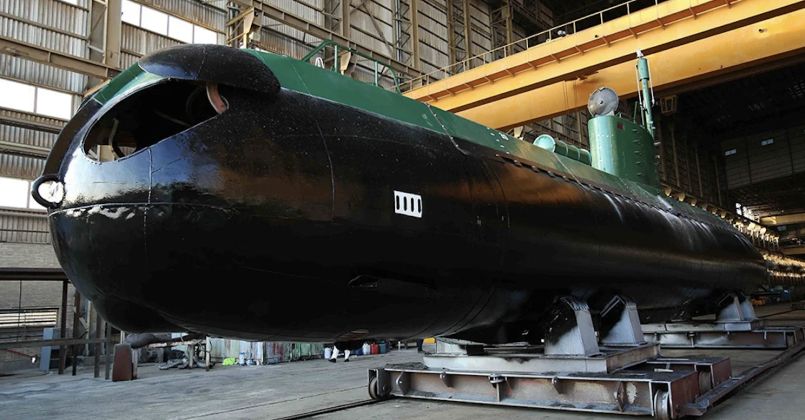
Iranian Navy Ghadir Class Attack Submarine
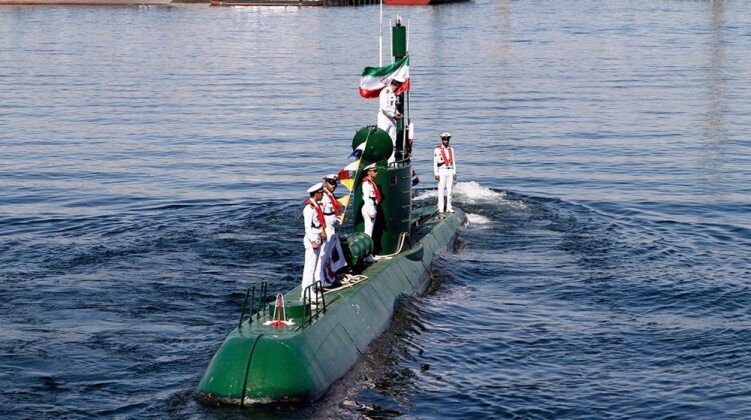
Following confirmation that the Iranian Navy had deployed its North Korean origin lightweight attack submarines for operations the Strait of Hormuz, most notably the Ghadir class which was produced under license based on Korean designs and technologies, significant questions have been raised the ships’ ability to threaten high value U.S. Navy assets at sea. An assessment of the performances of other types of diesel-electronic submarines with comparable capabilities against the U.S. Navy during simulated exercises provide valuable insight into potential vulnerabilities which U.S. carrier groups and other assets may face if engaging these ships. These include exercises against the navies, of Sweden, Australia, Chile and Japan, during which tactics such as resting on the seabed have often caused particular complications to U.S. anti-submarine warfare efforts.
Due to the high frequency of exercises between the Royal Australian Navy and the U.S. Navy, Australian Collins class diesel-electric attack submarines have been tested against U.S. warships particularly frequently, and were reported during RIMPAC 2000 exercises to have sunk two U.S. nuclear submarines and sailed dangerously close to the supercarrier USS Abraham Lincoln. Although the exercises were planned and the U.S. carrier group knew that the Australian ship was in the designated target area, they were still unable to locate it. Subsequently in 2001 during Operation Tandem Thrust, analyst Derek Woolner reported that a Colins class ship sank “two American amphibious assault ships in waters of between 70–80 metres depth, barely more than the length of the submarine itself.” In October 2002 Collins class submarines “hunted down and killed” the U.S. nuclear submarine USS Olympia during exercises near Hawaii. The Australian submarine commander observed that the larger U.S. ship’s greater speed and acceleration had been no advantage, because “it just means you make more noise when you go faster.”
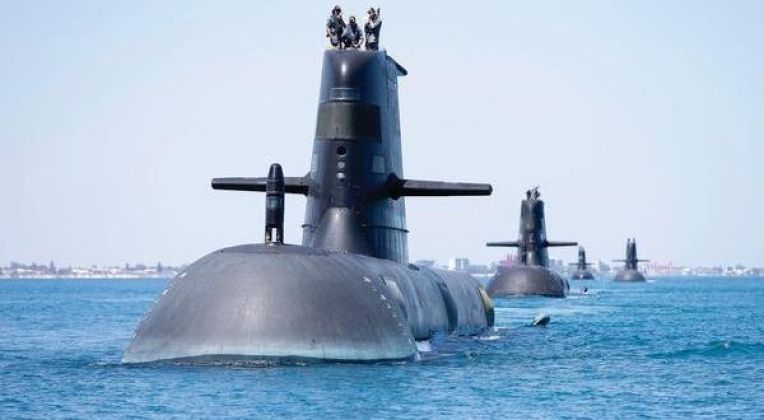
Collins class ships were in 2003 reported to have destroyed two U.S. Navy nuclear attack submarines and an aircraft carrier during simulated engagements. Defense Week on October 1, 2003, reported that the commander of the U.S. Pacific Fleet was trying to downplay the fact that the Australian ships had achieved such results during exercises. These successes were far from isolated, with U.S. Navy Vice Admiral Kirkland H. Donald in 2004 confirming that affirmed that in the autumn of 2000 the Swedish Navy diesel electric submarine HSwMS Halland “demonstrated remarkable prowess exercising against one of our finest ships, USS Annapolis. That exercise, along with many others, reinforced the difficulties in prosecuting a well built, well maintained diesel submarine, with a well trained crew.” Unconfirmed reports indicate that the USS Annapolis had been sunk in the exercises. During engagements with Japanese diesel-electronic submarines, their inherent quietness made them very hard to detect for U.S. sonar, allowing them to repeatedly sink U.S. warships during exercises. Chilean attack submarines were reported to have achieved similar results.
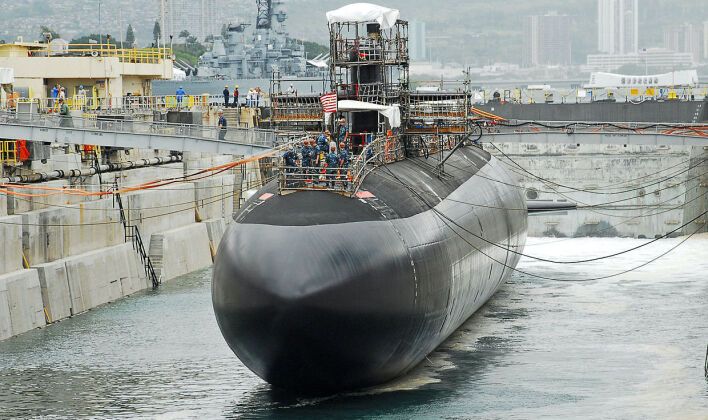
The decades long combat record of the U.S. Navy against diesel electric submarines indicates that Iran’s North Korean supplied ships, such as the Ghadir class vessels, could pose a very serious threat to U.S. carrier groups including amphibious assault ships, nuclear powered attack submarines, and aircraft carriers. The significant numbers which Iran deploys, and the challenging sonar conditions in the Strait of Hormuz, may exacerbate this challenge. While it remains uncertain whether Iranian crews’ training meets the standards of their North Korean counterparts, other arms of the country’s armed forces have proven to be well prepared for engagements with U.S. forces, resulting in a so far highly unfavourable outcome for the U.S.-led war effort. Between 14 and 20 Ghadir class ships, and multiple further Korean-produced diesel-electric attack submarines, are currently estimated to be in service, which are compatible with a variety of torpedoes and cruise missile types.
