
Iran Deploys North Korean Attack Submarines to Support Hormuz Strait Operations
Military Watch Magazine Editorial Staff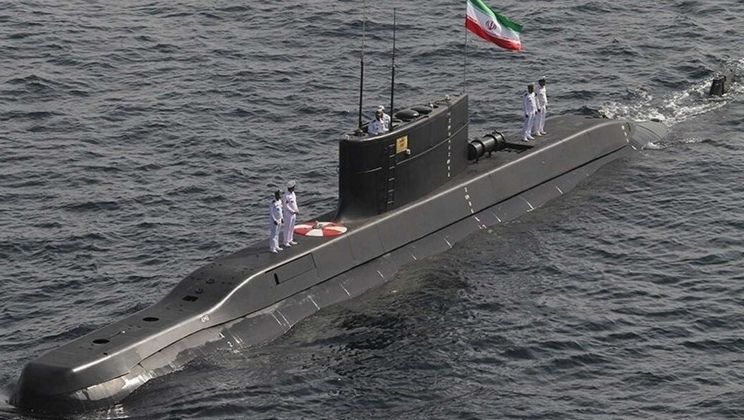
Iranian Navy Submarine
The Iranian Navy has deployed lightweight attack submarines for operations the Strait of Hormuz, which are prized for their ability to manoeuvre in relatively shallow waters and for their quietness, making them optimal for strikes on adversary shipping. Iran first began to procure submarines ships from North Korea in the 1980s to strengthen its sea denial capabilities, representing one of multiple potentially high impact assets supplied by the East Asian state. The Iranian Navy modernised its submarine fleet with the procurement of North Korean Yono class submarines in the 1990s and 2000s, with the Ghadir class that was subsequently produced at Iranian shipyards reportedly being a close derivative of this Korean design.
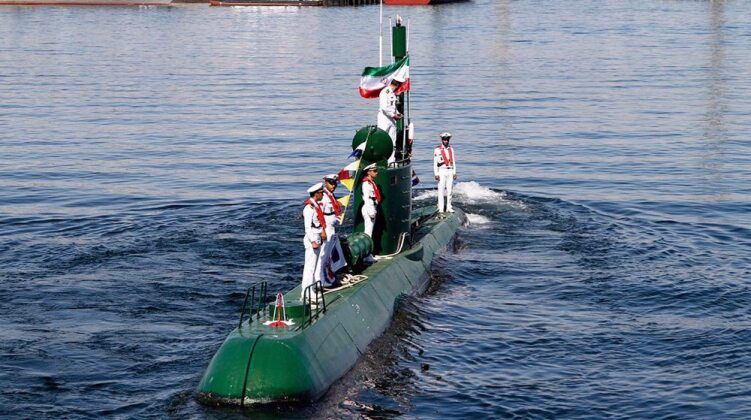
Difficult sonar conditions in the Strait of Hormuz are expected to reduce the effectiveness of adversary anti-submarine warfare tactics, strengthening the potency of tactics such as seabed ‘bottom rest’ concealment. Small submarines operating in congested littoral waters can impose disproportionate operational and force protection costs on larger naval forces, leading them to be considered a significant threat to the U.S. Navy’s operations. Similar small diesel-electric submarines operated by U.S. strategic partners such as Sweden and Australia have achieved outstanding results in simulated engagements with U.S. forces during exercises, including the sinking of aircraft carriers and nuclear powered attack submarines.
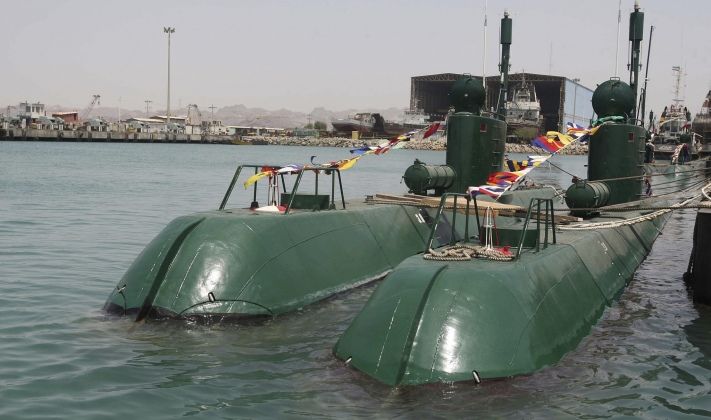
The Ghadir class entered service in 2007, and is considered the most potent class of ship in the Iranian fleet other than its larger Kilo class attack submarines. Each has a crew of seven personnel, while between 14 and 20 of the ships are estimated to be in service alongside additional North Korean built submarines. The ships can reportedly leave port and transition to operational status within 30 seconds, allowing for rapid dispersal during periods of crisis that is optimal when on the defensive against the U.S. Armed Forces. Should hostilities with the U.S. further escalate, the Iranian Navy is expected to employ the submarines to lay mines in confined shipping lanes, and fire Valfajr and Hoot torpedoes. The ships are reported by Iranian media outlets to also be able to launch Jask-2 and Nasr-1 anti-ship missiles. North Korea and Iran are thought to have refined operational tactics for these types of submarines jointly for decades, with the outcome of potential combat operations in the Persian Gulf having significant implications for the security situation on the Korean Peninsula.
