
South Korea Moves Ahead with Next Generation Destroyer Program After Major Delays
Military Watch Magazine Editorial Staff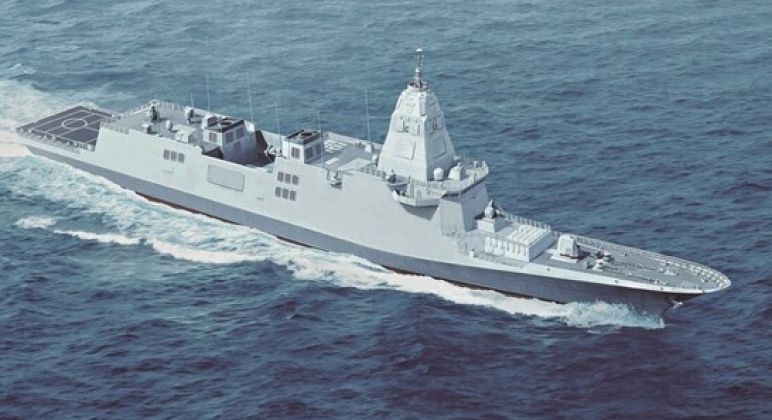
KDDX Destroyer Artwork
The Republic of Korea Defense Acquisition Program Administration has selected a new design for the KDDX next generation destroyer program, with the long delayed development effort expected to provide the country’s navy with six new 6,000 to 6,500 ton surface combatant. The vessels are intended to bridge the gap between South Korea’s KDX-II destroyers and larger KDX-III Aegis ships, adding more capable hulls without overusing the fleet’s top-tier missile-defence assets. The ship is expected to be the country’s first with an an Integrated Electric Propulsion System, reducing machinery noise to make it more difficult for submarines to track, and providing a significant electrical growth margin for high-power radars, electronic warfare equipment, and future directed energy weapons. The combat system is centred on a dual-band active electronically scanned array radar system, with an S-band radar is intended for long-range air surveillance and ballistic-missile detection and tracking, while a shorter wave X-band radar supports short-range air-defence control and the detection of hostile surface ships. The U.S. Navy previously attempted but failed to integrate such a radar onto the Zumwalt class destroyer, with China having done so from the late 2010s on the Type 055 class destroyer.
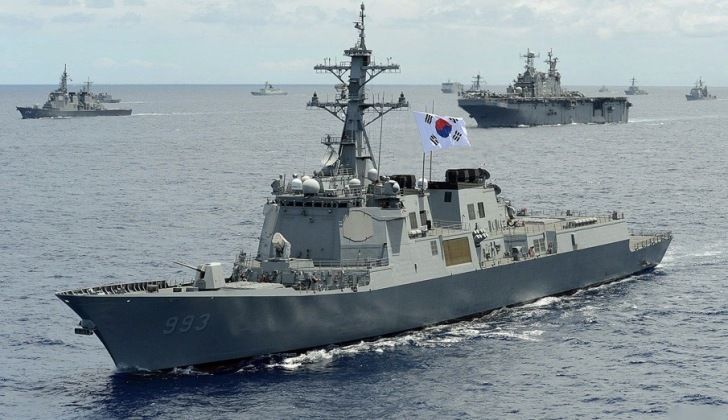
The concept design for the new destroyer class was conducted in 2012, after which HD Hyundai Heavy Industries won the basic design contract in 2020 and completed that work in December 2023. The next phase was delayed by disputes over bidding rules and security penalties. The program is expected to mark a major milestone in ongoing efforts to reduce reliance on U.S. armaments, as while previous South Korean destroyers relied on indigenous cruise missiles, and on American missiles for air defence, the new vessel integrates the Ship-to-Air Missile-II long-range missile, over 90 percent of which will be built domestically. Relatively little is known regarding the missile’s specifications, with some sources indicating it will provide a counterpart to the SM-6 in U.S. Navy service. The warship’s armaments suite is relatively small for its size, indicating a focus on stealth capabilities.
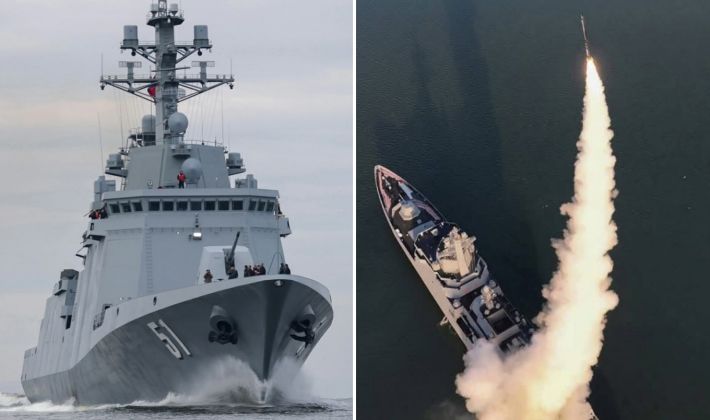
Progress on the KDDX program has occurred as North Korea, with which the south remains officially in a state of war, has made rapid progress on its own first destroyer program, launching its first destroyer the Choe Hyon in April 2025, and the second ship of the class two months later. The Korean People’s Army Navy is scheduled to receive two destroyers per year up to 2032, providing a fleet of 12 vessels, which would today represent the world’s fifth largest destroyer fleet behind the U.S., China, Japan and South Korea. Choe Hyon class destroyers are outstandingly heavily armed for their size, and integrate 74 vertical launch cells, compared to 96 on the much larger U.S. Navy Alreigh Burke class, 80 on the Zumwalt class, 64 on the Chinese Type 052D class, and 64 on the Russian Udaloy class. The program builds on major advances in cruise missile, ballistic missile, radar, and surface-to-air missile technologies, with the destroyers integrating navalised derivatives of multiple missile types that have long been deployed from ground-based launchers. The vessels are considered cutting edge, with far more modern designs than Russian or European destroyers, posing a new challenge to South Korean, Japanese and U.S. far seas dominance. It remains uncertain how South Korea’s naval forces may respond to this development.
