
S-300PT vs. S-300PMU-2: Why Azerbaijan Has the Air Defence Advantage Over Armenia
Military Watch Magazine Editorial Staff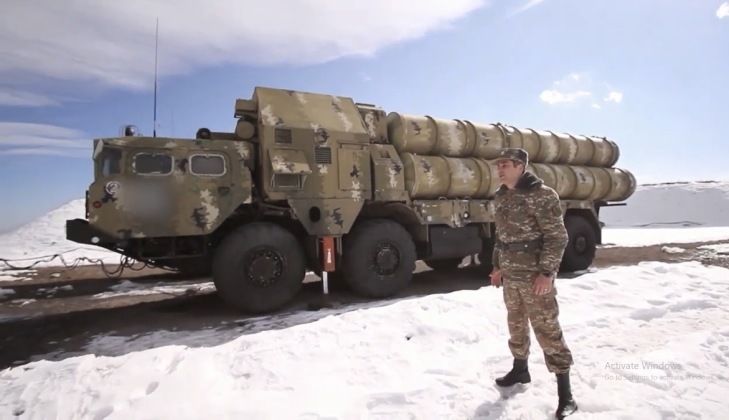
Armenian S-300PT Missile Battery
The ongoing conflict between Armenia and Azerbaijan has the potential to be the first time that the S-300 surface to air missile system is used in combat, and if some unverified reports are to be believed then the platform may already have been used by Armenia’s armed forces to neutralise Azeri drones. The S-300 system first entered service in the Soviet armed forces win 1979 as the S-300P, and has evolved considerably in the last four decades with the latest variants, currently in production, being the S-300V4 and S-400 platforms. Variants in Armenian and Azeri service, however, are very far from state of the art, although even these older variants had yet to see combat anywhere in the world before the current conflict began. An assessment of the capabilities of both S-300 systems, and comparison of their respective performances to one another, can provide insight into which party would hold the advantage should hostilities further escalate and should aerial warfare come to play a more significant role.
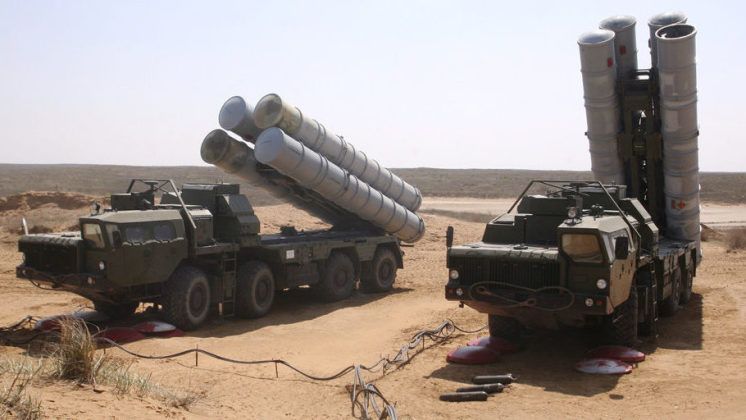
Armenia currently deploys a Soviet-era variant of the S-300 which first entered service in 1982, the S-300PT, which provides the only credible asset for long range air defence other than its four Su-30 fighter jets. This Soviet era S-300 variant is more than sufficient to threaten Azeri aircraft such as the MiG-29A, which also entered service in 1982 and has seen few upgrades since. The S-300PT is equipped with 5V55KD surface to air missiles, which provide a 90km engagement range and benefit from a terminal semi active radar homing guidance mode, providing improved precision relative to the original S-300P. The missile is limited by its relatively light 133kg warhead, low speed of Mach 3.35 and the ability to engage only a very small number of targets simultaneously - estimated at around a dozen or less. The limited capabilities of this missile system means Armenia will be forced to rely more heavily on its Su-30SM fighter jets should hostilities further escalate, or should Turkey intervene more directly in the conflict on the side of Azerbaijan.
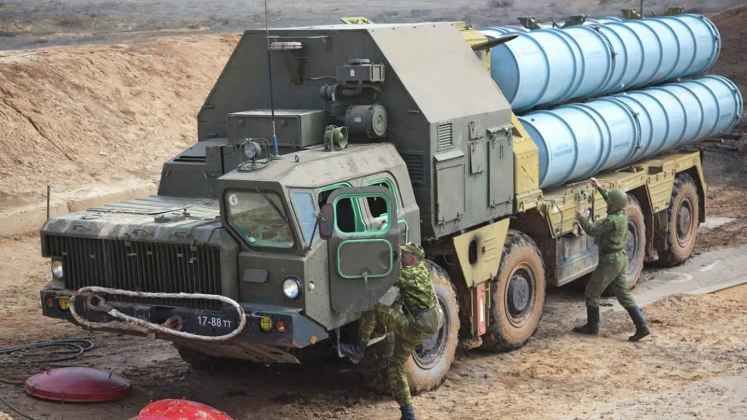
Azerbaijan notably does not field any S-300 systems inherited from the Soviet Union, although it does deploy advanced variants of the Soviet era S-200, S-125 and S-75 systems for a multi layered air defence network. The Azeri Defence Ministry has strengthened the country's air defences significantly since the Soviet collapse however, and while its single squadron of MiG-29 fighter jets has seen no significant improvements to its capabilities, the country diid acquire the advanced S-300PMU-2 air defence system from Russia. The S-300PMU-2 entered service 15 years after the S-300PT, first joining the Russian military in 1997, and was a direct predecessor to the better known S-400 system which succeeded it 10 years later. The missile system has the potential to engage targets at almost triple the range of the S-300PT at 250km if equipped with the 48N6E3 missile, although it remans uncertain whether Azerbaijan does indeed field these missiles. The less capable but more standard missile used to equip the S-300PMU-2, the 48N6E2, has a shorter but still respectable range of 200km. The missile can intercept targets at Mach 5.9 speeds and carries a large 180kg warhead, and up two 64 can be guided by a single S-300 system at any one time to engage up to 32 targets simultaneously.
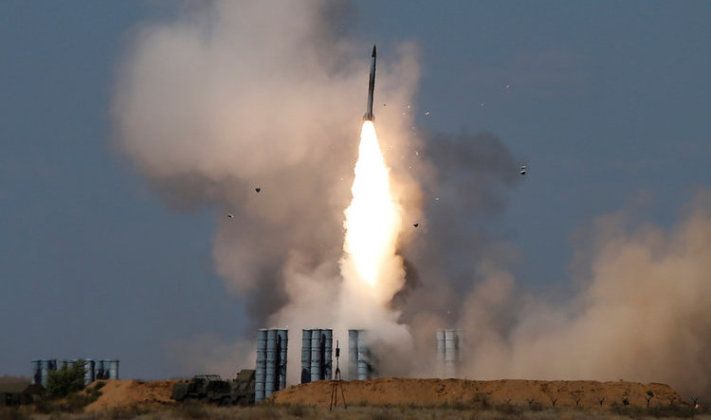
The 15 year technological gap between Armenian and Azeri variants of the S-300 system is closely reflected in there capabilities, with the S-300PMU-2 able to engage 2-3 times as many target simultaneously, doing so with more missile types for greater versatility, and able to threaten targets at much longer ranges. The PMU-2 variant also benefits from superior electronic warfare countermeasures which are critical to allowing it to operate effectively in a highly contested environment - particularly if facing advanced combat jets such as Armenia’s Su-30SM which will seriously test it electronically. The S-300PMU-2 is also able to set up and redeploy considerably faster than the older PT variant, with high mobility key to its survivability. The newer air defence system also benefits from far superior sensors, providing greater situational awareness and facilitating the targeting of adversaries at much greater ranges. It remains uncertain whether Armenia will seek to eventually replaced the S-300PT, possibly with the S-400 or some newer system, but this is likely to depend on the state of its economy over the coming 15 years. With access to Russian arms at ‘friendly’ domestic prices however, the Soviet successor states are in a strong position to acquire new aerial warfare systems and can purchase them at far lower prices than states outside the former Soviet Union are required to pay.
