
Five Powerful Armenian Weapons Systems Azerbaijan Fears: From Hypersonic Missiles to Su-30SM Fighters
Military Watch Magazine Editorial Staff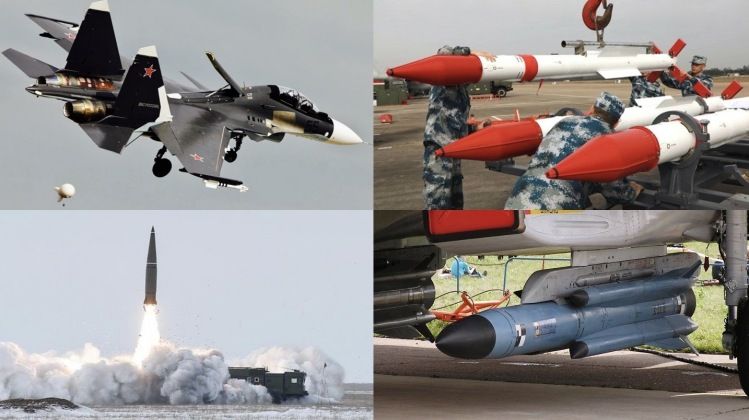
Su-30SM, R-77, Kh-31, Iskander (clockwise from top left)
With longstanding tensions between Armenia and Azerbaijan over the disputed Nagorno-Karabakh region again escalating into open confrontation, an assessment of the military capabilities of both Soviet successor states remains highly relevant today. Although both states have been able to purchase high end Russian weapons systems at ‘friendly’ low prices - a privilege granted to several Soviet successor states - and maintain positive relations with their larger neighbour, Armenia has come to rely on Russia more heavily for its defence. Azerbaijan has meanwhile invested more in defence partnerships with third parties - namely Israel and Turkey with which it maintains close military ties. Armenia has notably pursued a more ambitious modernisation program and sought to acquire higher end weapons systems, resulting in considerable advantages in terms of both strike and air superiority capabilities. A look at Armenia’s five most prized military assets, which are most likely to have a decisive impact should tensions further escalate to a full scale war, is given below.
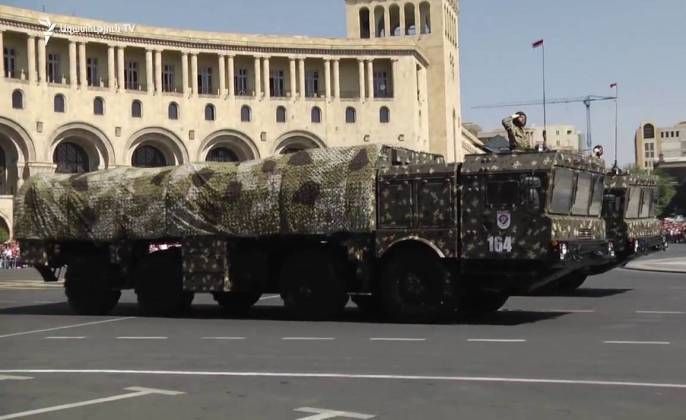
9K720 Iskander-E Hypersonic Tactical Ballistic Missile
Armenia was the first confirmed export client for the Iskander hypersonic tactical ballistic missile system, which is considered the most capable platform of its kind in the world and is thought to have been purchased specifically to counter Azerbaijan’s air defences. The Iskander was designed to evade advanced NATO air defence systems such as the PAC-3 Patriot platform, and is capable of maintaining high speeds throughout the middle and terminal stages of its trajectory and impacting at speeds of Mach 7. This combined with the Iskander’s high manoeuvrability and its advanced radar evading capabilities makes it particularly difficult to intercept. The missile system is prized for its high mobility and short launch time, which combined with Azerbaijan’s very limited strike assets means it will be able to reliably launch precision strikes on Azeri targets. The Iskander is a potential game changer for its ability to neutralise high value targets such as airfields, command centres, S-300 batteries and troop concentrations with little to no warning, and is capable of deploying specialised cluster and penetrative warheads for these purposes.
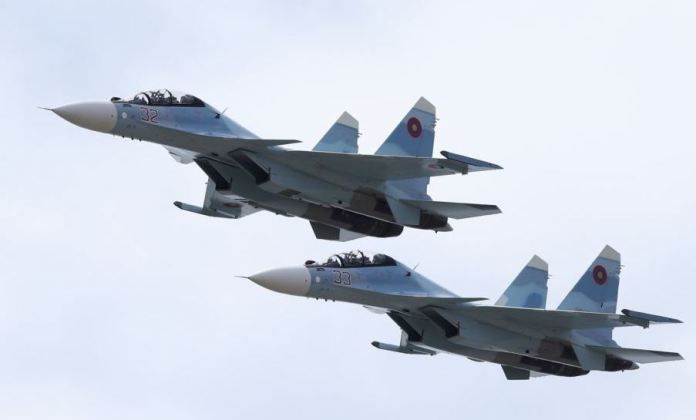
Su-30SM Heavyweight Fighter
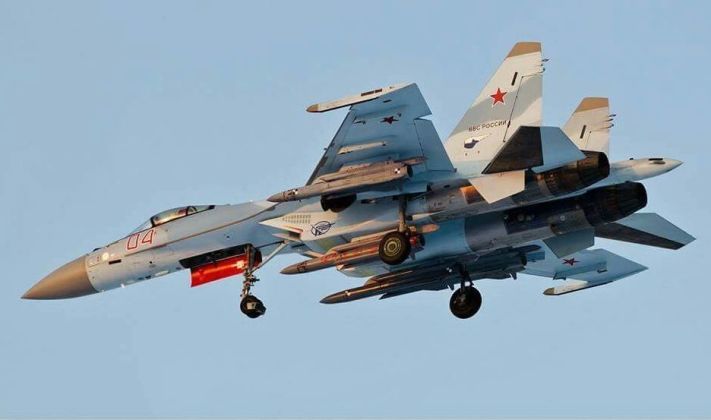
Armenia currently deploys a small contingent of four Su-30SM ‘4+ generation’ heavyweight fighters, with eight more of the jets now on order. These are not only the only heavyweight fighters deployed in either Azerbaijan or Armenia, but are also the only fighters in either country which were built less than 30 years ago placing them technologically around three decades ahead of the lighter MiG-29 fighters in the Azeri fleet. The Su-30SM is the most advanced variant of the Su-30 ever to enter service, and benefits from the latests developments in Russian sensor, electronic warfare, composite material and weapons technologies. It is no exaggeration to say that a small contingent of four Su-30SM fighters can comfortably neutralises the entire Azeri Air Force with little threat to itself due to the massive discrepancy in weaponry, sensors, flight performance and electronic warfare systems. Su-30SM jets can also be relied on to deliver precision strikes across Azeri territory, and was designed with the endurance required for deep penetration missions into Western Europe meaning even with a full weapons load and half filled fuel tank it can comfortably reach any target in Azerbaijan.
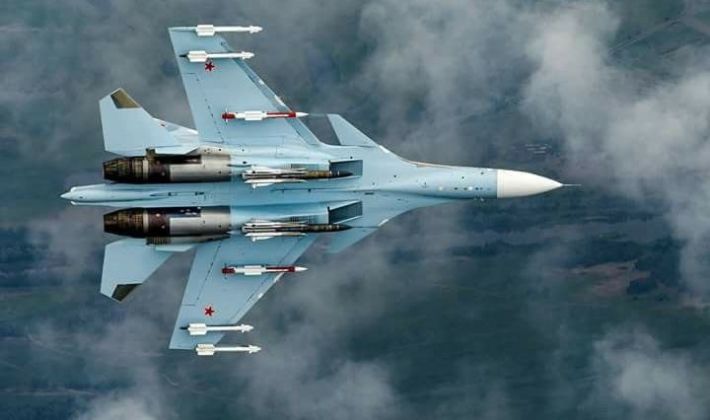
R-77 Air to Air Missile
The R-77 is the only active radar guided air to air missile, and the only modern air to air missile design, deployed by ether Armenia or Azerbaijan, and provides Armenian Su-30 fighters with an overwhelming advantage over Azeri MiG-29A jets. Azeri fighters deploy Soviet-era R-27 missiles which not only have a much shorter range than the R-77, but also weaker sensors and obsolete electronic warfare systems meaning they will pose little threat to Armenian fighters. The R-77 furthermore benefits from active rather than semi active radar guidance meaning Armenian fighters do not need to maintain a radar lock throughout their engagements with Azeri jets and have an effective ‘fire and forget’ capability. These already overwhelming advantages are compounded by the fact that Su-30SM fighters not only have more powerful sensors, but can also carry over twice as many long range missiles as the MiG-29A can.
Kh-31P Standoff Anti-Radiation Missile
Although unconfirmed, the Armenian Air Force is reported to have received Kh-31P standoff anti-radiation missiles to equip its Su-30SM fighters - with these missiles being a very standard armament delivered to the vast majority of clients for modern Russian fighter jets. The missile class was designed specifically to suppress enemy air defences and provides an effective complement to the ground based Iskander missiles which can also be used to take out Azeri surface to air missiles and radar sites. The Kh-31P has a range of approximately 110km, is highly manoeuvrable, and can impact targets at Mach 3.5 speeds making it difficult to track or intercept. Its light weight makes it ideal for saturation attacks when combined with the high carrying capacity of Su-30 fighters, and allows the jets to be configured for both strike and air to air missions simultaneously with a single loadout when paired with the R-77.
S-300PT Air Defence System
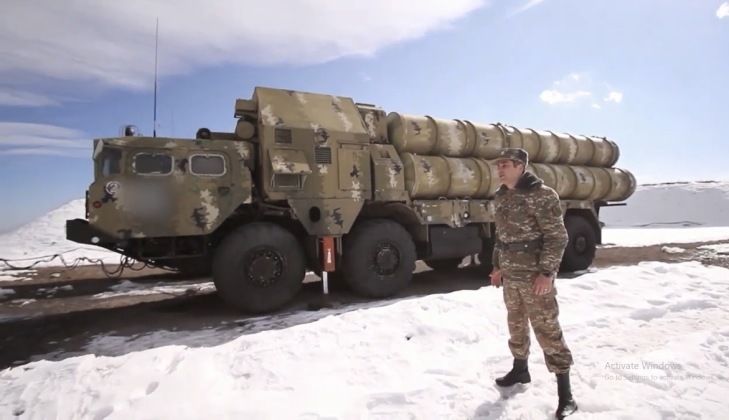
Until the delivery of the first Su-30 fighters, the S-300PT was Armenia’s only credible asset for long range air defence. Although far from state of the art, this Soviet era S-300 variant is still highly capable and is more than sufficient to threaten Azeri aircraft which are themselves considered out of date in terms of survivability. The S-300PT is believed to have entered service in 1982, and is equipped with the 5V55KD surface to air missile which provides a 90km engagement range and benefits from a terminal semi active radar homing guidance mode for improved precision. The platform its notably less advanced than newer S-300 variants in Azeri service, but still more than sufficient to serve as a complement to the Su-30SM. The S-300PT can be relied on to provide a basic defensive capability once the Azeri Air Force has been weakened and fighter jets begin to concentrate more on air to ground operations.
