
Russian Leads World in Integration of Air Defences with Aviation Control - Reports
Military Watch Magazine Editorial Staff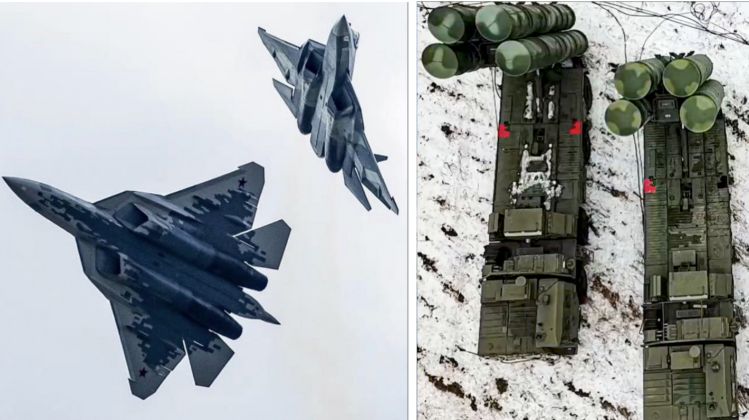
Russian Su-57 Fighters and Launchers From S-400 System
Deputy CEO of Russia’s leading producer of air defence systems Almaz-Antey, Dmitry Savitsky, has claimed that the Russian Aerospace Forces have maintained global leaderships in the integration of air defence systems with flight controls. “These tasks, in the terms of ICAO and EUROCONTROL - the European Organization for the Safety of Air Navigation - are called ‘civil-military air traffic management coordination.’ I think we are definitely a world leader in this aspect of air traffic control - both technically and technologically,” he stated. He added that procedures and techniques have recently been developed to improve the effectiveness of interaction between air traffic control centres and air defence agencies, adding that the safety of civil aviation flights and the reliability of airspace control critically depend on the efficiency of this interaction. “I believe this is invaluable experience,” he added.
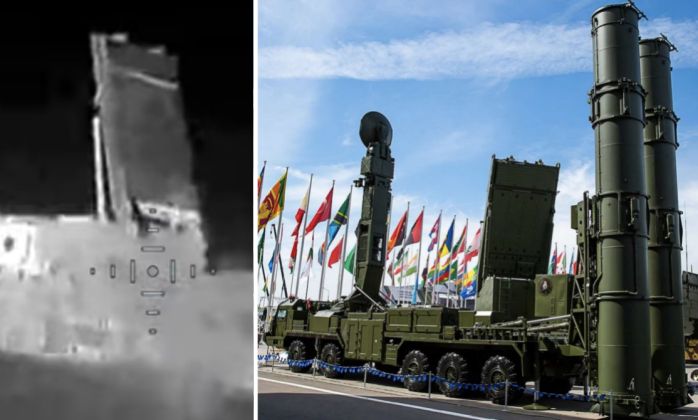
The Russian Armed Forces have been disproportionally reliant and very heavily invested in ground-based systems for air defence, with the Defence Ministry having invested more than twice as heavily in procuring the S-400 long range surface-to-air missile system alone than it has procuring all types of fighter aircraft combined over the past three decades. These systems’ very low lifetime costs and high combat potentials have made them highly attractive to asymmetrically counter NATO air power within the post-Soviet constraints of the Russian industrial base and defence budget. The significant decline of the Russian combat aviation industry and termination of the MiG 1.42 fifth generation fighter program, which left the Russian fighter fleet behind those of the U.S. and eventually China, are assessed to have strengthened the consensus within the Defence Ministry regarding a need to focus investment on ground-based systems.
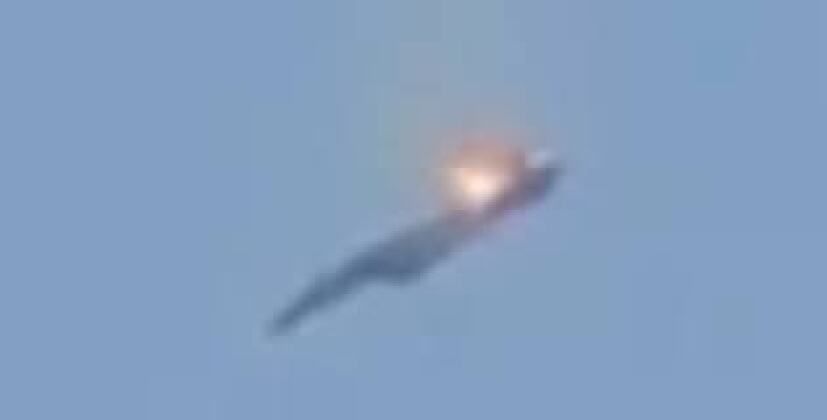
The integration of air defences with air control is critical to prevent friendly fire incidents, as recently seen in the U.S.-Iranian conflict when a Kuwaiti F-18 fighter was reported to have shot down three friendly U.S. Air Force F-15E fighters in the confusion that follows Iranian fighters’ penetration strikes into Kuwait. Although Western sources have reported a number of friendly fire incidents in the Russian-Ukrainian War, considering the intensity and length of the conflict and the scale on which ground-based air defence systems and fighters are employed such incidents have been few and far between. Close coordination between ground-based systems and fighters are considered critical to compensate for the disadvantages Russia’s predominantly fourth generation fighter fleet face if engaging NATO fleets, which are increasingly predominantly reliant on the more advanced F-35 fifth generation fighter. The synergy of ground-based systems like the S-400, and fighters with large radars serving as airborne sensor platforms, is considered a potentially effective means of countering fifth generation aviation assets.
