
Russia Surges Su-57 Stealth Fighter Deployments Near Japan: What is Their Purpose in the Pacific?
Military Watch Magazine Editorial Staff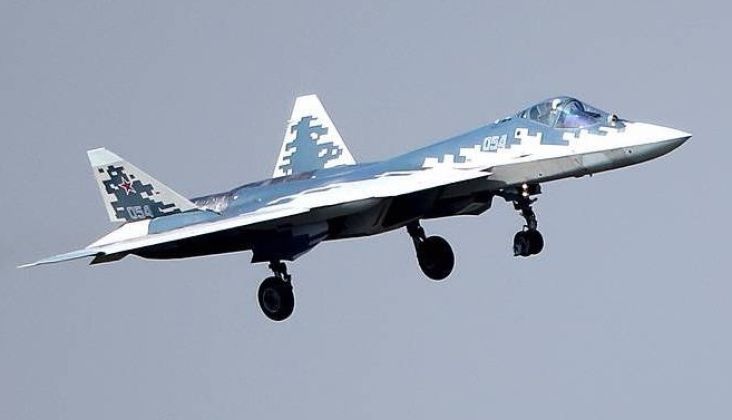
Su-57 Fighter
The Russian Aerospace Forces have concentrated deployments of new Su-57 fifth generation fighters at Dzyomgi Air Base in the Khabarovsk region near neighbouring Japan, accordingly to reports from Ukrainain sources. At least 15 of the aircraft were seen parked in the open at the airfield. The facility is considered one of the most sensitive in Russia, and currently hosts Su-35S air superiority fighters, while being located close to Tsentralnaya Uglovaya Air Base which hosts both the Su-35S and the MiG-31BM interceptor. The deployment closely coincides with the delivery of a new batch of Su-57 fighters to the Aerospace Forces, which reportedly benefit from improved weaponry and avionics over those from prior batches, with this marking the first confirmed delivery in over six moths.
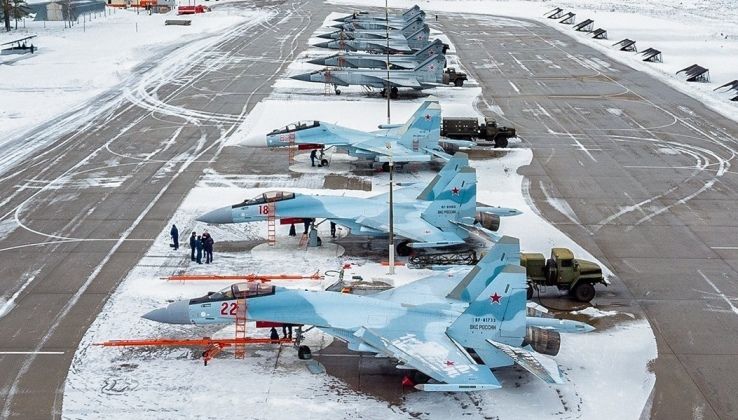
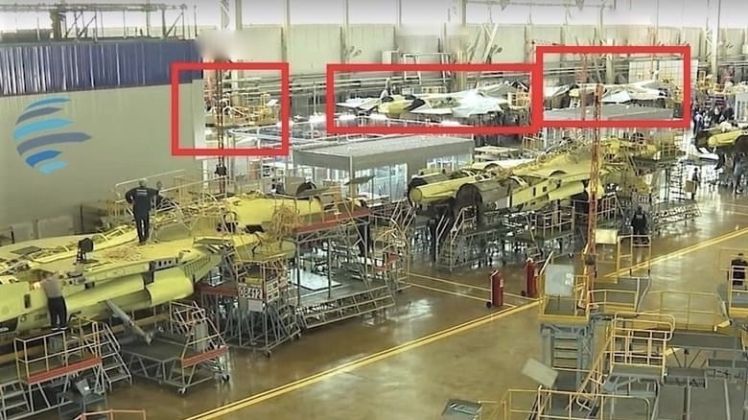
Dzyomgi Air Base is located near the Gagarin Aircraft Plant in Komsomolsk-on-Amur, otherwise known as the Komsomolsk-on-Amur Aircraft Plant, where all Su-35 and Su-57 serial production models undergo final assembly. Permanently basing the first regiment of the aircraft near the facility has allowed issues encountered during their early operations to be more easily addressed. The redeployment of Su-57s to the facility has nevertheless fuelled considerable speculation regarding possibly further purposes. One possibility is that it is intended to send a signal to neighbouring Japan, as the recent consolidation of power by Prime Minister Sanae Takaichi has led to expectations that the country will seek to more rapidly remilitarise to focus its attentions on both China and Russia as part of its alliance with the United States and wider Western Bloc.
Basing Su-57 fighters alongside Su-35 fighters and MiG-31 interceptors could allow the new stealth aircraft to train to operate alongside the older types, with the MiG-31 carrying larger sensors and being well suited to serving as an airborne command post. Su-57s could also provide dissimilar air combat training to Su-35 and MiG-31 units to simulate the capabilities of adversary F-35s deployed by the Japan Air Defence Force, and separately by the U.S. Air Force, Navy and Marine Corps from bases in Japan. It remains possible that while Su-57s were deployed in Russia’s European regions to take part in Russian-Ukrainian hostilities in the past, the expansion of the fleet with the delivery of the latest production batch has resulted in sufficient numbers being made available for simultaneous deployments within operating range of the Ukrainian theatre, and in the Russian Far East.
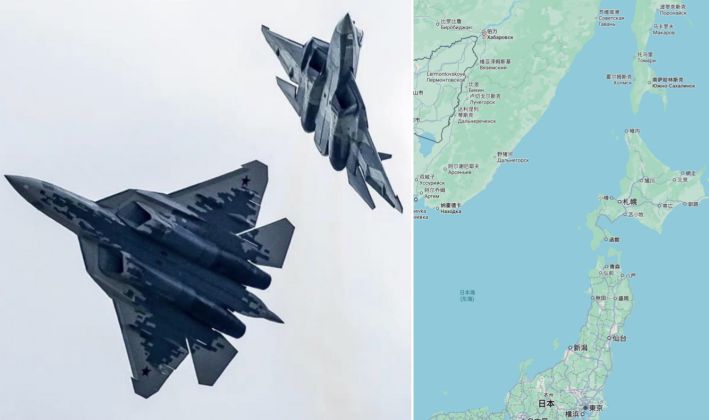
When stationed at Dzyomgi Air Base, Su-57s may be deployed to fly escort missions for Russian bomber and reconnaissance operations near Japanese territory, and potentially further into the Pacific as far as Alaska. The fighters have among the longest ranges of any types in the world, with combat radii over double those of the U.S. Air Force F-35 and F-22, although they are still constrained by the lack of AL-51F next generation engines which have been considerably delayed in their development. Following considerable speculation since the late 2010s that the Aerospace Forces could seek to reform a Fighter Aviation Regiment at Chuguyevka Air Base near Alaska, which previously hosted MiG-31 interceptors, the possibility remains that Su-57s could eventually be relied on to deploy to such a strategic forward facility near the Bering Strait, across from which the U.S. has built up by far its largest concentration of its own fifth generation fighters in Alaska.
