
Japan Activates F-35B Stealth Fighter Squadron Built For ‘Island Hopping’ at Key Base Next to Taiwan
Military Watch Magazine Editorial Staff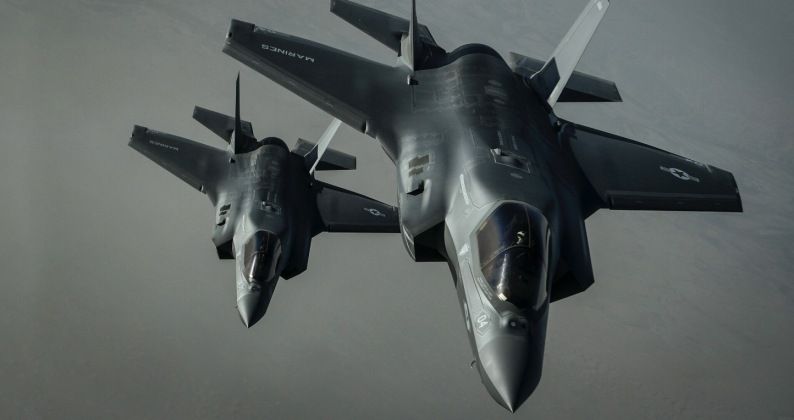
U.S. Marine Corps F-35B Fighters
The Japan Ministry of Defense on February 7 announced the service entry of the country’s F-35B fifth generation fighter aircraft, which have been deployed under the 202nd Tactical Fighter Squadron at Nyutabaru Air Base on Kyushu Island, one of the closest airbases to China and the Taiwan Strait. The F-35B is by far the most costly fighter type in serial production anywhere in the world, with a cost over 50 percent higher than the more widely used F-35A at close to $130 million per aircraft. Japan is one of just four foreign countries to have ordered the F-35B, alongside the United Kingdom, Italy and Singapore, with the first of the aircraft having arrived in the country in August 2025. The Defence Ministry has ordered a total of 105 F-35As and 42 F-35Bs, making it by far the largest foreign client for the aircraft, with the B variant potentially playing a central role in operations in the Taiwan Strait and East China Sea.
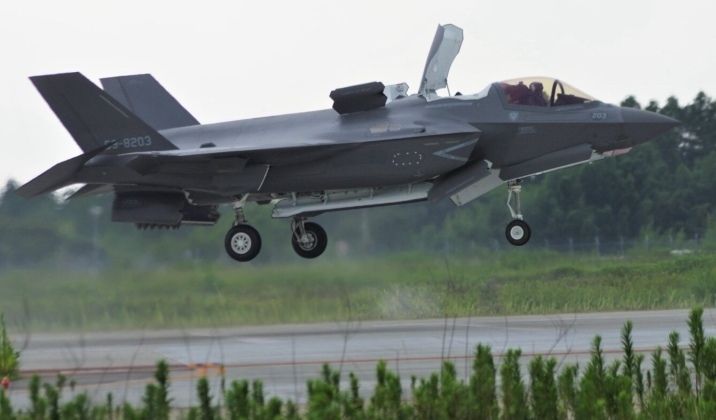
The F-35B was designed with unique short takeoff and vertical landing (STOVL) capabilities, which allow it to operate from short or makeshift runways, including those on disputed islands in the East China where China maintains a significant military presence. The much greater versatility of locations from which it can deploy, including an ability to fly from very small air strips set up by advancing units, has been particularly highly valued by the U.S. Marine Corps, under what are referred to as Expeditionary Advanced Base Operations (EABO). Nevertheless, the F-35B has been widely assessed to be the most maintenance intensive fighter type in the world, which has raised questions regarding its suitability for operations from makeshift forward facilities. The Marine Corps in February 2025 announced plans to reduce procurement of the F-35B by 21 percent, which was widely speculated to have been a response to the limitations of its suitability for EABO.
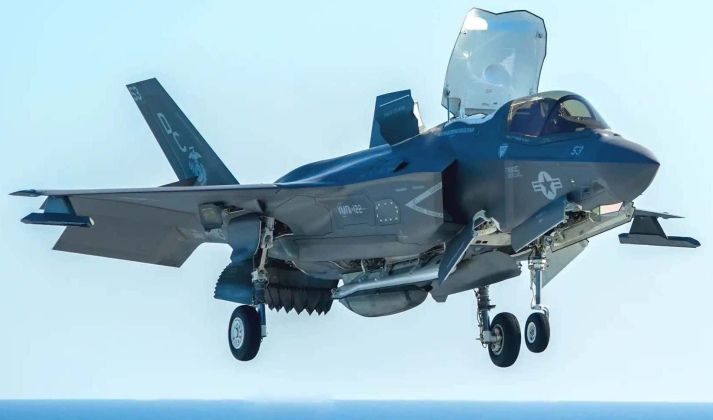
The activation of Japan’s first F-35B squadron at one of its closest military facilities to Chinese territory follows a significant rise in tensions between Tokyo and Beijing, after Japan’s new prime minister, Sanae Takaichi, threatened to intervene militarily in the ongoing conflict between the People’s Republic of China on the Chinese mainland, and the Republic of China based on Taiwan, which have for decades remained in a state of civil war. The F-35B could be an optimal aircraft to take part in such interventions, and uniquely pairs cutting edge avionics and stealth capabilities, with an ability to deploy from small islands near the Taiwan Strait. This includes the increasingly heavily militarised island of Yonaguni under 200 kilometres from Taipei. With the Chinese People’s Liberation Army fielding some of the world’s most advanced ‘4+ generation’ and fifth generation fighter types in the world, such as the J-20, the F-35 is considered the only non-Chinese fighter type capable of engaging them on a peer level.
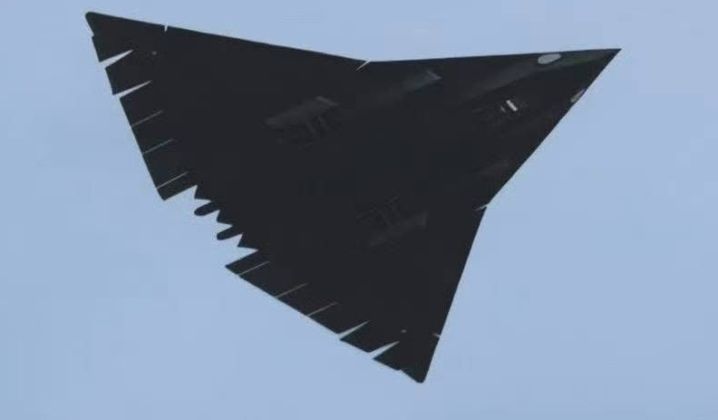
Although the F-35B’s primary advantage is its much more limited vulnerability to attacks on major airbases, the fighter suffers from serious limitations in its combat potential compared to other fifth generation fighter types. While the F-35A already has less than half the range of the Chinese J-20, the F-35B’s range is approximately 35 percent shorter than this. The F-35B’s manoeuvrability is by far the poorest of any 21st century fighter type, its supersonic flight is severely constrained, and its weapons bays are particularly small restricting both the types of weapons that can be carried and their quantities. These limitations, combined with the aircraft’s outstandingly high procurement and sustainment costs, have limited foreign interest particularly compared to the F-35A. Nevertheless, Japan’s geography, and its intention to field two Izumo class aircraft carriers that integrate the fighters, have led the Defence Ministry to assess that the fighter type has the potential to be of considerable value.
