
Japan Receives First F-35B ‘Stealth Jump Jets’ Built For Island War with China
Military Watch Magazine Editorial Staff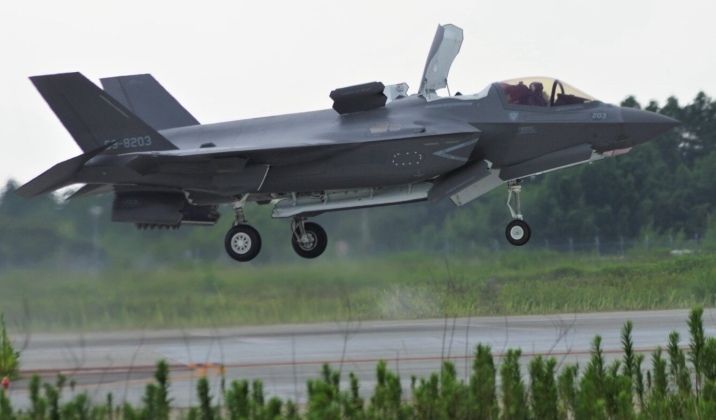
Japan Air Self Defence Force F-35B Conducts Vertical Landing
The Japan Air Self Defence Force has received its first F-35B fighter aircraft, which arrived Nyutabaru Air Base after considerable delays. Three of the fighters were delivered to the service, and will be operated by a newly established provisional squadron at the facility. The first three F-35Bs will be used for pilot training and maintenance preparation until the fleet further expands. Two full squadrons are expected to be based at the facility, with the first being the 305th Tactical Fighter Squadron that will transition to the F-35B from the F-15C/D, while the second will be an entirely new squadron. Japan is the second largest foreign client for the F-35B after the United Kingdom, with 42 of the fighters on order. The F-35B differs from the F-35A that Japan previously procured due to its unique short takeoff and vertical landing (STOVL) capabilities, which allow the aircraft to operate from short or makeshift runways, including those on disputed islands in the East China where China maintains a significant military presence.
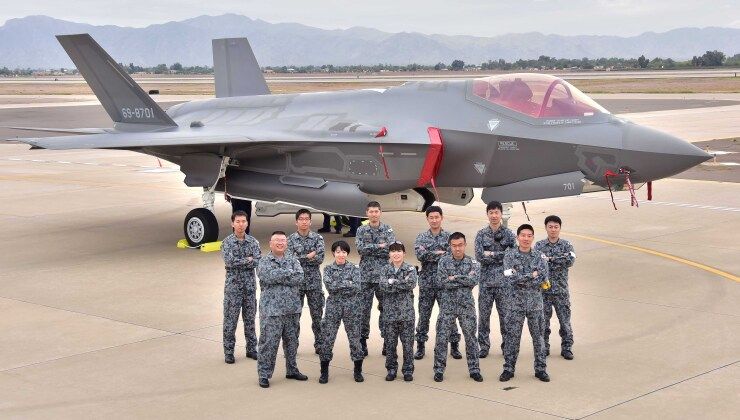
The F-35B’s STOVL capabilities provide considerable flexibility in how they can be deployed, and allows them to be accommodated on smaller aircraft carriers that lack arresting gear, such as the Japan Maritime Self Defence Force’s Izumo Class ships. This capability comes at a significant cost, as not only is the aircraft approximately 50 percent more costly to procure than the F-35A, but its capabilities are significantly poorer. The F-35B has much smaller weapons bays, limiting it to carrying smaller bombs or 33 percent less air-to-air ordinance, and meaning it is not compatible with many of the missile types designed for the F-35A. The aircraft is also much less manoeuvrable, with the poorest flight performance of any 21st century fighter class, and due to a design flaw cannot fly supersonically without risking sustaining damage. The F-35B’s fuel carriage is also very significantly lower, meaning its combat radius is over one third shorter. Availability rates are also difficult to keep high, even compared to other F-35 variants, while sustainment costs and maintenance needs being significantly higher due to the complexity of its STOVL-related subsystems.
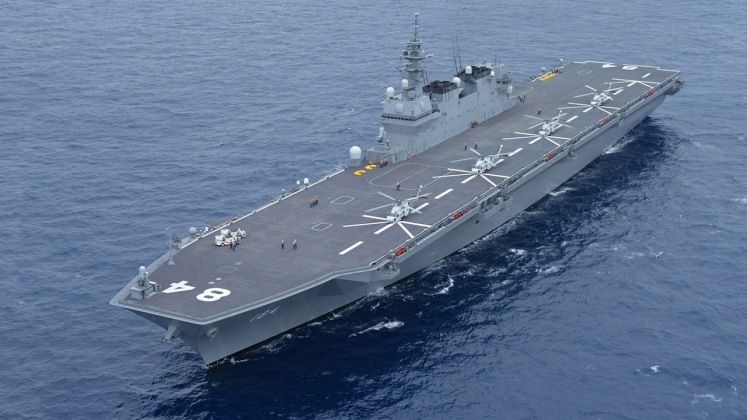
The F-35B is expected to be operated jointly by the Japan Air Self Defence Force and the Maritime Self Defence Force, much as is done by the British Royal Air Force and Royal Navy, with fighters deployed from two 27,000 ton Izumo Class carriers that were specifically built for them, as well as from forward airbases. The first landing on one of the carriers occurred in October 2024, albeit using a U.S. Marine Corps F-35B as Japan’s own aircraft had not yet been delivered. The flexibility provided by the F-35B’ STOVL capabilities is prized due to both the limited number of airbases at key forward locations, and due to the high possibility that airbases will be destroyed in the early stages of a major conflict.
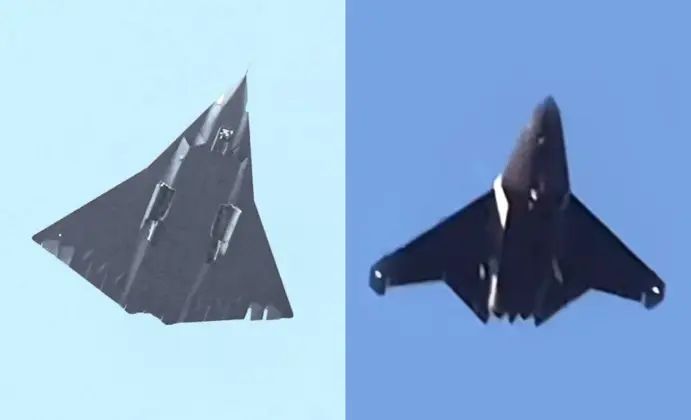
Despite its advanced stealth capabilities and avionics, the F-35B’s viability for high intensity combat in the Pacific remains questionable, as while even the much more capable F-35A fighters are hard pressed to counter similarly sophisticated but much heavier Chinese J-20 fifth generation fighters, China is set to begin introducing sixth generation fighters into service from around 2030. These will leave even more capable variants of the F-35 at very steep disadvantages. This is considered a major factor both in the fall in stock value of the F-35’s producer, Lockheed Martin, and in the U.S. Air Force’s deep cuts to its own orders for F-35s. Chinese sixth generation fighters are expected to be operational before all the F-35s Japan has on order have been delivered.
