
Russia’s Most Capable Strategic Bombers Patrol Near NATO’s Arctic Territories
Military Watch Magazine Editorial Staff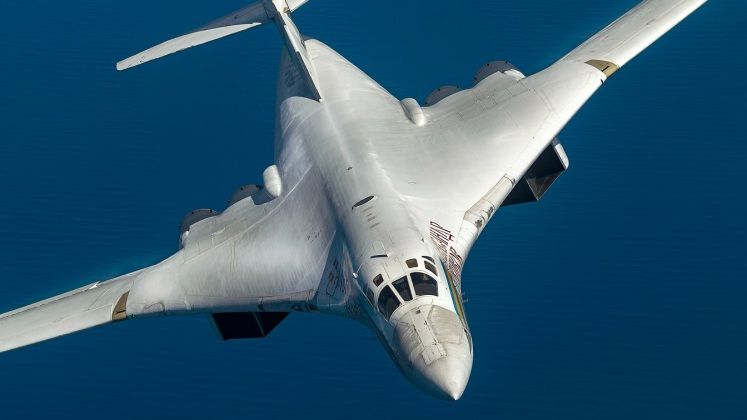
Tu-160 Bomber
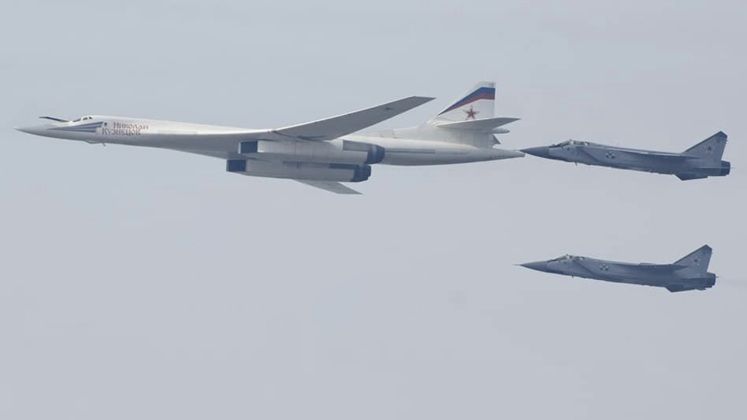
The Russian Aerospace Forces have deployed Tu-160 intercontinental range strategic bombers for operations over the neutral waters of the Barents and Norwegian seas, with MiG-31 interceptor aircraft providing escort. The Russian Defense Ministry reported that the flight “lasted approximately 16 hours. During the mission, the Tu-160 crews practiced aerial refuelling.” This occurred at a time of high tensions with NATO, and following multiple engagements in the region. In early March, for example, a pair of Russian Tu-95MS strategic bombers and their Su-35 fighter escorts conducted a long patrol in international airspace over the Barents Sea, and were intercepted by Royal Norwegian Air Force F-35s. The stealth fighters established positive identification, maintained a controlled escort profile, and sustained continuous tracking.
On June 3 the Russian Navy Yasen class nuclear powered attack submarine Arkhangelsk launched a P-800 anti-ship cruise missile near NATO territory in the Barents Sea, raising significant questions regarding the ship’s capabilities and its ability to challenge Western Bloc naval power in the region. Although Russian investment in its bomber fleet has been significantly smaller than that in its nuclear submarine fleet, the recent modernisation of Tu-160 bombers to the Tu-160M standard, and expansion of production of new bombers of the type, raises the possibility that the aircraft will pose a serious and growing challenge to NATO in the event of a potential conflict. The bombers are prized for their unrivalled speeds exceeding Mach 2, and their high weapons carrying capacities which are 50 percent greater than the older Tu-95MSM bombers.
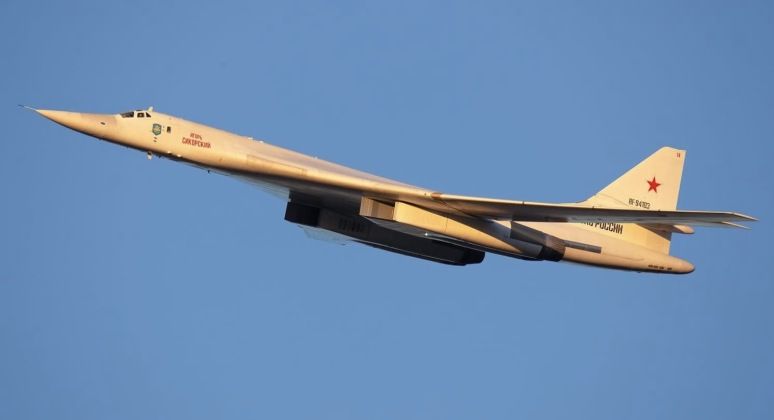
The Tu-160 is the largest combat aircraft ever placed into operational service, and can carry roughly 45 tons of weapons internally, including nuclear and conventional cruise missiles. Unlike many bombers, all weapons are carried inside the fuselage, reducing drag and preserving performance. The aircraft’s greatest combat strength is arguably its role as a long-range cruise missile carrier. Modern Tu-160Ms can launch weapons such as the Kh-101 and Kh-102 radar evading cruise missiles from over 5,000 kilometres away. This allows the bomber to strike targets while remaining well outside many enemy air-defence zones. The Tu-160M also possesses exceptional range and endurance, with their new NK-32-02 engines reduce fuel consumption and extend operational reach, making the aircraft one of the longest-ranged strategic bombers in existence. Combined with aerial refuelling, it can conduct missions across continents and oceans. Other than improved engines, a major advantage of the Tu-160M over older Tu-160s is its comprehensive avionics modernisation. The Tu-160M is the only intercontinental range bomber currently in production anywhere in the world.
