
World’s Largest Attack Submarine Announces Presence Near NATO’s Arctic: How Capable is Russia’s Yasen-M Class?
Military Watch Magazine Editorial Staff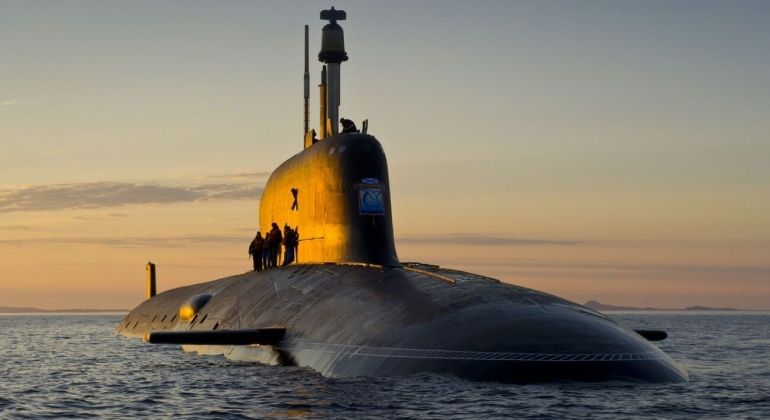
Yasen-M Class Attack Submarine
Following confirmation from Russian state sources on June 3 the Russian Navy Yasen class nuclear powered attack submarine Arkhangelsk had launched a P-800 anti-ship cruise missile near NATO territory in the Barents Sea, significant questions have been raised regarding the ship’s capabilities and its ability to challenge Western Bloc naval power in the region. The service entry of the Yasen class has represented a major game changer for the balance of power at sea, with the ships incorporating raft-mounted machinery, improved propulser design, acoustic coatings, and numerous noise-reduction measures which are assessed to have made the submarine class among the quietest and most challenging to detect in the world. This stealth capability is combined with large armaments and sensor suites, which can be accommodated due to both the efficiency of the design and to its sheer size at 14,000 tons.
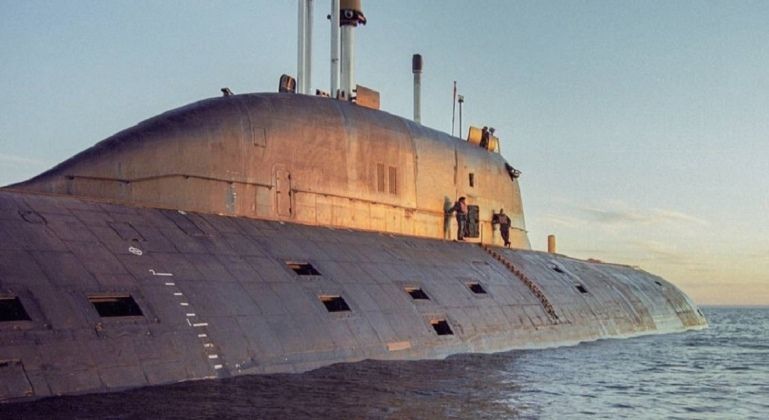
As the world’s largest attack submarine, the Yasen-M class ship integrates an unusually powerful sonar suite, with the distinctive massive spherical bow sonar occupying much of its forward section, forcing torpedo tubes to be relocated farther aft. While analysts have generally focused on the design’s strike and stealth capabilities, its situational awareness is one of the most important component of the design, with its enormous bow array intended to provide outstandingly long detection ranges. This reflects a recognition that in modern submarine warfare, the side that detects its opponent first often gains a decisive advantage, thus making it highly complementary to the major advances in quieting capabilities to make the Yasen class less detectable.. The relocation of the torpedo tubes indicated that the ship’s designers were willing to reorganise the entire submarine around acoustic performance. Additional flank arrays and towed sensors further enhance situational awareness.
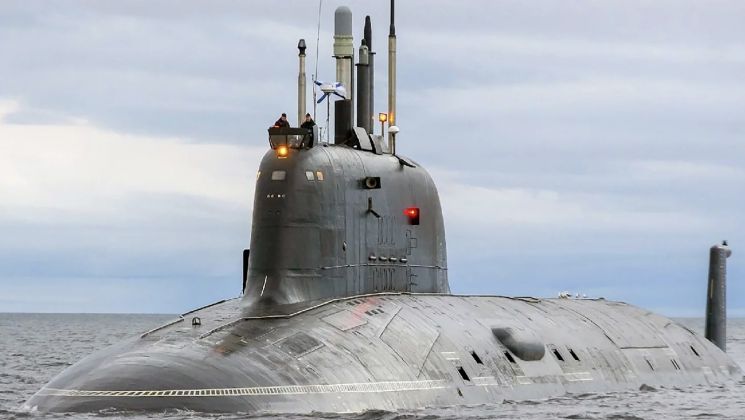
The development of the Yasen class was heavily influenced by the Soviet Navy’s experience tracking U.S. Navy carrier battle groups, with a primary requirement for the ships having been the ability to hunt and destroy such forces. Where Soviet designs often emphasised deep diving, high speed, and rugged construction as means of surviving combat, the Yasen class instead places much greater emphasis on avoiding detection altogether, with its design philosophy having very much been stealth-centric. The ship’s quieting measures are particularly extensive, with machinery is mounted on vibration-damping platforms, while considerable effort was invested in reducing hydrodynamic noise. Some Western naval observers have described the Yasen as the first Russian submarine class designed from the beginning with acoustic stealth as the primary design driver. The use of a use of a single-shaft propulsion arrangement, where Soviet era ships has twin-shaft configurations to prioritise high speeds, is another notable consequence of this.
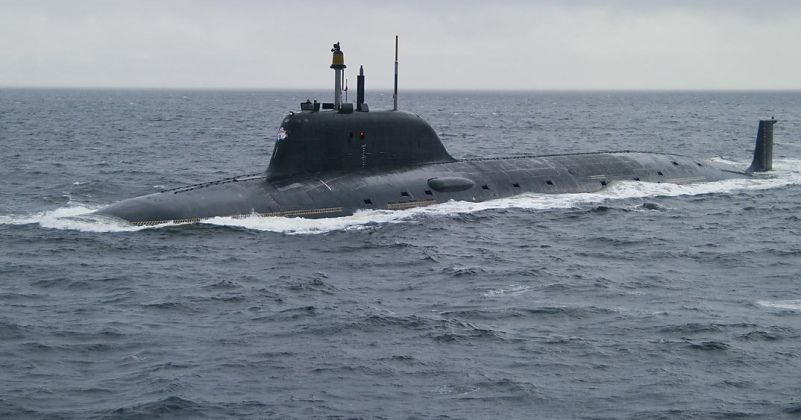
The Yasen was conceived as a hybrid design intended to replace two very different Soviet submarine types simultaneously, combing the hunter-killer role traditionally associated with the Akula class, with the long-range cruise missile strike role of the much larger Oscar II class, allowing a single ship to conduct anti-submarine warfare, anti-ship warfare, intelligence collection, and deep-strike missions against land targets. Few submarine designs anywhere in the world were intended from the outset to consolidate so many missions into one platform. One contributor to this versatility is a very high level of automation, with the ships requiring a remarkably small crew relative to its size at just 64 personnel, where smaller rival Western ships generally have crews of 100 more more sailors. The automation of engineering, weapons-handling, and ship-control functions are important contributors to this.
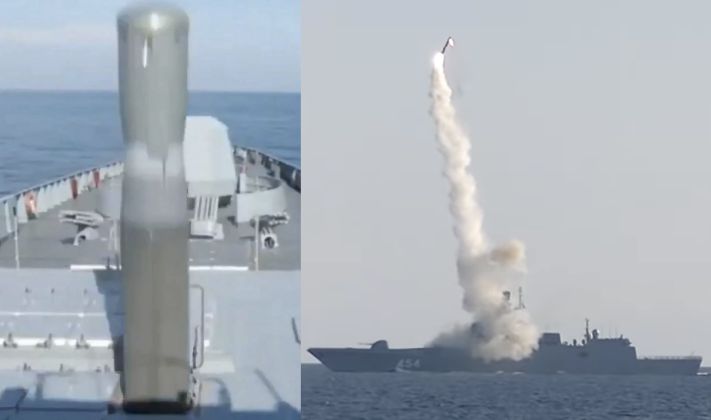
While the Yasen-M class had previously led the world in its capabilities, the integration of the 3M22 Zircon hypersonic cruise missile from 2025 significantly enhances its combat effectiveness for engaging high-value naval and land targets. Ships equipped with Zircon can threaten enemy carrier strike groups, major warships, command centres, and other strategic targets from much longer and safer distances. The missile’s most challenging characteristic for defenders is its combination of high speed, manoeuvrability, and relatively short warning time, with its Mach 9 speed reduce the time available for detection, tracking, decision-making, and engagement compared with conventional cruise missiles. The missile can perform evasive manoeuvres during its terminal phase, making it outstandingly challenging to intercept. The Zircon is a major force multiplier for Yasen class ships that allows them to pose much more serious threats to hostile surface ships in particular, including for their original primarily role of threatening U.S. carrier groups. No other submarine integrates a missile with comparable capabilities, although the YJ-20 under development in China promises a similar performance.
