
Russia Begins Developing New S-75 Checkmate Stealth Fighter Program’s First Flight Prototype
Military Watch Magazine Editorial Staff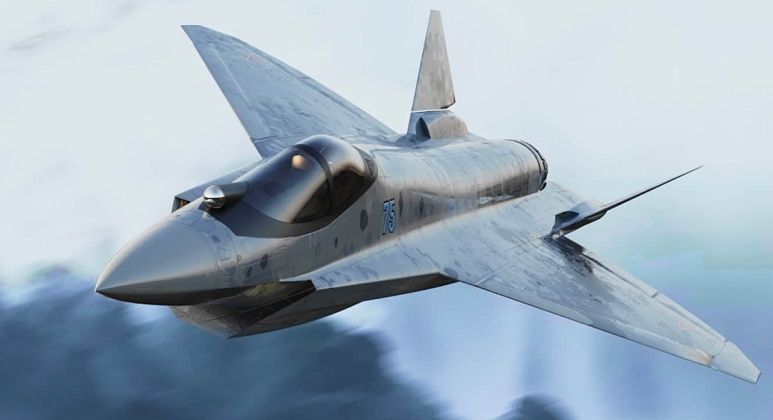
S-75 Checkmate Artwork Based on 2021 Mockup
The Russian state run United Aircraft Corporation has begun work on the first flight prototype commissioned for the S-75 Checkmate fifth generation fighter program, according to the corporation’s CEO Vadim Badekha. Local sources report that the aircraft, which was unveiled in 2021, is expected to fly as early as 2027, which would still place it several years behind schedule. At the time of its unveiling, the aircraft was projected to be ready for service entry in 2026, indicating a first flight scheduled for 2023 or earlier. The aircraft’s design has reportedly evolved very significantly, and will differ considerably from the mockup shown in 2021, and may have been refined based on advances made in the Su-57 fifth generation fighter program, with which it shares many of the same technologies. There have been indications that the fighter’s designation will change, and that the designation ’S-75 Checkmate’ was only intended for temporary marketing purposes.
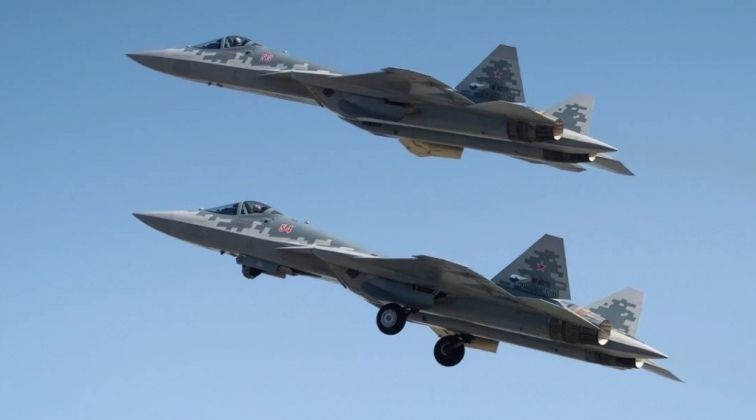
The S-75 program was reportedly initiated with the expectation of very low development costs, as it would use the same technologies as the Su-57 including a common engine, composite materials, weaponry, and a downsized derivative of the larger aircraft’s radar and avionics suite. This would mirror the development of the Chinese J-16 and J-10C, or the U.S. F-15 and F-16, as high-low combinations of twin and single engine fighter types in the respective ‘4+ generation’ and fourth generation. Well placed Russian sources report that although the S-75 program was initiated to provide a lower cost lower maintenance alternative to the Su-57 fifth generation fighter on export markets, there remains a significant possibility that the Russian Aerospace Forces will also show an interest in making procurements.
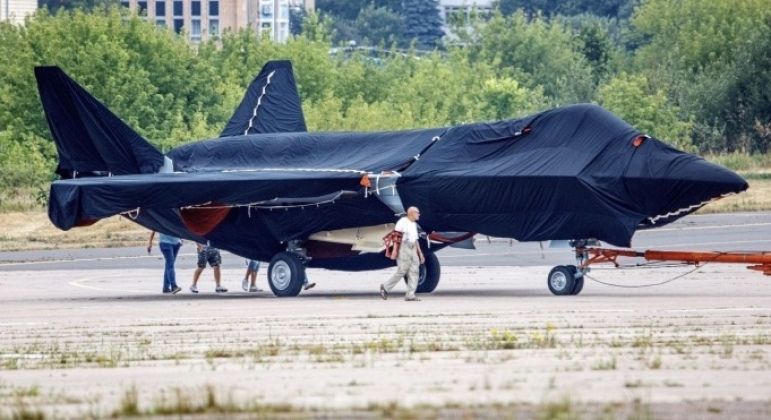
While the Su-57 program has recently made significant progress, with its first export delivery confirmed in November 2025, while combat testing has intensified and been highly diverse, the state of the S-75 program has remained highly uncertain. The program’s heavy reliance on export demand, and the high possibility that most clients will favour the Su-57 despite its higher cost due to its much longer range and higher combat potential, has raised the possibility that it would not be financed. Should the program achieve the outstandingly low maintenance needs and operational costs projected, it could be a game changer for Russian fighter exports, and for the combat capabilities of a number of security clients, with likely interested parties expected to include India, North Korea, and Kazakhstan.
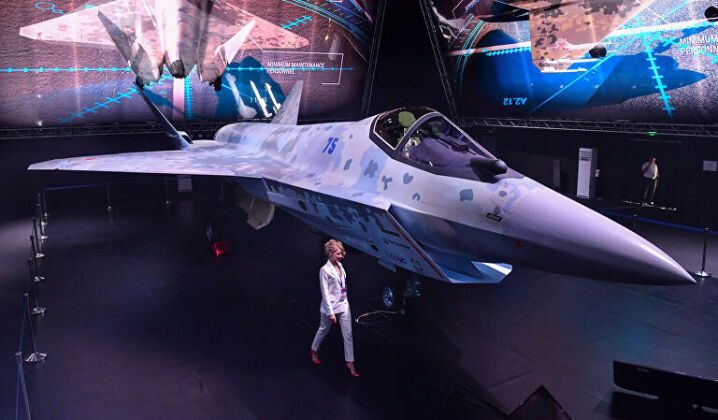
The United Aircraft Corporation was confirmed in May 2025 to have begun talks on the possible co-production of the S-75 with Belarusian industry, as the Soviet successor state has long been considered a leading potential client for the aircraft. The fighter’s significantly lower procurement and operational costs than alternative fighter types, the limited size of the Belarusian defence budget, the small size of Belarus’ airspace, made it appear optimal, as does the potential perceived need to counter the F-35s fifth generation fighters increasingly deployed across the country’s borders by NATO members. The Russian defence sector remains far ahead if its European rivals in moving past fourth generation technologies, although still far behind China and the United States as its fighters’ stealth capabilities and avionics are not considered on par with those of the J-20 or F-35. As this discrepancy grows, it now appears highly likely that the S-75 will not enter service before China itself begins to field sixth generation fighters in the early 2030s.
