
Russia’s Most Complex Tank Marks 50 Years in Service: How Capable is the T-80 Today?
Military Watch Magazine Editorial Staff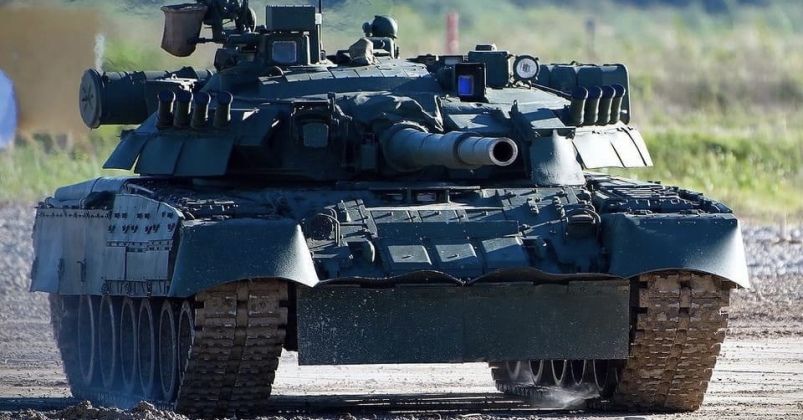
T-80 Main Battle Tank
Fifty years after its service entry in the Soviet Army in July 1976, the T-80 remains the most complex main battle tank ever serially produced in Russia, and was developed under one of the most ambitious armoured vehicle programs of the Cold War. Unlike the more numerous and economical T-72 main battle tank, which was designed as a relatively simple, low maintenance, and low cost effective backbone for the Soviet Army and for export clients, the T-80 was developed as a high-end platform for elite Soviet armoured formations. It combined the Soviet tank design philosophy of a low silhouette, powerful main gun, composite armour, and automatic loading system with a unique gas turbine engine derived from aviation technology.
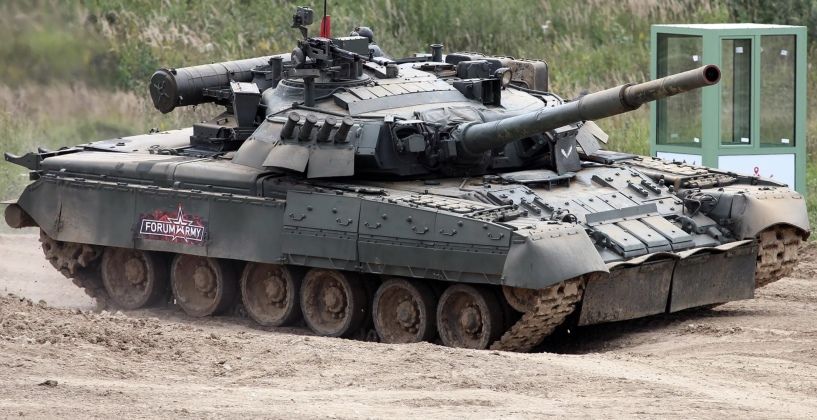
While both the T-72 and T-80 were derivatives of the T-64 tank, which had been introduced into service in 1964 as what was by far the most advanced tank in the world at the time, the T-80 was very considerably more costly and more complex to operation and maintain, with its design prioritising performance over cost or logistical concerns. The integration of a gas turbine engine provided exceptional acceleration and power compared with contemporary diesel engines, with the T-80 being the first tank in the world, and one of just two alongside the U.S. M1 Abrams, to integrate such engines. The engine allowed the tank to achieve a high power-to-weight ratio, giving it excellent mobility across difficult terrain and a superior performance in extremely cold conditions. These capabilities continue to be highly prized by Russian Army units, including for frontline operations in the Ukrainian theatre.
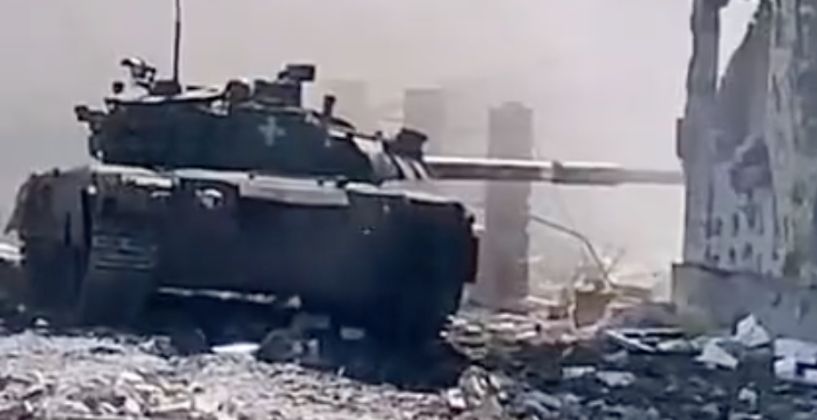
The investment in integrating a costly and maintenance-intensive gas turbine engine onto the T-80 reflected requirements to operate in the harsh environment of northern Europe, and to advance rapidly into hostile territory to spearhead the first armoured advances cutting off hostile forces in Central Europe. The T-80 was thus designed to be among the fastest and most agile tanks in service, and remains so until today, with an exceptional power to weight ratio. The tanks were also prioritised to integrate the most advanced fire-control systems the USSR could develop, with the T-80B and T-80U incorporating improved sights, laser rangefinders, ballistic computers, and better night-fighting capabilities, while the T-80UK integrated the first thermal sights on a Soviet tank.
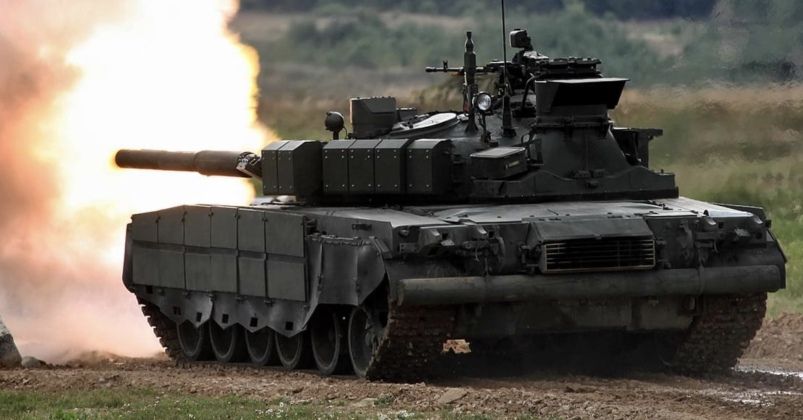
Compared to the most capable tank fielded by NATO during the Cold War, the U.S. M1A1 Abrams, the T-80 had several advantages. It was significantly lighter, had a smaller silhouette, accelerated faster, and required a smaller crew due to its autoloader. The ability to fire anti-tank guided missiles through its main gun also gave it a long-range engagement capability unavailable on many Western tanks of the period. The T-80U was the only tank with armour protection levels rivalling those of up-armoured M1A1 tanks, but achieved this without the major compromises to mobility seen on the Abrams. The Soviet tank’s integration of Kontakt-1, and then Kontakt-5, explosive reactive armour was a major factor improving its protection levels, complementing the major advances in composite armour technologies which the design pioneered.
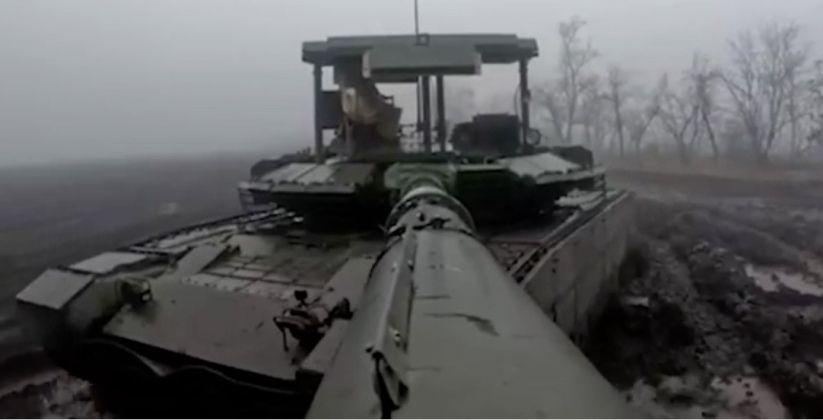
While the T-80 was intended to be developed into a next generation main battle tank with an unmanned turret and isolated crew compartment in the 1990s under the Black Eagle program, this terminated after the USSR disintegrated due to a lack of funding. Although other next generation tanks were developed under the Soviet Object 195 and Russian T-14 Armata programs, neither succeeded in providing a successor to the T-80. The cancellation of the T-95 program, and extreme delays to the T-14 program, have ensured that the T-80 remains the most complex and costly tank ever to enter service in Russia.
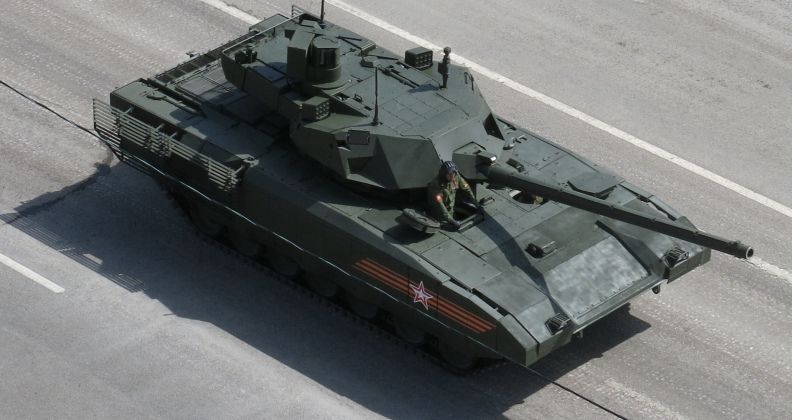
While T-80 production was terminated in 2001, against strong objections from the Army leadership, the decision was announced in 2023 to resume production after the tank demonstrated its advanced capabilities in frontline combat in the Ukrainian theatre. It has been speculated that the next variant brought into production could benefit from a number of technologies from the Black Eagle program, and possibly from the same next generation revised configuration. The T-80 was the last genuinely new design introduced into service in Russia, with the T-90 that is currently in production being an enhanced T-72 variant initially developed under the designation T-72BU. Indeed, the T-90 was developed by integrating many of the advances in armour protection and fire control technologies pioneered by the T-80UK onto the T-72 chassis. The T-80 program represented the peak of Soviet efforts to combine mobility, firepower, and advanced technology into a single operational platform, with the large scale on which it was procured despite its extreme cost reflecting the USSR’s prioritisation of advanced capabilities over cost effectiveness for its elite frontline units.
