
Russia Has Increased Orders For Su-30, Su-34 and Su-35 Fighters - Will the Su-57 Be Next?
Military Watch Magazine Editorial Staff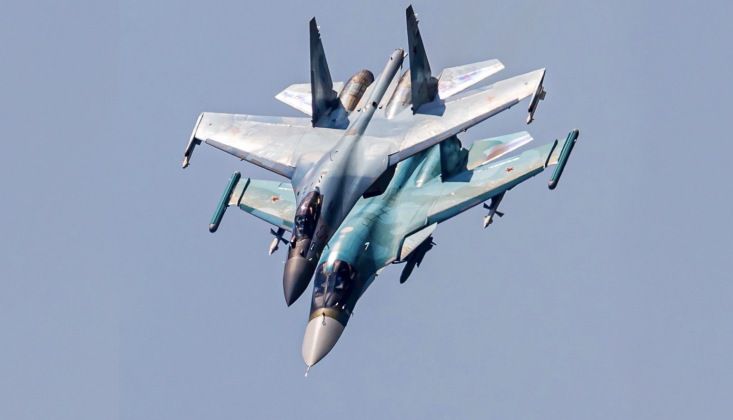
Russian Su-35 and Su-34 Heavyweight Fighters
In the final week of August 2020, the Russian Defence Ministry announcing the new contracts had been signed for the acquisition of 75 new heavyweight fighter jets based on the Flanker design, including 21 Su-30SM2 fighters, 24 Su-34 strike fighters and 30 Su-35 dedicated air superiority fighters. These orders supplement existing orders for 76 or more of each aircraft which were already under way under the current 2018-2027 State Armaments Plan, and an additional order for 25 Yak-130 jet trainers was also announced. Aside from trainers, Russia currently has five separate classes of fighter jet under serial production simultaneously, including the aforementioned three heavyweight fighter classes which make up the large majority of orders, as well as the newer Su-57 next generation heavyweight fighters and MiG-35 ‘4++ generation’ medium fighters. The MiG-35 is the latest fighter class to enter Russian service, and the first to integrate an nose mounted AESA radar, although orders have been limited to around two dozen aircraft due to the Russian Air Force’s strong preference for heavyweight aircraft. The lighter jet, although very advanced, is much cheaper both to built and to operate than Flanker jets, but is restricted to carrying a much smaller radar and lower weapons payload and to flying across shorter ranges and at lower altitudes. While further orders for MiG-35 jets can be expected under Russia’s current 2018-2027 State Armaments Plan, the fighter is primarily oriented towards export markets and will likely see the bulk of production models dispatched overseas to potential export clients such as India or Iran.
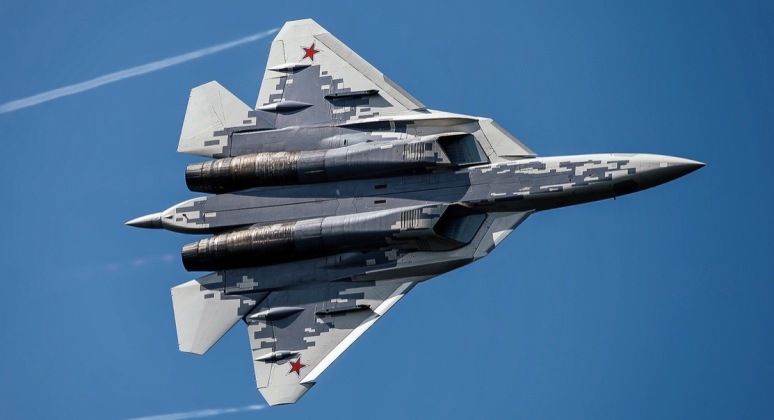
For Russia’s heaviest and most sophisticated fighter class, the Su-57, 76 fighters are on order under the current State Armaments Plan although none have entered service as of yet. The Defence Ministry’s propensity to place further orders for the jets is dependent on a number of factors, including how quickly next generation technologies such as laser weapons, artificial intelligence and Saturn 30 engines can be made ready for integration into production lines. Although the Su-57 is currently a highly capable fighter, integrating a range of advanced features not seen on other classes such as cheek and rear mounted radars and laser defence systems, the aircraft is primarily designed for combat at a much higher sixth generation level. Most of the required technologies have yet to complete development, meaning there is a strong incentive for the Defence Ministry to order Su-57 fighters in more limited numbers until the design further matures. Another major factor, however, is progress in the United States on its own sixth generation fighter programs - which have the potential to outperform the Flanker airframes currently in production and would lend urgency to fielding more Su-57 jets and to upgrading the design more quickly.
