
Russia Massively Expands Northwestern Military Infrastructure to Respond to Doubling of NATO Land Border
Military Watch Magazine Editorial Staff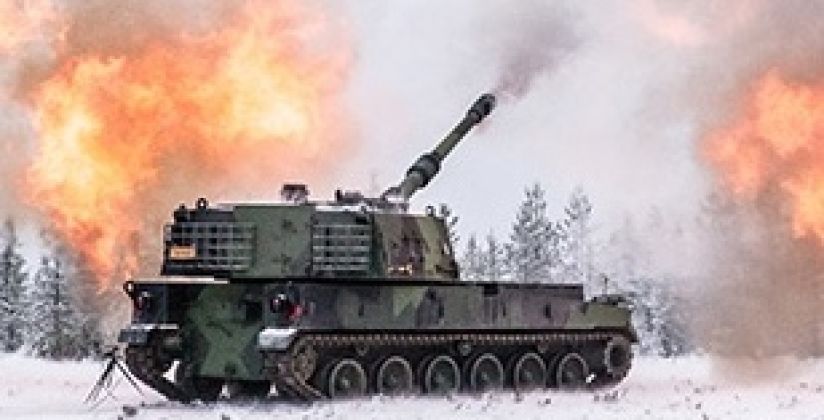
Finnish Army K9 Howitzer
The Russian Armed Forces have significant expanded their infrastructure along the border with Finland, as part of a broader effort to reinforce the country’s northwestern flank following Finland’s accession to NATO in April 2023. Satellite imagery and intelligence assessments indicate that new barracks, warehouses, vehicle parks, ammunition depots, and logistics facilities have been constructed, while long-abandoned Soviet-era bases have been reactivated. These projects appear designed to support a much larger permanent military presence once forces and equipment become available. Military analysts believe the infrastructure could eventually support around 80,000 Russian personnel near Finland, compared with approximately 20,000 before the expansion began in 2023. Some assessments suggest that after the war in Ukraine, Russia could deploy even larger numbers of battle-hardened personnel to the region as part of its planned force restructuring and expansion of the Leningrad Military District.
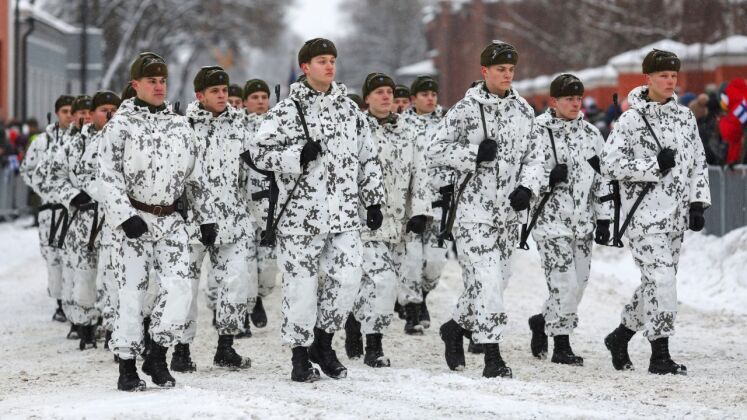
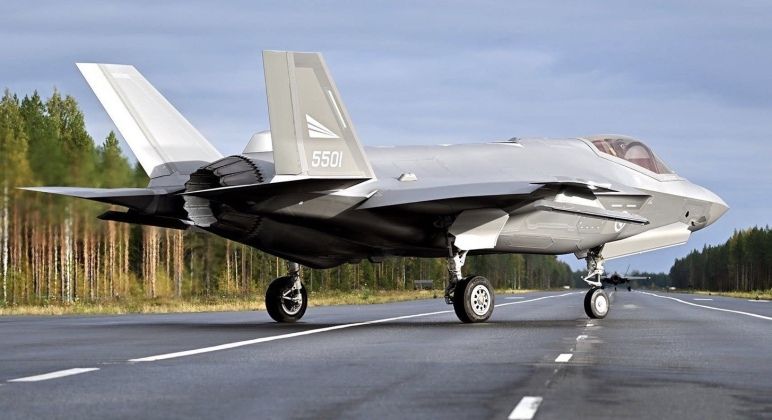
Of all the new countries to have joined NATO since 1989, Finland’s accession may be the most significant due to its strategic location, with the country’s 1,340km border with Russia doubling the length of NATO’s border with Russia. The border runs mainly through the uninhabited taiga forests and through sparsely populated rural areas. The lack of natural features such as mountains or rivers separating the two countries could make it particularly difficult to defend for either side. Before joining the alliance, Finland had already moved towards expanding its armed forces’ integration with those of NATO members, culminating in 2021 in a major order for 64 F-35A fifth generation stealth fighters which are expected to place significant further pressure on Russian air defences. Finland has also hosted NATO forces on its territory with growing frequency, including recently U.S. Air Force, U.S. Marine Corps, Norwegian and Italian F-35 fighter units as part of separate exercises. The country has taken important steps towards hosting NATO nuclear weapons in its territory, which is expected to culminate in a nuclear sharing agreement that would allow its F-35s to be equipped to launch nuclear strikes on Russian targets.
One of the most notable developments in Russia’s military buildup in response to Finland’s accession to NATO is the revival of the Petrozavodsk garrison in the Republic of Karelia, which is being modernised to serve as a major hub for the newly formed 44th Army Corps. Construction includes new accommodation blocks, maintenance facilities, storage areas, and supporting infrastructure capable of sustaining a large force close to the Finnish border. Satellite images also show increased military vehicle activity and site preparation for additional units. Russia is also building entirely new military installations, with a new complex near Novaya Vilga, close to Petrozavodsk, reported to be the first completely new Russian military base built since the disintegration of the USSR . Elsewhere, new infrastructure is under construction at Kirillovskoye, while existing facilities at Kandalaksha, Sapernoye, and Luga are being expanded with additional barracks, equipment shelters, and logistics capabilities.
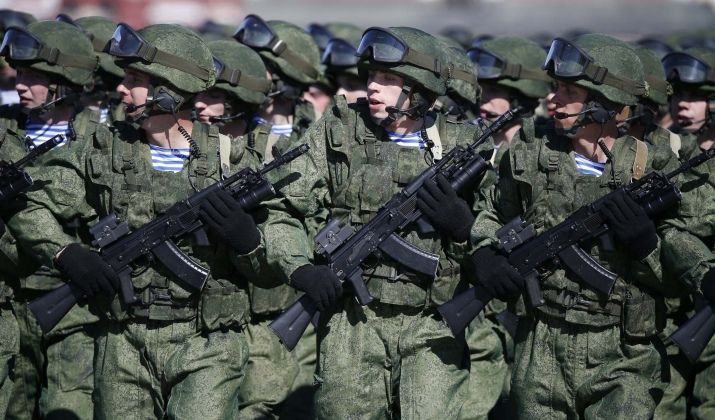
Beyond housing for personnel, Russia is investing heavily in logistics and support infrastructure. New ammunition depots, vehicle storage halls, maintenance workshops, fuel facilities, and transportation links are intended to sustain large formations over extended periods. These developments would enable rapid mobilisation and deployment of forces toward NATO’s northern flank while improving the resilience of Russian operations in the High North. Further north, the Pechenga area near the Norwegian border is undergoing extensive expansion. New barracks and storage facilities are expected to allow the base to accommodate around 17,000 personnel, a substantial increase over previous levels. The location is strategically important for protecting Russia’s Kola Peninsula, home to the Northern Fleet and a significant portion of the country’s sea-based nuclear deterrent, while also strengthening Russia’s Arctic military posture. It has been widely speculated that fighter regiments near Finland will be prioritised to receive Su-57 fifth generation fighters to respond to the significant concentration of F-35s on Finnish territory.
