
U.S. Marine F-35B Stealth Fighters Make First Ever Deployment Across Russia’s Northwestern Border: How Capable Are They?
Military Watch Magazine Editorial Staff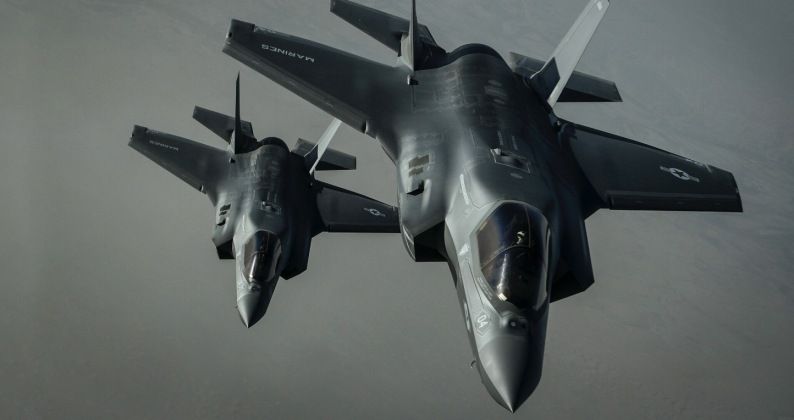
Two U.S. Marine Corps F-35B Fighters
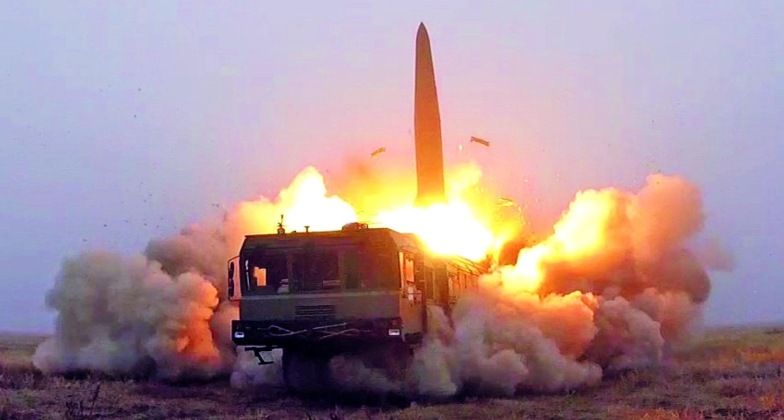
The U.S. Marine Corps has deployed F-35B fifth generation fighters for operations from Finnish highways in Tervo during Ramstein Flag 2026 exercises, highlighting the U.S. Armed Forces’ growing focus on dispersed combat operations to allow advanced airpower to continue to function away from major air bases. Although all variants of the F-35 can deploy from specially reinforced highways, the F-35B’s entirely unique short takeoff and vertical landing capabilities make the aircraft particularly optimal for operations from austere sites. This is particularly valuable when considering that Russia’s response to NATO’s military buildup near its territory, and to Finland’s accession to NATO in 2023, has been focused on deploying strike assets such as Iskander-M ballistic missile systems to destroy concentrations of high value aircraft on the ground.
The F-35B is by far the most costly fighter type in serial production worldwide, with a cost over 50 percent higher than the more widely used F-35A at close to $130 million per aircraft. The much greater range of locations from which it can deploy has been particularly highly valued by the U.S. Marine Corps, under what are referred to as Expeditionary Advanced Base Operations (EABO). Nevertheless, the F-35B has been widely assessed to be the most maintenance intensive fighter type in the world, other than possibly the F-22, which has raised questions regarding its suitability for operations from makeshift forward facilities. The Marine Corps in February 2025 announced plans to reduce procurement of the F-35B by 21 percent, which was widely assessed as likely to have been a response to the limitations of its suitability for EABO revealed during testing.
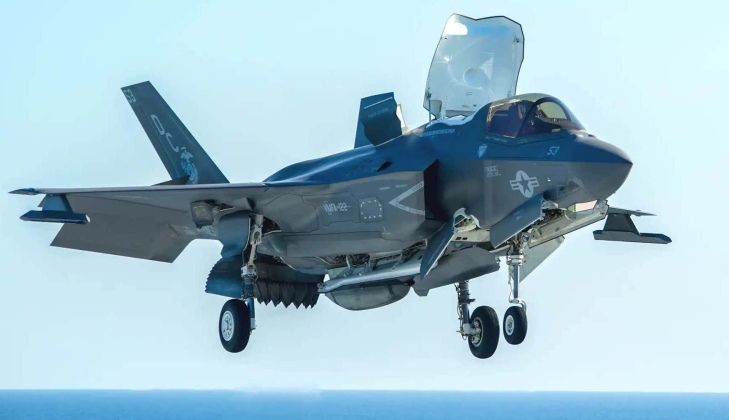
The F-35B suffers from serious limitations in its combat potential compared to other fifth generation fighter types, and while the F-35A already has less than half the range of Russia’s Su-57 and Su-34 fighters, the F-35B’s range is approximately 35 percent shorter still. The Marine aircraft’s manoeuvrability is by far the poorest of any 21st century fighter type, its supersonic flight is severely constrained, and its weapons bays are particularly small restricting both the types of weapons that can be carried and their quantities. These limitations, combined with the aircraft’s outstandingly high procurement and sustainment costs, have limited foreign interest particularly compared to the F-35A. Multiple NATO members have deployed F-35 fighters for exercises on Finland’s road network, including Royal Norwegian Air Force F-35A and Italian Air Force F-35B fighters.
