
Russia Begins Assembly of Myanmar’s Flankers; What is the Su-30SM Capable Of?
Military Watch Magazine Editorial Staff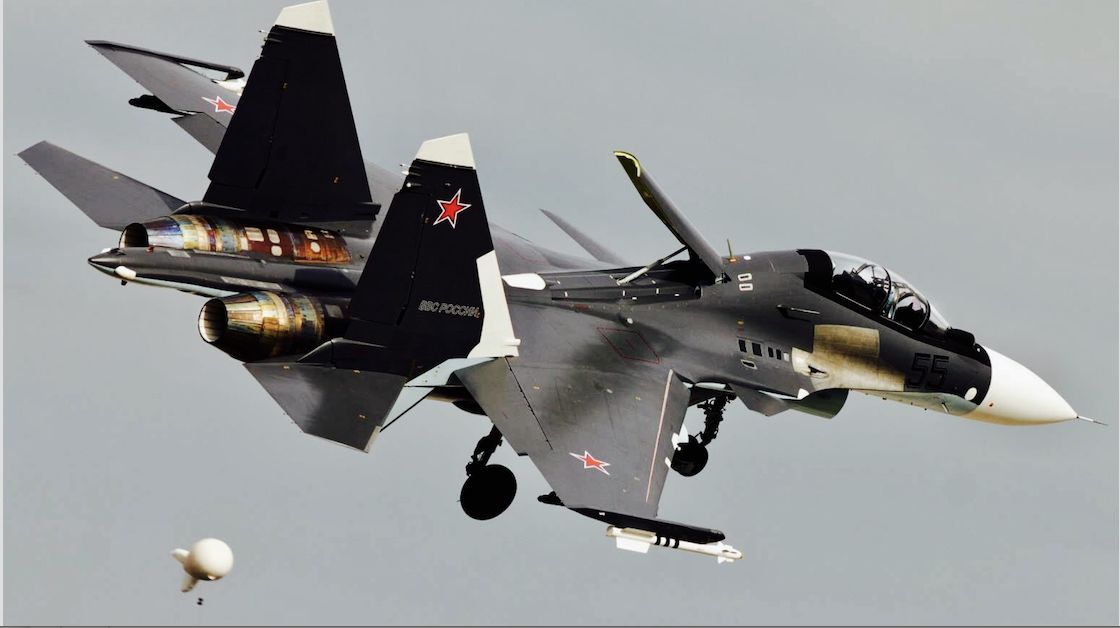
Russian Air Force Su-30 Twin Engine Fighter
The assembly of six Su-30SM Flanker heavy fighters for Myanmar’s Air Force has reportedly begun in Russia, following the placing of a preliminary order in January 2018 by the Southeast Asian state to modernise its aerial warfare capabilities. The order was placed during a visit by Russian Foreign Minister Sergei Lavrov to the country aimed at cementing ties between the two nations - which have expanded significantly in recent years. Myanmar Armed Forces Commander in Chief Min Aung Hlaing stated regarding the acquisition that the aircraft "are currently at the production facilities. The contract will be implemented.” The sale came in spite of considerable Western pressure on both parties, which have sought to cut Russia’s export earnings from defence sales by threatening potential clients with economic sanctions while also restricting Myanmar’s access to modern weaponry - as part of a campaign to undermine its military leadership which has long opposed what it alleges is Western interference in its domestic affairs.
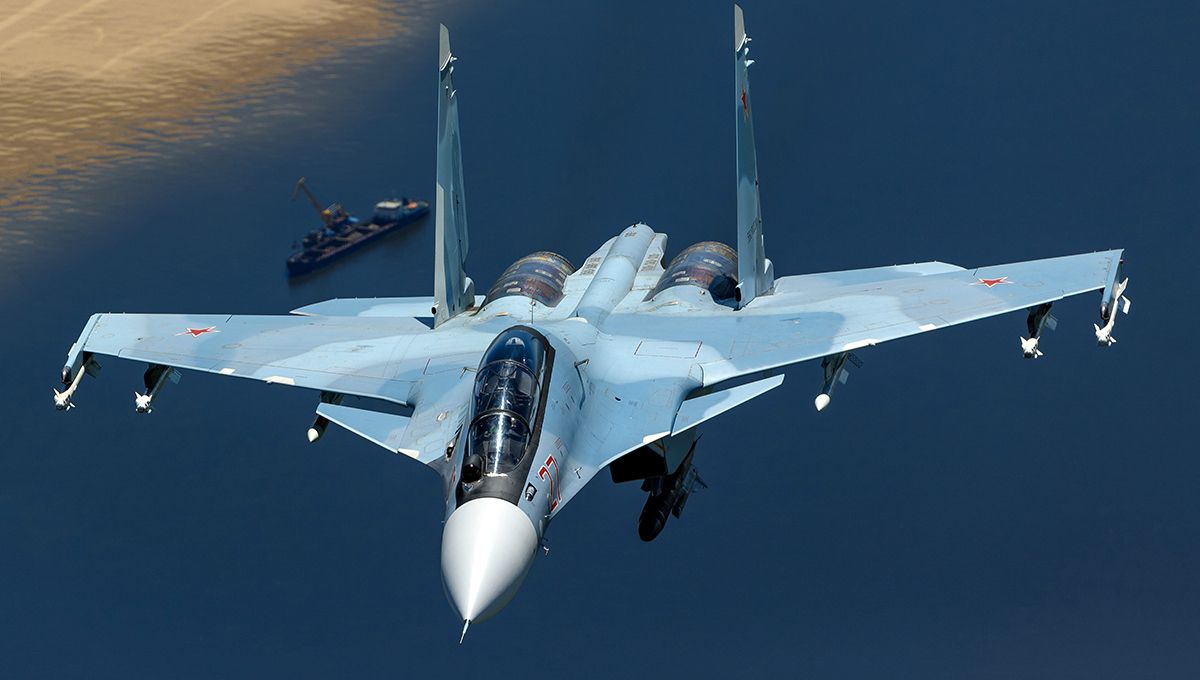
The Su-30SM will provide Myanmar’s Air Force with its first ever heavyweight twin engine fighter, having previously relied on the lightweight single engine J-7 and JF-17 and the medium weight twin engine MiG-29. The aircraft represents one of the most modern fighters deployed by a Southeast Asian state, and the is most sophisticated of all Su-30 variants in many of its capabilities. The fighter inherits advanced air to air combat capabilities from the Soviet Su-27 air superiority fighter on which it is based, but also integrates advanced air to ground and anti ship capabilities and is comparable with a wide array of highly potent specialised munitions to fulfil these roles such as the Kh-31 and Kh-59. The fighter can carry a sizeable payload of up to 12 missiles, double that of the MiG-29 and JF-17, and integrates two dimensional thrust vectoring systems for extreme manoeuvrability. With a long range and a twin seat configuration, allowing it to accommodate both a pilot and a weapons systems officer, the Su-30SM is well suited to a strike role and the penetration of enemy airspace, and if suitably armed can engage enemy aircraft and ground targets simultaneously - with the pilot operating air to air weaponry while the officer operates air to ground systems.
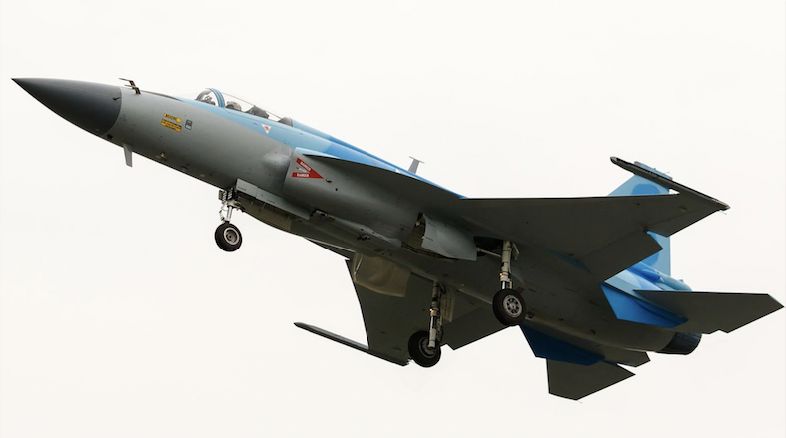
The Su-30 in Myanmar’s hands is expected to serve in a complementary role to newly acquired JF-17 fighters, including the JF-17B, as the MiG-29 and J-7 are eventually phased out of service. Further orders for an additional six Flankers are expected once the initial half-squadron is delivered, making Myanmar one of the first foreign operations of the SM variant of the Su-30. The Russian Air Force placed its first order for this variant in 2012, requesting 60 aircraft, and the platform performed its first flight that year. The aircraft have been extensively combat tested in Syria as the elite of the Russian Air Force presence in the country alongside the single engine Su-35, a more advanced single engine Flanker derivative. While the Su-30SM lacks the advanced Irbis-E radar of the Su-35 and Su-27SM3, its N011M Bars radar is still formidable with a maximum detection range 400 km and a search range of 200 km. The fighter will provide Myanmar’s Air Force with an overwhelming qualitative edge over neighbouring Bangladesh, with the neighbouring South Asian state expected to place its own order for high end Russian fighter jets in the near future - possibly also the Su-30 or the lighter but more sophisticated '4++ generation' MiG-35.
