
Myanmar Cements Defence Ties with Russia; Orders Six Su-30 Air Superiority Fighters
Military Watch Magazine Editorial Staff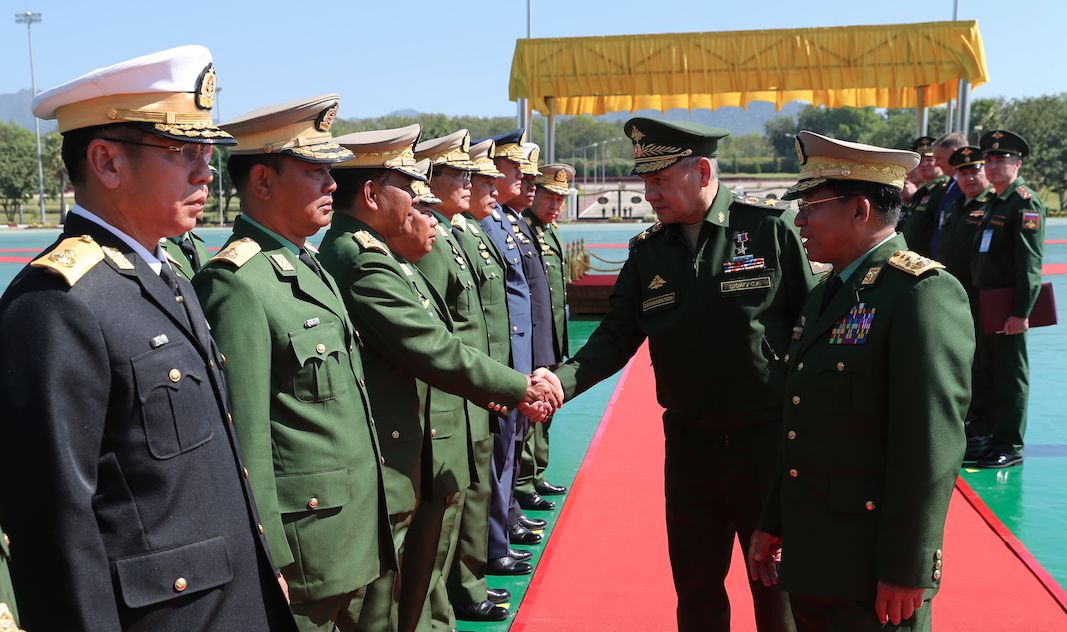
Defence Minister Sergey Shoigu in Myanmar
Russian Defence Ministry
During a visit by Russian Defense Minister Sergey Shoigu to Myanmar the South East Asian republic signed an agreement to purchase six Su-30 air superiority fighters. These are set to form the elite of the country's Air Force - currently comprised primarily of lighter platforms such as the MiG-29 and J-7. Russian Deputy Defense Minister, Lieutenant General Alexander Fomin, stated in regards to the purchase: "During the Russian defense minister’s visit an agreement was reached under which Myanmar would purchase six Su-30 planes." He noted that the elite Russian platforms "will become the main fighter aircraft of Myanmar’s air force to protect the country’s territorial integrity and repel any terror threats." Considering the small size of the purchase, this indicates that Myanmar could potentially be planning to make further purchases in future - and considering the country's substantial $2.1 billion defence budget expansions to the fleet in future remain possible.
According to Minister Fomin, Russian arms' previous performance to the satisfaction of Myanmar's armed forces was key to facilitating purchase of the more costly high performance Sukhoi platforms. He noted: "These are, in particular, the Mi-24, Mi-35 and Mi-17 helicopters, as well as the MiG-29 fighter aircraft, the Yak-130 combat-capable trainer aircraft, the Pechora-2 air defense system and other equipment." He further reported that over 600 members of Myanmar's military were currently studying in Russia’s higher military educational institutions, stating: "All of this helps tighten security in Southeast Asia and the Pacific Rim in general."
With Myanmar facing growing tensions with the Western bloc, the country has long invested in Russian and to a lesser extent Chinese and North Korean arms to deter any potential attacks. The country's position makes it key to Chinese energy security as a transit route for fossil fuels, which has increased its importance in the growing conflict between the Western bloc and China. With the country under harsh Western sanctions, Russia, China, North Korea and increasingly Pakistan have emerged as its key defence partners. Russia and China have both notably taken measures to veto Western drafted UN resolutions against the country - and defence and economic ties between the small Asian nation and the two superpowers are set only to strengthen in future. In 2016 the defence establishments of both Russia and Myanmar signed a new military cooperation agreement establishing a legal framework for cooperation in military medicine, peacekeeping, search and rescue and naval cooperation among other fields. Defence Minister Shoigu's visit in 2018 was a step towards strengthening this critical partnership, and the two countries signed an intergovernmental agreement on a streamlined entry for warships in Russia’s and Myanmar’s ports during the visit - a key asset to Russia as it attempts to expand its military presence in the Pacific.
