
Russia Announces Adaptations to T-14 Next Gen. Tank Based on Ukraine War Lessons
Military Watch Magazine Editorial Staff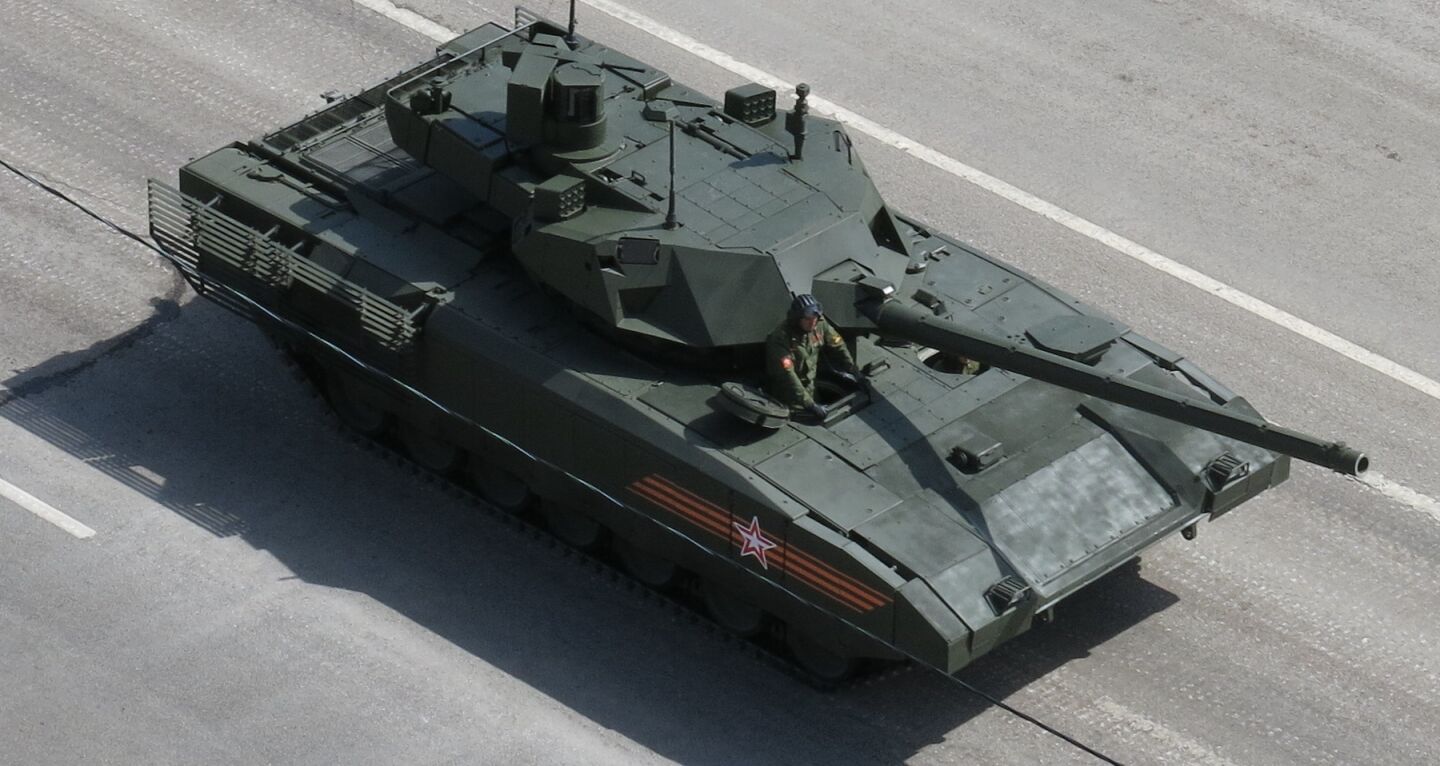
Russian T-14 Pre-Production Tank
Russia’s T-14 Armata main battle tank is undergoing further development informed by experience gained during the war in Ukraine, according to Alexander Potapov, chief executive of the tank’s manufacturer, Uralvagonzavod. The vehicle is also undergoing phased operational trials with the Russian Armed Forces, reflecting the continued effort to refine it before introduction wider introduction into service. Potapov’s remarks, reported by Russian media on October 11, indicate that work on the T-14 continues despite the Russian defence industry’s emphasis on producing and modernising existing armoured vehicles to meet immediate wartime requirements. He said a range of improved ammunition types had already been developed for the tank, with further work under way to enhance their characteristics and optimise the tank’s ammunition load in light of combat experience.
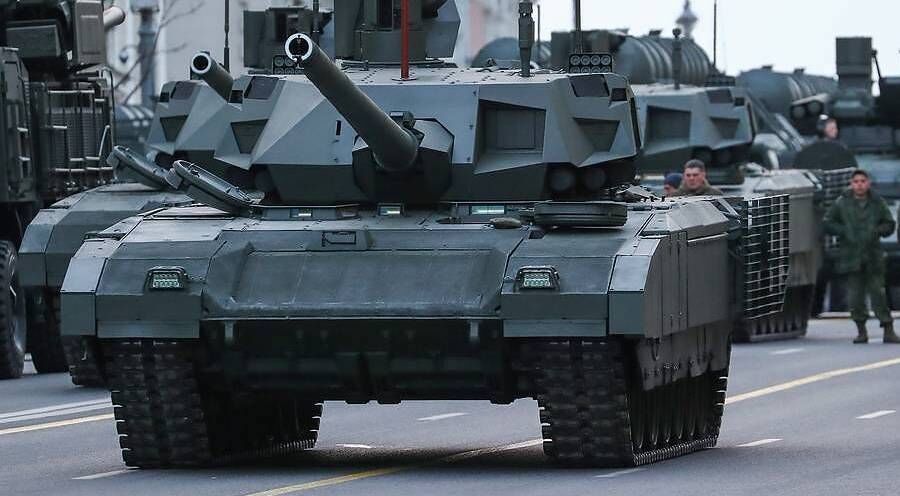
Potapov’s statement was far from the first to indicate that the T-14’s design was being adapted based on combat experience in Ukraine. On August 22, 2023, TASS reported another defence-industry source as saying that the T-14 had been used several times in the theatre of operations, and was being modified on the basis of combat experience there. Russia has adapted its main battle tanks significantly to respond to changes in how armoured operations are conducted, including adding protection against top attacks by loitering munitions and missiles, prioritising the integration of active protection systems, and enhancing these systems to provide a defence against drone attacks. First-person view drones have also been integrated onto the T-90M, which is Russia’s most capable operational tank.
Modifications to the T-14 are expected to in many respects mirror those being made to operational tanks like the T-90M. The T-14’s design dates back to the late 1980s, when the Soviet Union developed a next generation tank under a program widely referred to as the T-95. The cancellation of this program after considerable delay in the 2000s was followed by the development of the T-14 as a follow-on program built around a close derivative of the design. While the T-14 was expected to be the world’s first fourth generation tank to enter service in the 2010s, delays allowed the Chinese Type 100 to achieve this landmark goal in 2025 with a more advanced and better refined design, which appears to itself have responded to lessons from the Ukrainian theatre.
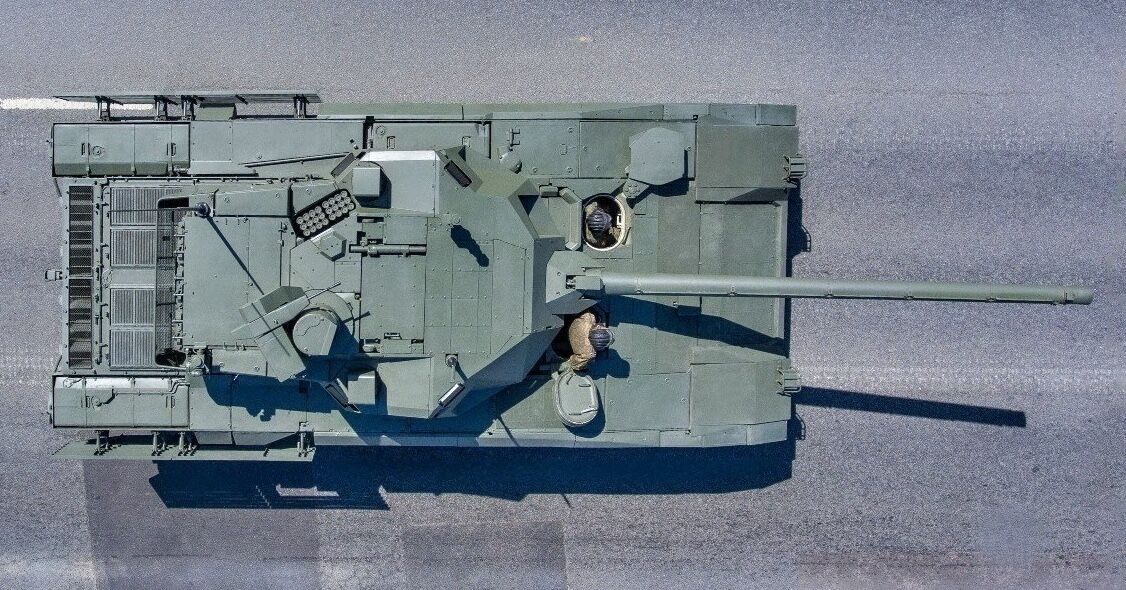
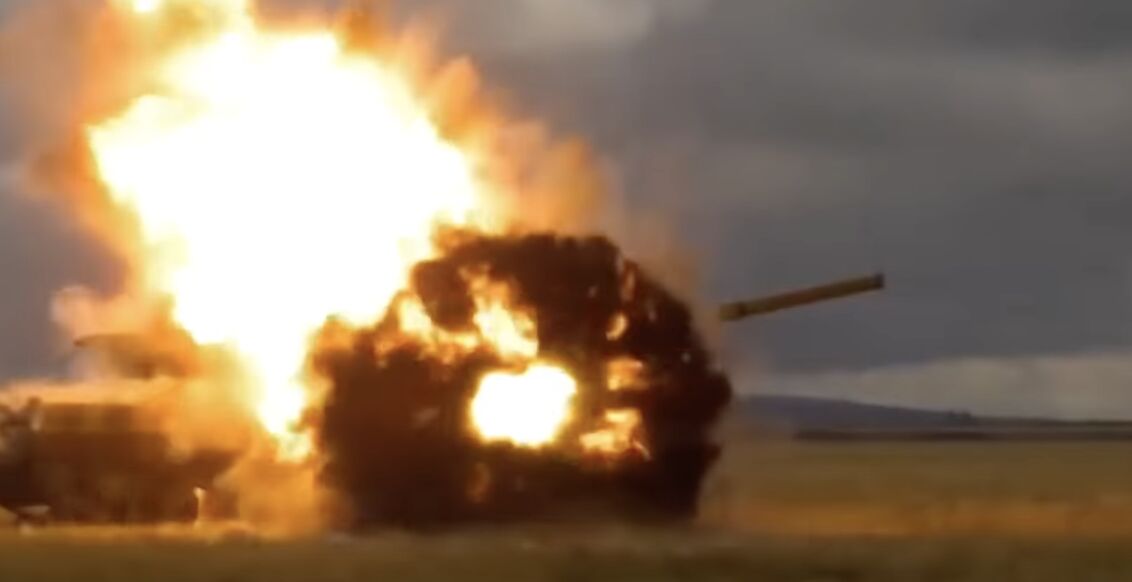
The T-14 was first unveiled in 2015, and while its imminent service entry has been announced multiple times ,this has consistently failed to materialise. This has left the future of the program highly uncertain, with Russia having last introduced a genuinely clean sheet tank design in 1964 with the T-64 tank, on which the designs of its current T-72, T-80 and T-90 are loosely based. Confirmation of continued work on the tank follows the widespread circulation of footage of a pre-production T-14 at a firing range in mid-September. The T-14 employs a multi-layered defensive concept combining passive composite protection, explosive reactive armour, active protection systems, electronic countermeasures, smoke and aerosol launchers, and crew compartment isolation into a single integrated defensive package. Should it enter service, it would provide an overwhelming advantage over all rival tank designs outside China.
