
Footage Shows World’s Most Advanced Tank in New Camouflage in Chinese City: What Makes the Type 100 So Dangerous?
Military Watch Magazine Editorial Staff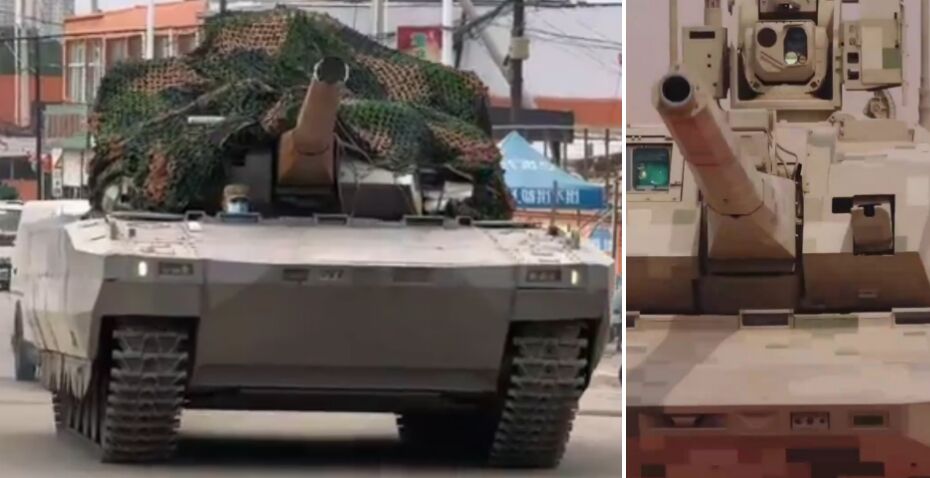
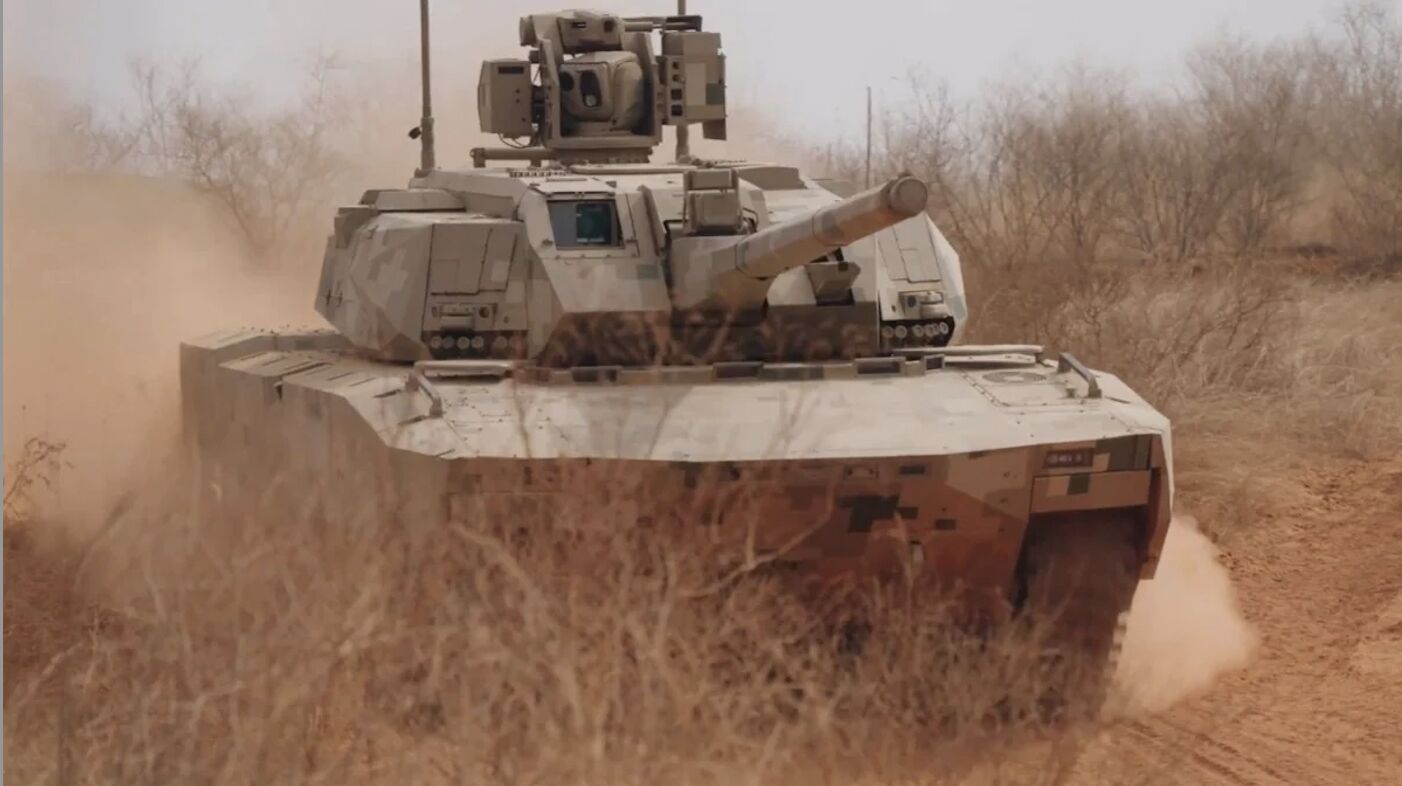
Type 100 in New Colours (left) and Type 100 Turret
Footage from an unknown urban location in China has shown the Type 100 next generation main battle tank in previously unseen colours in active service. The footage follows unconfirmed reports from local sources that the vehicle is being brought into service in larger numbers, following its unveiling as the first tank in the world of its generation in September 2025. The Type 100 has cemented China’s position of leadership in armour development, where previously the USSR and Russia were expected to lead the world into the new generation with the respective T-95 and T-14 programs. Work on the T-95 was terminated in the early 2000s, while its less ambitious derivative the T-14 has suffered from extreme delays leaving its future highly uncertain.
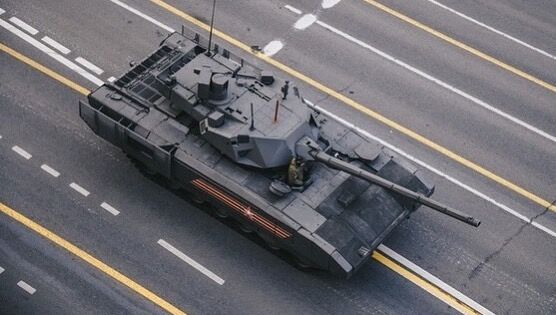
The Type 100’s design is heavily optimised for an era of network-centric warfare on battlefields dominated by drones and loitering munitions. The vehicle places a particularly high emphasis on data connectivity, active protection, and multi-domain coordination, with Chinese military commentators having described this as part of a broader trend towards networked joint operations. The tank was designed to serve as a nodes within an integrated combat structure rather than acting as an isolated platform. It accordingly prioritises active protection systems over heavy armour, allowing for a much higher degree of mobility and a smaller profile.
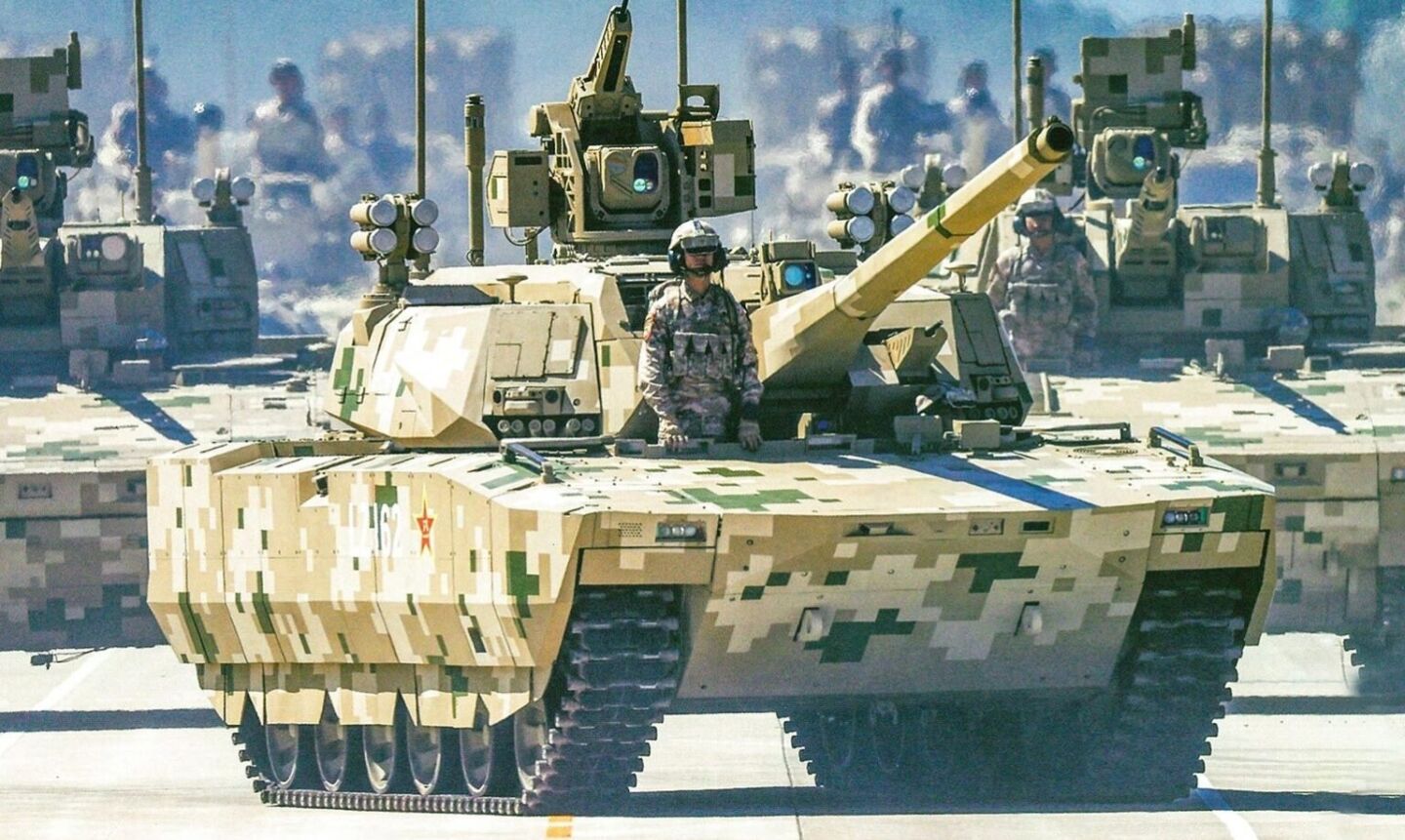
Where previously the next generation of main battle tanks were expected to integrate larger main guns, which would allow for greater armour penetration, lessons from modern combat indicate that guns are primarily relied on for anti-infantry roles. Tanks instead integrate guided missiles and network with loitering munitions to more effectively engage hostile armour at long ranges. A smaller gun further contributes to the Type 100’s relatively light weight. New combined arms exercises involving the Type 100 have seen the tanks operate closely alongside new rocket artillery systems, electronic warfare teams, and reconnaissance drones, highlighting changes in doctrine that are being facilitated by technological advances.
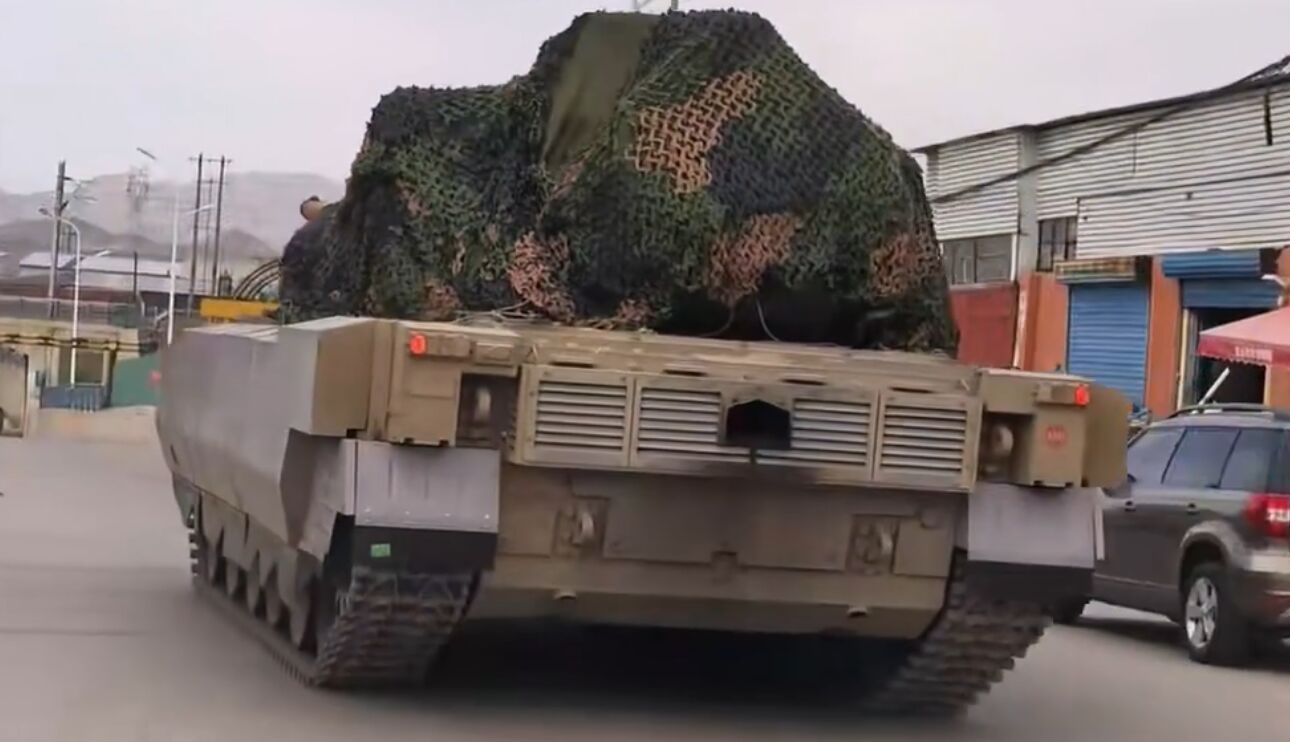
The Type 100 uses both active and multi-spectral defence systems, with two GL-6 active protection systems managed by four phased-array radar panels providing 360-degree threat detection against anti-tank missiles, rockets, and top-attack munitions. Its laser warning receivers, ultraviolet sensors, and multi-band optical detection arrays provide further protection against guided weapons. The irregular polygonal shapes on the hull and turret also reduce hit probability. Much like the unrealised Russian T-14, the crew of the Type 100 is enclosed in armoured capsules within the hull, as advances in autoloader and remote turret technologies allow it to achieve a much greater degree of crew protection.
The Type 100 is in most respects the most advanced main battle tank in the world, with its advanced capabilities expected to result in a near term end to production of China’s primary tanks from the previous generation the Type 96 and Type 99. Its development has occurred at at time when growing questions have been raised among Western analysts regarding whether ongoing Western tank programs such as the British Challenger 3 and U.S. M1E3 Abrams will be obsolete before they enter service, with future designs seen outside China widely expected to follow the example set by the Type 100. China may be close to a decade ahead of the world in bringing a next generation tank into service, with South Korea and Russia potentially being the next to do so with the respective K3 and T-14 programs.
