
Republic of China Defence Ministry Highlights Key Lessons From U.S.-Iranian War For Future Taiwan Strait Conflict
Military Watch Magazine Editorial Staff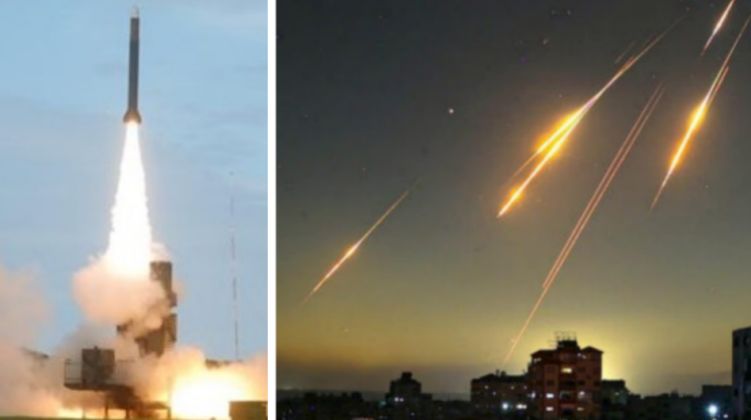
ROC Air Force Sky Bow Launch (left) and Iranian Missile Strikes on Israel
The Republic of China Ministry of National Defence has announced a response to the new perceived threat posed by hostile missiles, rockets, and drones, specifically citing the lessons from the ongoing U.S.-Iranian War that began on February 28. The Ministry announced plans to develop develop and acquire low-cost air defence weapons capable of intercepting long-range rockets based on existing missile technologies, and other unspecified steps to establish appropriate defensive capabilities and ensure defensive combat resilience. The Ministry has been invited to submit a special report on lessons learned from the U.S.-Iranian conflict regarding air defence and anti-missile systems, low-cost interception methods, and drone countermeasures, to the legislature in Taipei on March 16.
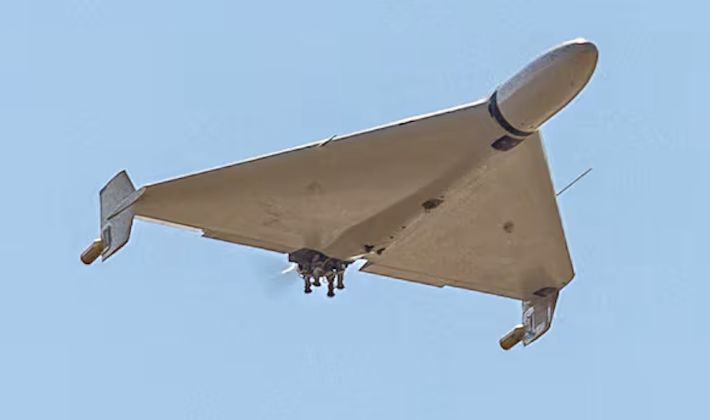
A report by the Defence Ministry has drawn strong parallels between Iranian strike capabilities, which have proven highly effective against the U.S. and its strategic partners’ air defences, and the projected "multi-wave, multi-missile" aerial threats which the Chinese People’s Liberation Army is expected to employ in the event of a new Taiwan Strait war. The Chinese People’s Liberation Army and the Republic of China Armed Forces remains officially in a state of civil war, as both Beijing and Taipei claim to be the sole governments of the Chinese nation. The Defence Ministry noted the ongoing development of the “Taiwan Shield,” otherwise known as the T-Dome, to constructed a layered, highly sensitive, and effective interception-based air defence system suitable to counter emerging challenges.
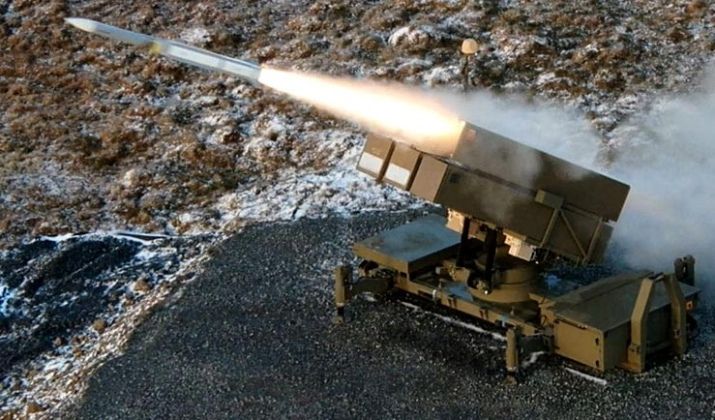
The Defence Ministry has stated that it has established long-range early warning radar and a multi-dimensional surveillance system, and is planning to acquire new mobile radar systems. It is currently planning to procure Tian Kung IV mid-level anti-ballistic missile system developed by the National Chung-Shan Institute of Science and Technology, alongside U.S. MIM-104 Patriot systems and short range NASAMS system. Regarding low-cost interception methods, the Ministry stated that to prevent the People’s Liberation Army from using large quantities of inexpensive weapons to deplete Republic of China Air Force’s air defence missiles, it will develop and acquire low-cost air defence weapons capable of long-range interception. The Ministry also confirmed plans to introduce high-tech and artificial intelligence battlefield management systems to shorten decisionmaking time and increase system response time.

Further measures announced by the Defence Ministry include simultaneously procurements of passive defences including decoys, false targets, satellite positioning jamming systems, and threat signal generator. The Ministry also outlined plans to pursue international industrial exchanges and cooperation in order to link mature technologies in domestic and foreign commercial markets to improve drone countermeasure capabilities, while adopting small-batch procurement and testing methods to ensure continuous improvements. Despite considerable investments being made in bolstering air and missile defences, the viability of sustaining even a week long defence against the People’s Liberation Army remains in serious question, with the much more limited Iranian missile and drone arsenals having proven highly effective against the combined collective defences of the United States, Israel, and multiple Arab Gulf states. The scale and sophistication of strikes from the Chinese mainland are expected to be very considerably greater, while the Republic of China Armed Forces rely on largely the same U.S.-origin air defence technologies as those deployed in the Middle East.
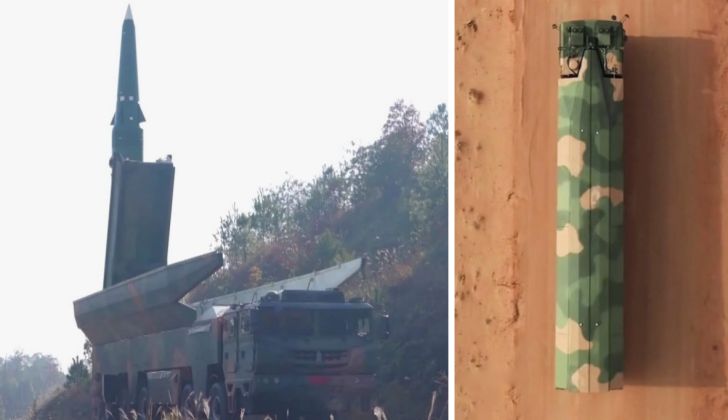
On March 5 Vice Chairman of the Forward Auxiliary Association Li Wenzhong warned that much of the equipment the Republic of China Defence Ministry is ordering was designed to "fight yesterday instead of tomorrow's war.” Regarding PAC-3 anti-ballistic missiles for Patriot air defence system, he observed that although these were sophisticated and formed the core of the Republic of China’s air defences, they limited viability against attacks by cruise missiles, guide rockets, and unmanned aircraft, adding that they were outstandingly expensive, particularly when considering that they were designed to be launched in pairs against incoming targets. Such launches were wholly unaffordable and unsustainable against the Chinese mainland’s vast ballistic missile arsenal, with the PAC-3’s cost ensuring that the surface-to-air arsenal would be exhausted quickly.
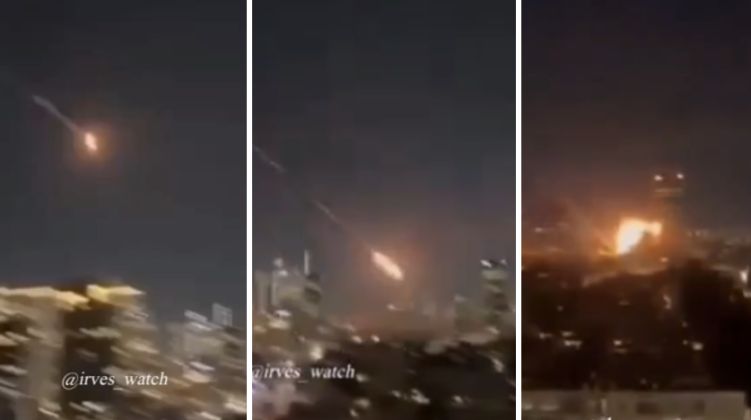
The ongoing U.S.-led war effort against Iran has drawn further attention to the issue of an expending of anti-ballistic missile stockpiles, with U.S. and Israeli stockpiles having been diminished very rapidly at relatively little cost to Iran, forcing the U.S. to withdraw systems and interceptors from bases across much of the world to replenish its capabilities. The sustainability of this should hostilities continue remains very limited. This has been aside from the issue of the questionable effectiveness of missile defences against even older types of ballistic missiles, with the failures of the Patriot system in the Gulf region having been observed repeatedly, even when large salvos of multiple anti-ballistic missiles are launched. Higher level missile defence systems deployed in Israel have also been filmed repeatedly failing against Iranian strikes launched using hypersonic glide vehicles, a new capability that it did not previously utilise. The People’s Liberation Army’s hypersonic strike capabilities are notably very considerably greater than those of Iran.
