
Republic of China Infantry Getting Anti-Tank Firepower Boost with New Enhanced Kestrel II Missile
Military Watch Magazine Editorial Staff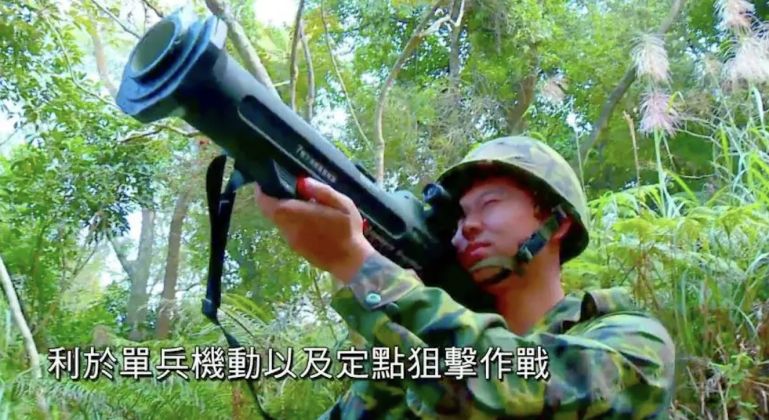
Republic of China Army Serviceman with Kestrel Anti-Tank Missile
The Republic of China state defence research institute, the National Chung-Shan Institute of Science and Technology, has publicly unveiled a next-generation handheld anti-tank missile system that promises to provide a significant improvement to infantry’s ability to counter adversary armour. The new system, the Kestrel II, was reported to be able to achieve 67 centimetres of armour penetration in testing, and to be able to engage targets at 500 meter ranges. The Kestrel II is considerably more capable than the original Kestrel anti-tank missile system which began development in 2008, and entered service in 2015, when measured by both range and armour penetration. The Kestrel II’s caliber grew from 66mm in the original to 96mm, requiring a larger launcher tube, and indicating that it may be considerably heavier than its predecessor.
The Republic of China Army has suffered from growing obsolescence of many of its conventional assets, has can be seen clearly when observing its inventory of main battle tanks. The backbone of its armoured fleet is formed of 480M60A3 that were transferred from U.S. Army surpluses for approximately $1 million per vehicle in the 1990s, and are decades past obsolescence. Similarly obsolete CM-11 Brave Tiger tanks, a derivative of the M60 and M48 designs, and older Korean War era M41 and M48 tanks, have also continued to be relied on. With Republic of China Army main battle tanks on average being the least capable of those of any major army in the world, this has forced the service to rely very heavily on man-portable anti-tank missile systems to provide an asymmetric means of countering modern armour.
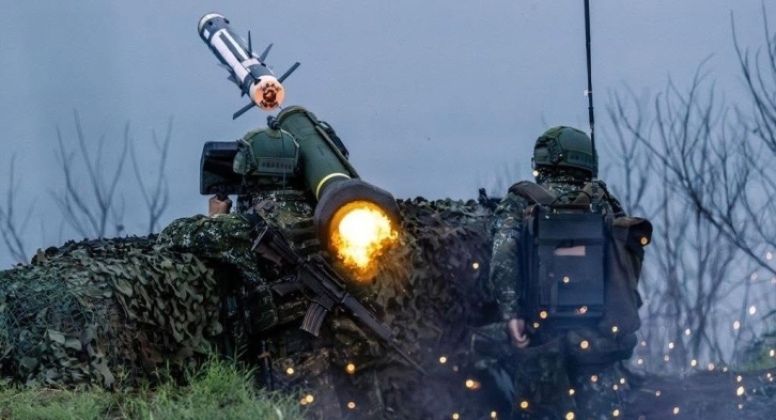
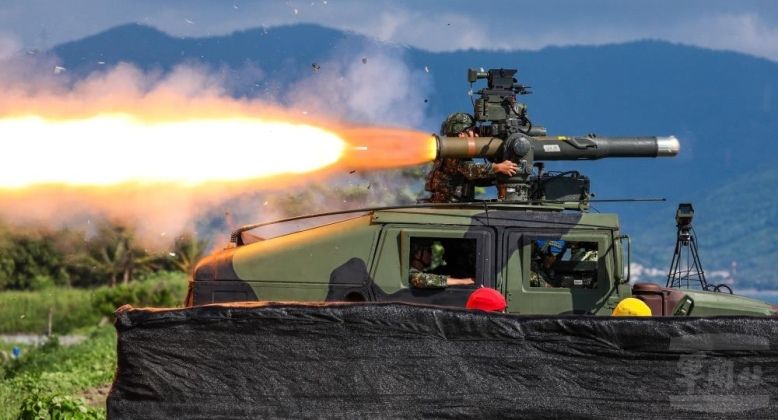
In parallel to the development of the Kestrel II, the Republic of China Army has continued to expand its stockpiles of U.S. BGM-71 TOW and FGM-184 Javelin man-portable anti-tank missiles, and in February saw further procurements approved by Washington. The service has fielded the older TOW missiles since the mid-1970s, which relies a direct line of fire from the launcher to the target, and uses wire guidance, with recent procurements having been of modernised variants. The first order for Javelin missiles was placed in 2002, with these being significantly more costly and complex designs that use an electro optical infra-red sensor to provide a ‘fire and forget’ capability. The Javelin was designed to strike targets beyond line of sight on their top armour. The Republic of China based in Taipei remains in a state of civil war with the People’s Republic of China based in Beijing, with the latter’s armour superiority having grown increasingly overwhelming. In September 2025 the new Type 100 main battle tank was unveiled in Beijing, and is considered the first to enter service from an entirely new generation, which as of yet has no peer level analogues abroad. Even preceding the Type 100, however, mainland armour remained more than a generation ahead.
