
Republic of China Air Force F-CK Fighters Modernised to ‘4+ Generation’ Standard with First AESA Radar Flight
Military Watch Magazine Editorial Staff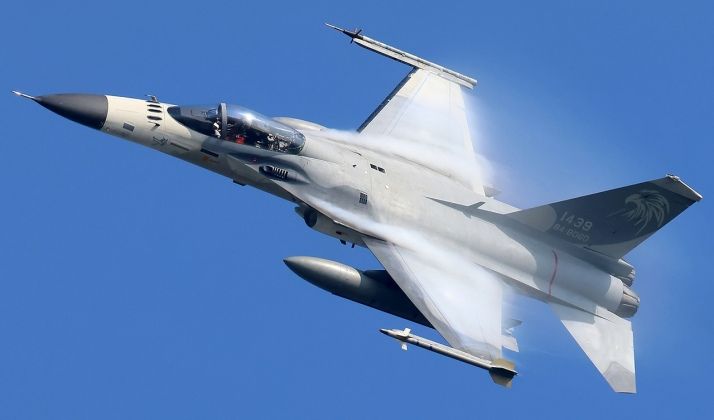
RoC Air Force F-CK Ching Kuo Fighter
Efforts to modernise the Republic of China Air Force’s F-CK Ching-kuo lightweight fighters with next generation avionics and weaponry have continued to make progress, with a new active electronically scanned array (AESA) radar having begun flight testing. Fighters enhanced to the new standard have been designated F-CK-1C “Super Ching-kuo.” The radar was developed by the Chung-Shan Institute of Science and Technology (CSIST) under the “Eagle Project," and is based on cutting edge Gallium Nitride array technologies. Gallium Nitride radars are currently being integrated onto frontline fighters in the Chinese People’s Liberation Army Air Force, and intended for service entry in the United States Armed Forces near the end of the decade.
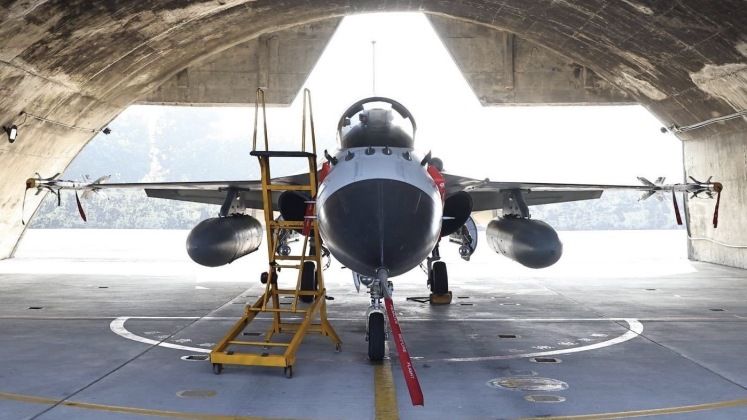
In order to integrate the new radars, the internal structure behind the F-CK’s nose radar dome has been redesigned, and the skin has been repainted. The overall scope of the modifications is comprehensive. The National Chung-Shan Institute of Science and Technology (NCSIST) stated that this AESA radar is a domestically manufactured component, a derivative of the prototype announced in 2017, and is currently undergoing testing according to the project schedule. The F-CK currently relies on an obsolete mechanically scanned array radars, with the integration of a new primary sensor expected to revolutionise its situational awareness, targeting capabilities, and electronic warfare performance.
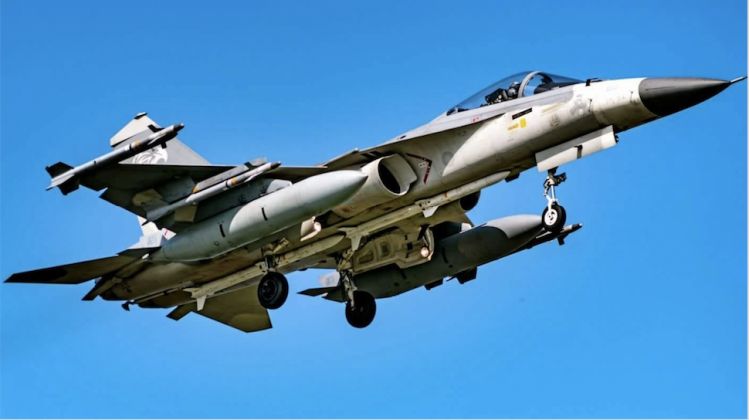
In January the Taipei-based China Academy of Sciences was commissioned to develop an AESA radar for the F-CK, with the radar’s design being considerably more advanced than the AN/APG-83 radar integrated on F-16 Block 70 fighters than the Air Force is procuring from the United States. The modernisation of the F-CK fleet closely follows the completion work to bring Republic of China Air Force’s F-16A/B fighters to the F-16V standard under the $4.5 billion ‘Peace Phoenix Rising’ program with U.S. assistance. The Republic of China Armed Forces’ difficulties procuring fifth generation fighters has led to a renewed emphasis on acquiring ‘4+ generation’ fighter aircraft, and alongside procurements of F-16 Block 70 fighters, talks are reportedly also underway to procure Rafale fighters from France.
