
Software Issues with Republic of China Air Force’s Downgraded F-16s Placing Pilots in Serious Danger
Military Watch Magazine Editorial Staff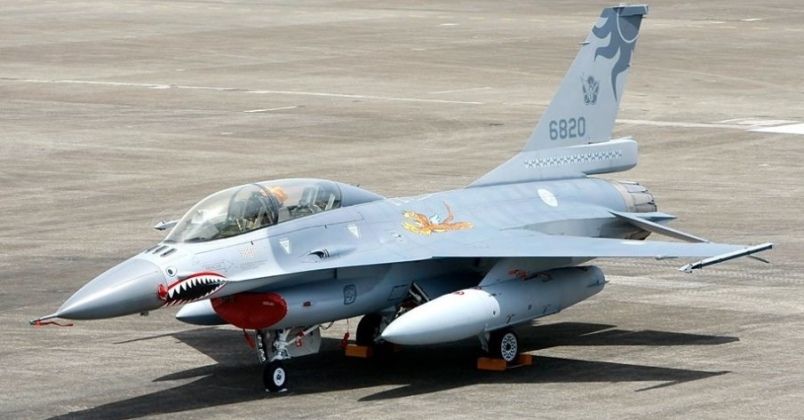
Republic of China Air Force F-16B Fighters
Following the crash of a Republic of China Air Force F-16V fighter into the sea on January 6, and the presumed death of pilot Captain Hsin Po-Yi, significant details regarding prevailing issues with the newly modernised American aircraft have come to light. This incident has raised particular concerns about when this type of aircraft will be equipped with the "Automatic Ground Collision Avoidance System" (Auto GCAS), which was designed to save pilots' lives. Minister of National Defence Gu Lixiong had explained on June 8 that the F-16A/B Block 20 fighters procured in the 1990s use analogue flight control system, which are incompatible with the modern digital anti-collision system designed for aircraft brought up to the F-16V standard.
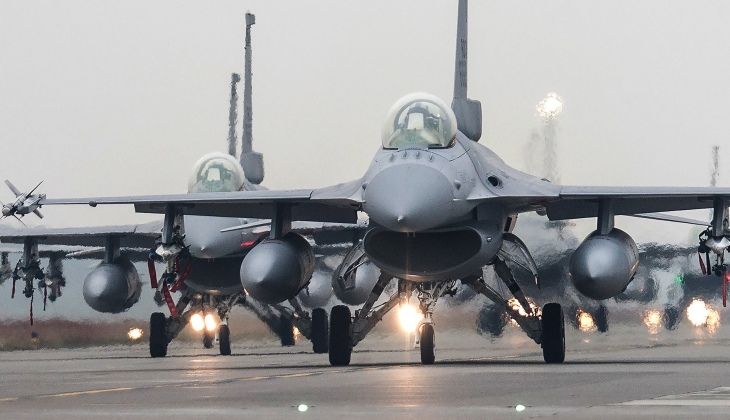
The Republic of China Defence Ministry was the last client for the F-16A/B, which had been phased out of production for close to a decade when it they were approved for sale in 1992. The Republic of China’s lack of international recognition, and state of civil war with the internationally recognised People’s Republic of China government on the Chinese mainland, made selling fighters highly controversial, leading to a decision to offer only the less advanced older F-16 variants from the 1970s. The F-16A/B’s lack of compatibility with modern subsystems has resulted in a particularly lengthy integration and modification process for Auto GCAS. Minister Gu nevertheless pledged that if testing is successful, installation would begin by the end of 2026, with the goal of completing all installations by the end of 2027.
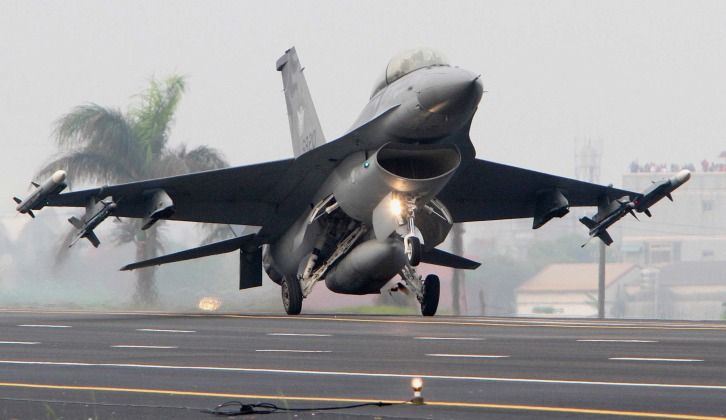
The Defence Minister further elaborated that although the Ministry finalised a contract for the the anti-collision system as early as 2020, the technical difficulties involved, specifically the need to integrate a digital system with the analog avionics on the older variants of the F-16, have delayed progress. The Republic of China Air Force had notably claimed on January 11, 2022, that it had begun integrating Auto GCAS with the F-16, and that installation locally would begin in November 2023, raising significant questions regarding the causes of the delays. These issues with the F-16V fleet are particularly concerning when considering that the fighter type is relied on to form the elite of the Air Force’s combat units, with its F-CK Ching Kuo and Mirage 2000 fighters all being effectively obsolete, while F-16C/D Block 70 fighters ordered in 2019 have yet to be delivered due to major production issues and delays in the United States.
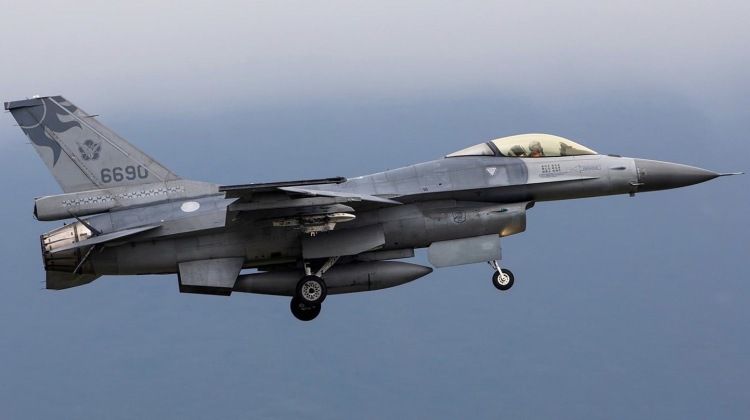
Captain Hsin’s F-16V is thought to have crashed due to a mission computer malfunction which resulted in his spatial disorientation, with his chances of survival having been diminished by the lack of cold weather survival suits on Republic of China Air Force F-16. This significantly further increases risks to pilots who eject into the sea. The Air Force had initially stated that deliveries of these suits would begin in January 2027. Defence Minister Gu stated that the cold-weather survival suits were only procured in 2025, after extensive evaluation by the Air Force. The lack of these suits is particularly significant considering the outstandingly high crash rates which Republic of China Air Force fighter aircraft have suffered, and the fleet’s training predominantly at sea. The crash rate of the F-16 has remained far higher than that of the locally developed F-CK Ching Kuo fighter, although significantly lower than those of French-supplied Mirage 2000s which have suffered from significant qualitative deficiencies and seen eight of the fleet of just 60 lost to crashes.
