
Republic of China Air Force Begins Most Ambitious Local Fighter Upgrade Program in its History
Military Watch Magazine Editorial Staff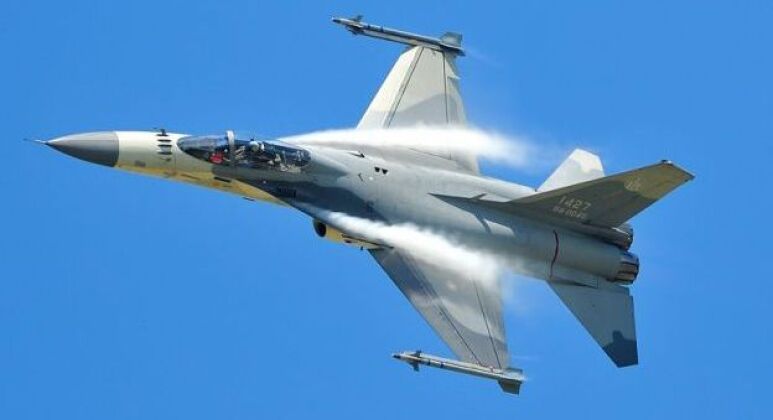
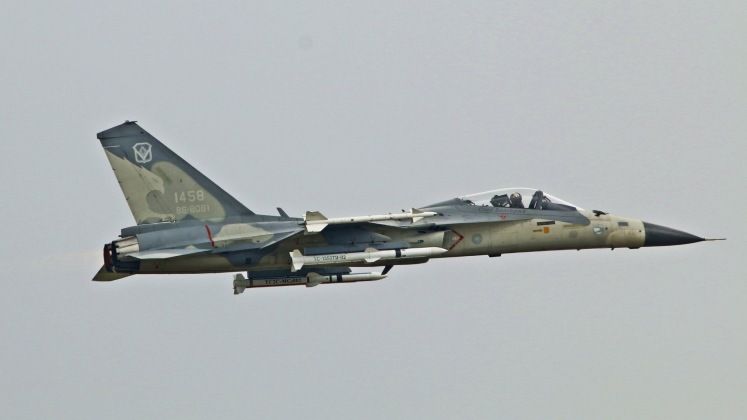
Ching Kuo Fighter with AIM-9 Air-to-Air Missiles
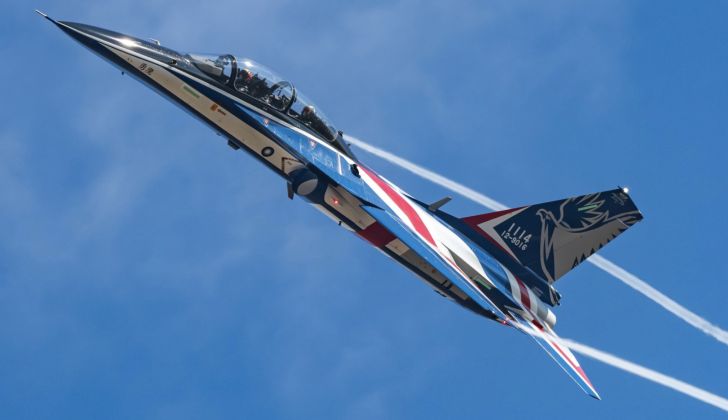
The Republic of China Air Force has moved ahead with the development of a new upgrade program for the locally produced F-CK Ching Kuo fighters aiming to bring their capabilities to a ‘4+ generation standard, with the Taipei-based China Academy of Sciences commissioned to develop an active electronically scanned array (AESA) radar for the aircraft. The Ching Kuo first flew in 1989, and was introduced in to service in 1992, making it the oldest fighter type currently serving in the air force. The fighter’s current mechanically scanned radars have long been considered obsolete, with a prototype AESA radar under development to replace it reportedly having already begun testing. An enhanced derivative of the fighter, the T-5 Brave Eagle, notably already integrates an indigenous AESA radar, with the Ching Kuo’s own next generation sensor expected to be closely based on this design.
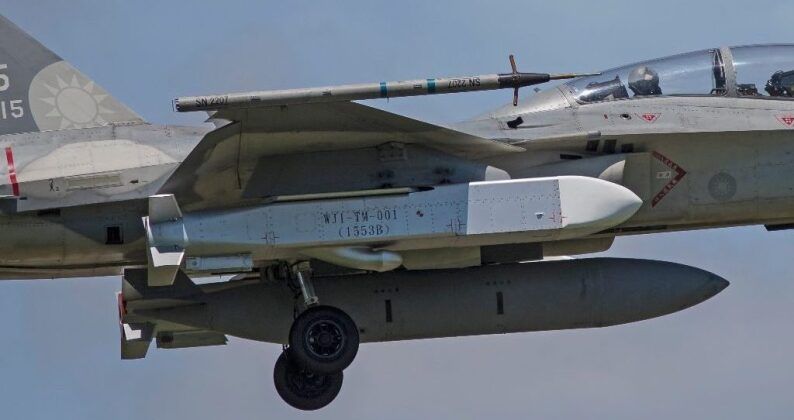
Military officials have reported that the China Academy of Sciences has made remarkable progress in AESA radar technology in the past two years, including in the development of some of the world’s first radars that gallium nitride to facilitate greater efficiency. The U.S. Air Force is currently bringing its first gallium nitride fighter radar, the AN/APG-85, into service on improved variants of the F-35 fighter, but has faced significant delays in efforts to do so due, while the Chinese mainland is speculated to have done so for its J-20 and J-16 fighters. Beyond a new radar, the Ching Kuo fighter is also intended to integrate new much longer ranged missiles, including improved variants of the Wan Jian cruise missile and the Xioni supersonic anti-ship missile. Planned improvements to its air-to-air arsenal remain uncertain.
Elaborating on efforts to modernise the Ching Kuo fighter, an associate researcher at the Republic of China National Defence Research Institute Shu Xiaohuang said that in the next ten years it was unlikely that the Air Force would be able to transition to fielding fifth generation fighters, and a such it was vital to field more capable ‘4+ generation’ fighters to cope with air defence requirements. This could be done both by developing more capable long range air-to-air and air-to-ground weapons, and by improving electronic warfare systems, which was particularly urgent. Military expert Shi Xiaowei pointed out that the limited fuel capacity of the Ching Kuo meant developing an aerial refuelling capability was vital. The Ching Kuo has the shortest range of any fourth generation fighter type in the world, and is by far the lightest twin engine fighter type of its generation.
The Republic of China’s lack of international recognition, and state of civil war with the internationally recognised People’s Republic of China government on the Chinese mainland, has limited its ability to procure advanced fighter aircraft from abroad, with multiple efforts to procure F-35 fifth generation fighters having been rebuffed. The Ching Kuo itself was initially developed due to the United States’ refusal to supply F-16 fighters in the 1980s, with its planned production run having been cut from over 300 aircraft to just 131 after Washington agreed in the 1990s to provide downgraded F-16s. The Republic of China Ministry of National Defence is currently considering pursuing the development of a fifth generation fighter to succeed the Ching Kuo in service, with a number of related technologies currently under development. While the Ching Kuo uses F125-GA-100 engines from the United States, analysts have widely projected that these will eventually be phased out of service and replaced by indigenous engines with greater fuel efficiency.
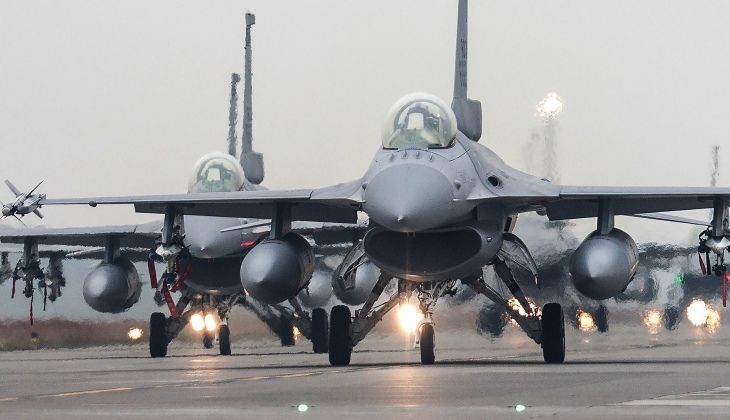
A program to upgrade the Ching Kuo is far from unprecedented, with the Defence Ministry having previously planned a highly ambitious upgrade program for the F-5E/F third generation fighters that were produced locally under license. The program reached advanced prototype stages, and included new avionics and a new radar and missiles to facilitate beyond visual range air-to-air engagements at an advanced fourth generation level, although it was cancelled due to its high cost. From the mid-2010s 139 F-16A/B fighters ordered in the 1990s were locally modernised to the F-16V standard under the $4.5 billion ‘Peace Phoenix Rising’ program in cooperation with Lockheed Martin and other American firms. The program to upgrade the Ching Kuo, however, appears to be the most ambitious in the history of the Republic of China’s defence sector. The Ching Kuo is expected to remain in service until either a more capable locally made fighter replaces it possibly, based on the T-5 Brave Eagle design, or until a lightweight fifth generation fighter can be developed.
