
Republic of China Army’s New U.S.-Supplied Abrams Tanks Involved in Crash During Landmark Exercises
Military Watch Magazine Editorial Staff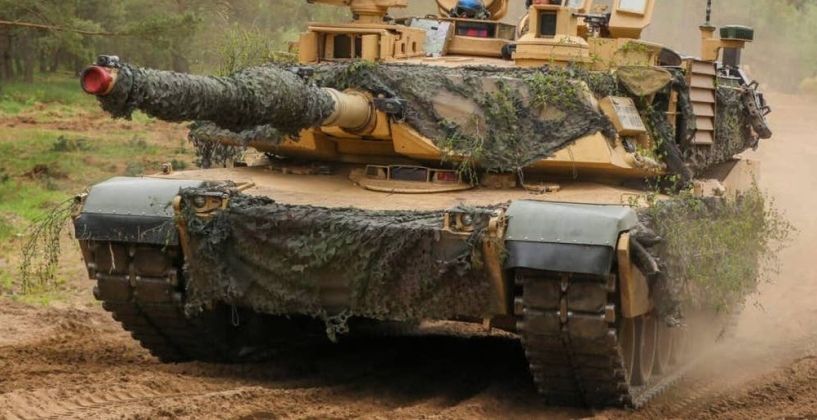
U.S. Army M1A2 Abrams Tank
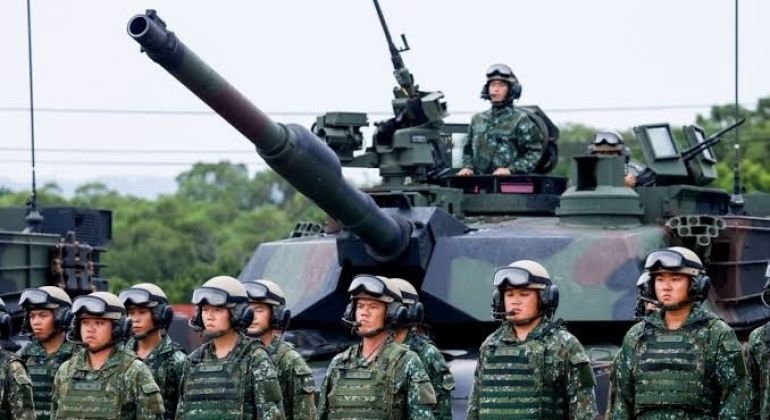
The Republic of China Armed Forces have launched the first-ever Joint Defense Exercise, a five-day, four-night military drill, which was designed to prepare for the upcoming Han Kuang 42 live-fire exercise scheduled for August. The opening day of the exercise has been overshadowed by a road accident involving military vehicles from the Republic of China Army Sixth Army Corps, highlighting the practical challenges involved in moving large numbers of armoured and support vehicles during mobilisation operations. During the deployment of M1A2 Abrams main battle tanks in Taoyuan on July 13, two medium tactical wheeled vehicles from the Sixth Army Corps’ 269th Brigade collided while travelling along High Speed Rail South Road.
According to reports, the final vehicle in the convoy apparently failed to maintain sufficient following distance before reaching No. 129, Section 1, resulting in a collision with the vehicle ahead. The impact was severe. The front section of the trailing MTV was driven underneath the rear of the vehicle in front, causing extensive damage. Images from the scene showed the vehicle’s hood pushed upward, the bumper heavily distorted, and the warning sign mounted on the front detached from the force of the collision. A tow truck was eventually required to separate the two vehicles. Despite the severity of the damage, no personnel were injured in the accident.
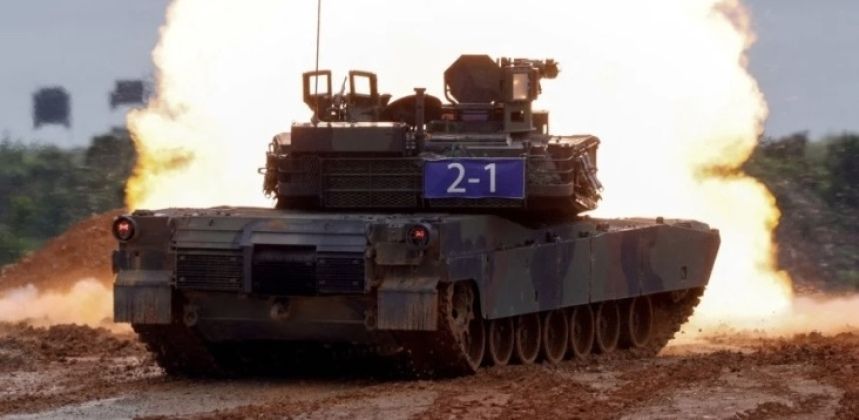
The Joint Defense Exercise focuses on improving joint-service coordination, command resilience, and battlefield survival capabilities under conditions intended to simulate a large-scale conflict scenario. The drill follows the Immediate Combat Readiness Exercise held in June, and is part of the Armed Forces’ broader effort to adapt its military posture toward the possibility of a high-intensity conflict. Unlike traditional large-scale exercises that rely heavily on fixed command structures and concentrated forces, the Joint Defense Exercise emphasises operations under degraded conditions, including disrupted communications, decentralised command, and dispersed troop deployments.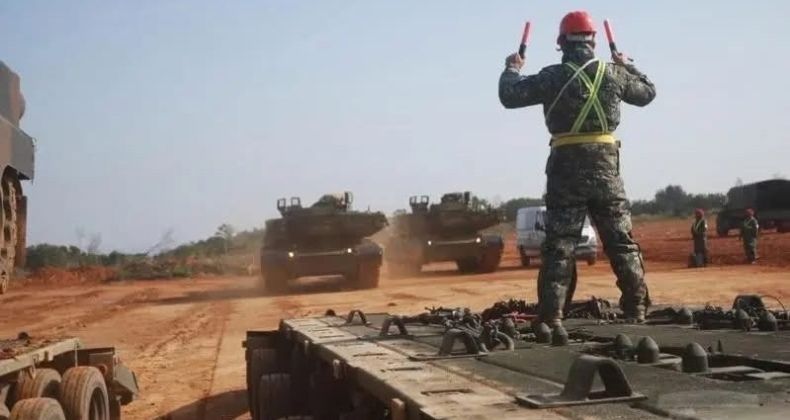
The exercise aims to test whether the Republic of China Armed Forces can maintain coordinated operations after an adversary has initiated attacks against key military infrastructure, communications networks, and command centres. By practicing rapid dispersal, joint operations, and continued combat operations under pressure, the military hopes to improve its ability to withstand an initial attack and sustain resistance. This year’s training cycle reflects a growing emphasis on realistic combat conditions, including the assumption that forces may face early attacks aimed at disrupting communications, isolating units, and degrading command structures. By practicing distributed operations and joint responses, Taiwan hopes to improve the survivability and effectiveness of its armed forces in a potential crisis.
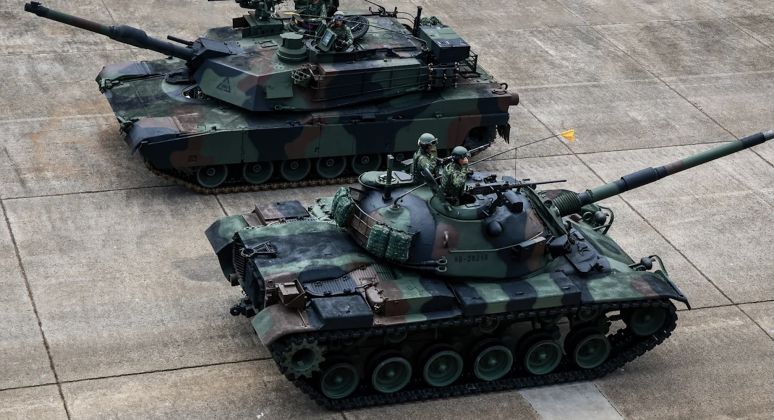
Following the delivery of the last of the 108 Abrams tanks ordered, analysts at the Australian Strategic Policy Institute (ASPI) in June assessed that the vehicles were prime examples of “dead weight” procurements. “The 74-ton, four-person M1A2 was designed for a kind of warfare that is rapidly becoming a thing of the past. As the wars in Ukraine and Iran have proved, the future belongs to small, light, autonomous weapons that can be continuously upgraded and built quickly in huge quantities,” the report observed. The geography of Taiwan Island, where Republic of China forces are based, offers few opportunities for large-scale armoured manoeuvre warfare, it observed. It contended that the Republic of China Defence Ministry should prioritise asymmetric capabilities that are cheaper, more survivable, and capable of imposing disproportionate costs on advancing forces. This assessment has echoed criticisms widely made by both Chinese and Western analysts regarding the prioritisation of procurement funding.
