
Polish Pilots Cross 1000 Hours Training on New F-35s: A Looming Game Changer For its Offensive Potential
Military Watch Magazine Editorial Staff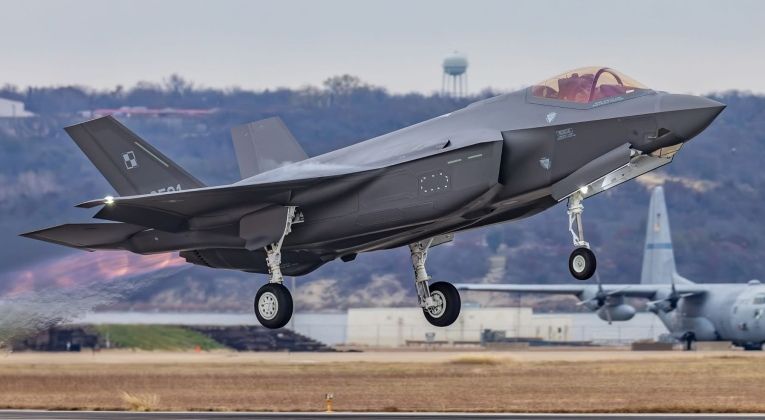
Polish Air Force F-35A
Lockheed Martin
The Polish Air Force’s F-35A Husarz fifth generation fighter fleet has surpassed 1,000 flight hours during training in the United States, after they crossed the 500 flight milestone in December 2025. The service’s first stealth fighter was unveiled during a rollout ceremony at the Lockheed Martin Aeronautics facility in Fort Worth, Texas, on August 28, 2024, with the first of the aircraft expected to arrive in the country near the end of 2026. Training flights are intended not only to build pilot qualification, but also to increase maintenance proficiency among Polish Air Force ground crews. A contract to procure 32 F-35A fighters was finalised in 2020, marking a major milestone in the aircraft’s proliferation into Eastern Europe including into former Soviet-allied Warsaw Pact states.
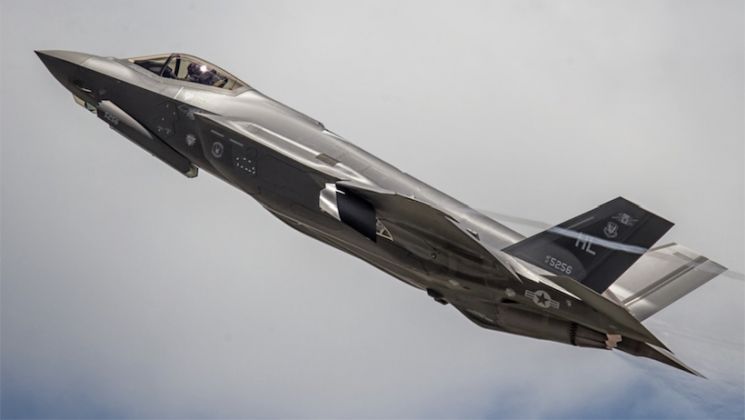
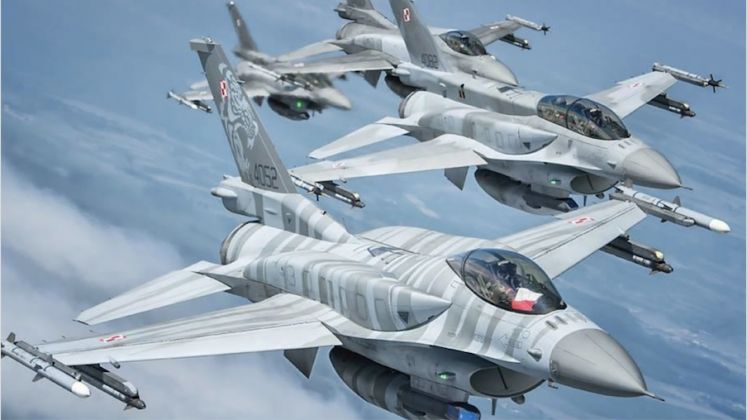
The procurement of 32 F-35s is one of a wide range of investments made by the Polish Defence Ministry to modernise the country’s forces, with the Ministry in August 2025 having signed a $3.8 billion contract to modernise 48 F-16C/D Block 52+ fighters to the F-16V, which will revolutionise their combat capabilities and bring their avionics to a comparable standard to those of the F-35. The Ministry in 2022 ordered 48 South Korean FA-50 lightweight fighters, which have similarly advanced avionics, to expand its fleet at a lower cost. The F-35 is expected to serve as a force multiplier for these fourth generation aircraft, with its more powerful sensors and more advance data links allowing it to very significantly increase the situational awareness of the wider fleet, while its advanced air defence suppression capabilities could allow it to ‘kick down the door’ into well protected airspace in Belarus or Russia.
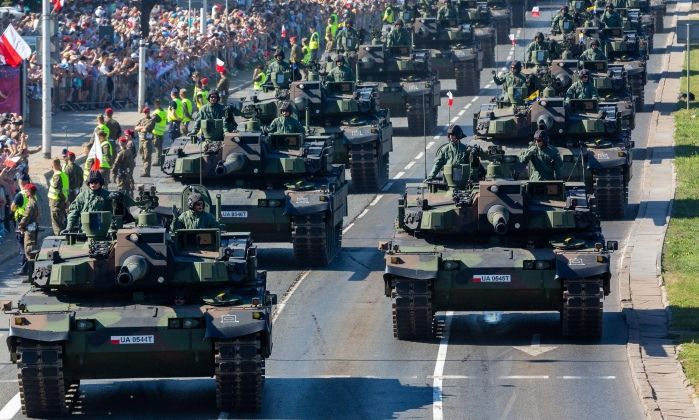
Poland’s most influential military thinkers, such as President of Academy24, General (ret.) Jaroslaw Gromadzinski and former Chief of the General Staff Rajmund Andrzejczak, have widely advocated a major shift in the country’s defence posture aimed specifically at preparing for war with Russia, and establishing a much expanded capability to launch large scale strikes on vital strategic targets in the country. Although the Polish Air Force’s capabilities are being revolutionised, the country’s ground force transformation has stood out as by far the most significant among European NATO members. 366 Abrams tanks have been ordered from the United States, as well as 360 South Korean K2 tanks out of a planned total procurement of 1000, representing one of the fastest buildups of armour seen anywhere in the world.
Outstandingly large orders South Korean K9 howitzers and Chunmoo rocket artillery systems are further rapidly expanding the Polish Army’s combat potential complementing improvements to air power. It is expected that the Polish Army will play an outsized role in any NATO war effort against Russia, while the relatively small fighter fleet will rely more heavily on support from other NATO members. Polish contractor personnel have already been playing a disproportionately significant role in the Russian-Ukrainian War on the frontlines, with units such as the Polish Volunteer Corps made up of personnel from the country that are officially on leave to allow them to deploy to the active war zone. A presence of thousands and by some estimated over 10,000 personnel has been sustained on and around the Ukrainian frontlines.
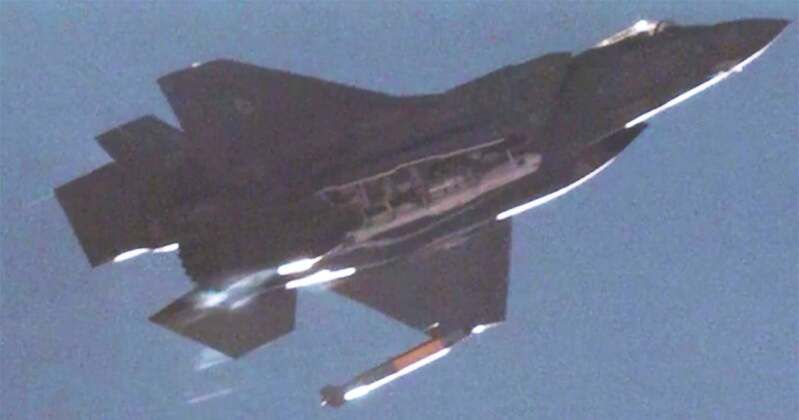
The crossing of a significant milestone preparing for F-35 operations from bases in Poland closely follows a statement by Polish President Karol Navrocki emphasising that his country should start developing nuclear weapons, specifying that a future nuclear arsenal would be aimed at Russia. This follows multiple reported requests by Polish officials to enter into a nuclear sharing agreement with the United States, under which the Polish Air Force would be given wartime access to American warheads that would be stored on the country’s territory. Belgium, the Netherlands, Germany, Italy, Turkey, and the United Kingdom, which all have nuclear sharing agreements with the United States, have all placed orders for F-35A fighters to serve as the primary delivery platforms for American B61-12 nuclear bombs, raising a significant possibility that Polish F-35As are also envisaged to eventually have a nuclear strike role.
