
Poland’s Rapidly Expanding Abrams Tank Fleet Poses New Challenges to Russia: Fourth Batch of the Year Delivered
Military Watch Magazine Editorial Staff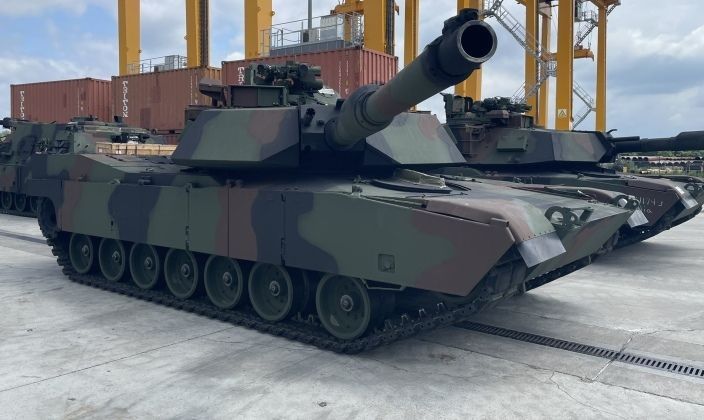
Polish Army M1A1 Abrams Tanks
The Polish Defence Ministry has accepted the delivery of 32 U.S.-built M1A2 SEPv3 Abrams main battle tanks, continuing the rapid expansion of the country’s fleet. This closely follows the delivery of 38 M1A2 SEPv3 tanks in mid-September, a previous batch which was delivered in May 2025, and the first batch which arrived in January. Poland has ordered 336 Abrams tanks from the United States, including 116 less capable M1A1 tanks acquired second hand from the Marine Corps, the final batch of which was delivered in July 2024, and 250 newer M1A2 SEPv3 tanks ordered in April 2022 under a $4.8 billion contract, which began to arrive in January. Poland is the only foreign operator of the Abrams tank in NATO, and is expected to become by far the largest operator of the type other than the U.S. Army.
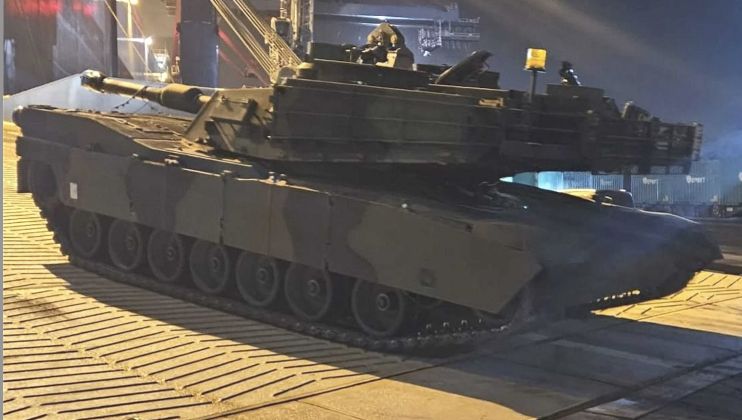
Compared to the M1A1, the M1A2 SEPv3 has stronger turret and hull front armour, requires less maintenance, and boasts an increased power generation and distribution capacity and superior network centric warfare capabilities. It is also compatible with the new M829A4 kinetic energy anti-tank round which provides greater penetrative capabilities, which could be particularly valuable due to advances made in Russian tank protection capabilities. Rapid deliveries of Abrams tanks, and parallel deliveries of even greater numbers of South Korean K2 tanks, has allowed the Polish Army to retire its German Leopard 2 and Soviet T-72 and PT-71 tanks, with this having in turn been delivered to the Ukrainian Army in significant numbers as aid. The U.S. and South Korean tank industries have thus indirectly created the surpluses needed to help replenish Ukraine’s rapid armour losses, with Poland having been the first to deliver Leopard 2s to the country, while the number of T-72s it has supplied is estimated to have exceeded 350 tanks.
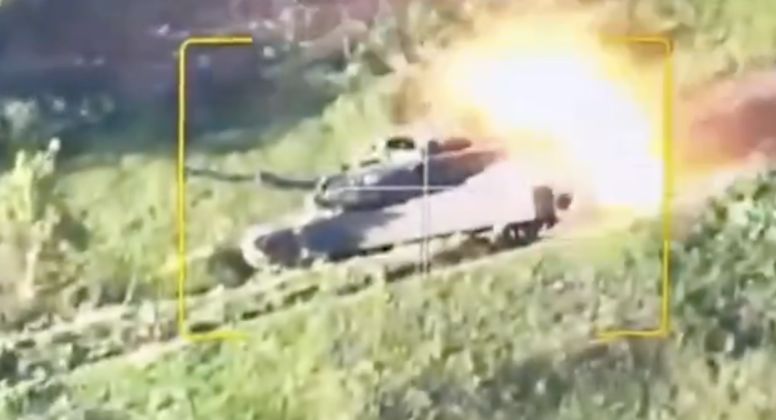
Serious questions have been raised regarding the viability of the Abrams for modern warfare, with their performance under combat conditions having been reflected on poorly by Ukrainian crews. Personnel complained of technical issues including vulnerability of electronic components to condensation, as well as the tank’s demonstrated vulnerability in combat. After their first engagements with Russian forces in February 2024, the tanks took heavy losses including to drones, anti tank missiles and the guns of T-72 tanks. The Ukrainian Army was assessed in June 2025 to have lost 87 percent of its Abrams fleet. Assessments of the performance of the Abrams and other Western tank types in the Ukrainain theatre has cemented a consensus among analysts that existing U.S. and European tank designs are built around a design philosophy that is now obsolete. The U.S. Army has itself responded by scrapping plans to incrementally modernise the Abrams, and instead prioritising the funding of a radical redesign under the M1E3 program, which shares many features with mainland China’s Type 100 tank. Russian plans to develop a tank with similar next generation capabilities under the T-14 program have continued to stall.
