
Orientation of North Korea’s Armed Forces: Towards Offence or Defence?
Military Watch Magazine Editorial Staff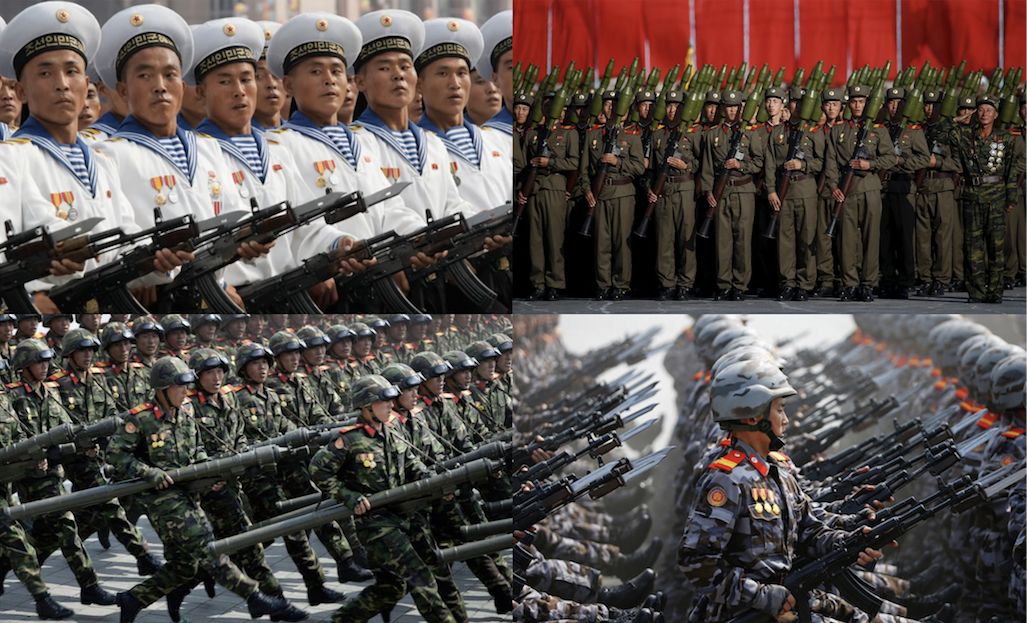
North Korean Soldiers on Parade (clockwise from top left: sailors, RPGs, bayonets, heavy weapons)
North Korea has long been among the most militarised states in the world, with the world’s largest special forces, largest reserve manpower, largest submarine fleet and largest and longest ranged artillery forces all deployed by a relatively small country of around 24 million people. The country’s pursuit of nuclear weapons and successful development and testing of a miniaturised thermonuclear warhead design and accompanying intercontinental range ballistic missiles have led a number of analysts to speculate that Pyongyang may have offensive designs towards its neighbours, seeking to use nuclear weapons to either neutralise enemy formations or coerce surrender before annexing enemy territories - or possibly even facilitating capture of South Korea and forcefully reunifying the peninsula. The sheer size of the country’s armed forces, and the fact that the bulk of the country’s ground forces are deployed very near to the inter-Korean demilitarised zone, have been cited by a number of Western analysts as a sign of the country’s potential aggressive intent - which nuclear weapons will only embolden Pyongyang to pursue.
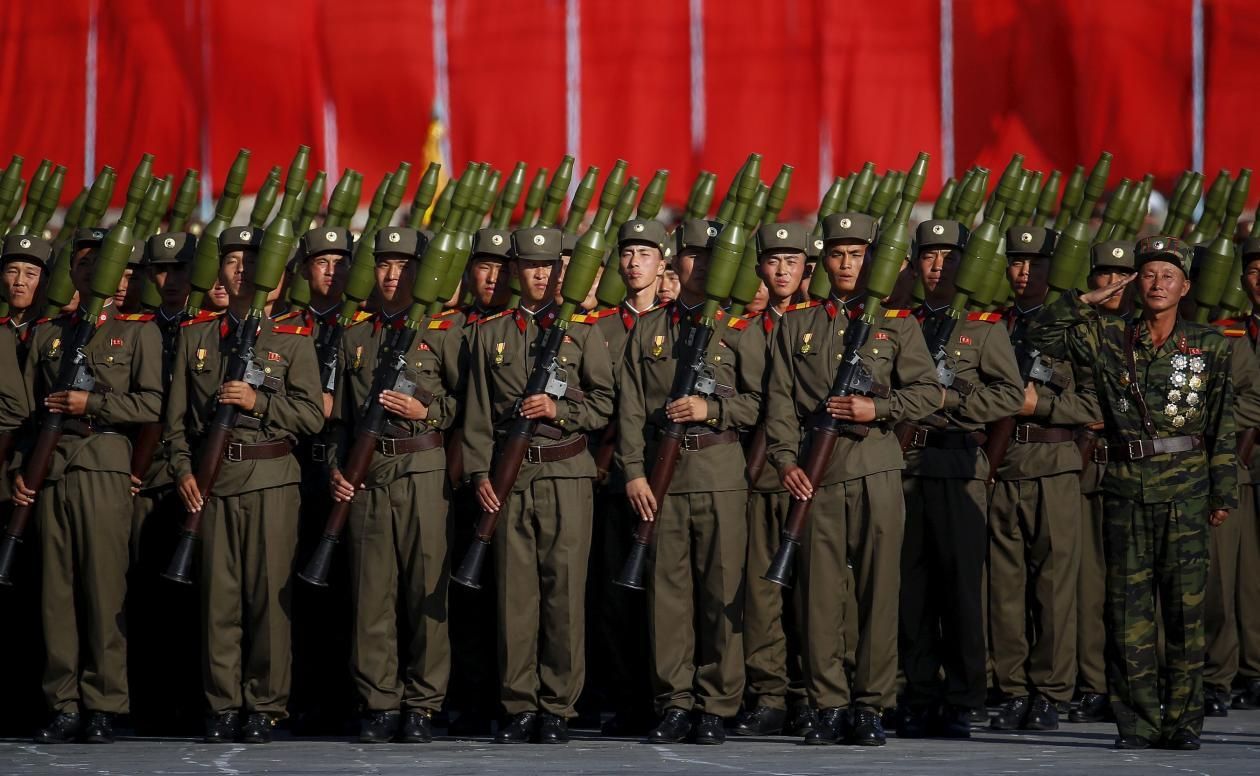
An assessment of the nature of North Korea’s investments in its armed forces, particularly following the Cold War’s end in 1989, can give perhaps the most accurate indication of the state’s intentions and the orientation of its military - offensive or defensive. Firstly it is important to consider the state’s investments in power projection assets. States which are heavily oriented towards offensive wars overseas and power projection tend to deploy a large number of logistical units for each combat unit - and also tend to structure large numbers of their reservists and logistics units. The most prominent examples of such offensively oriented militaries are those of Western Europe and North America such as Britain, France, Belgium and the United States. None of these states realistically perceive a high chance of invasion of their homeland, but all are heavily invested in deploying force overseas to further national interests and coerce potential adversaries into submission. For North Korea, investments in logistical assets have always been low but this trend appears to have only grown after the fall of the Berlin Wall. The country’s armed forces would likely struggle to supply a large force even in Seoul, the South Korean capital, and if attempting to press further south such difficulties would only grow. While North Korea is likely to use conventionally armed tactical ballistic missiles and special forces to carry out raids on enemy military facilities and disrupt their logistics in the event of a war on the peninsula, assets in which it has invested heavily, the lack if investment in logistical assets indicates that Pyongyang does not intend to support a large force to push south of the demilitarised zone and invade South Korea - with the vast majority of its multi-million man army set to remain within the state’s own borders in a defensive role.
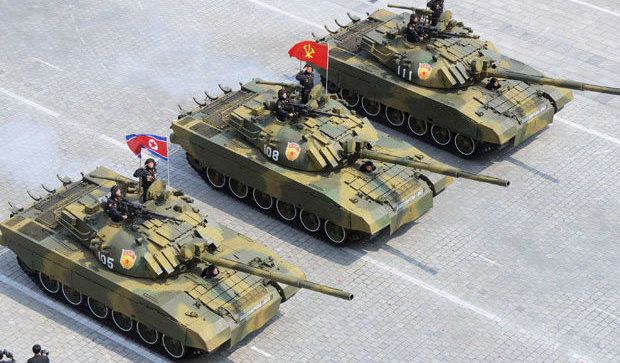
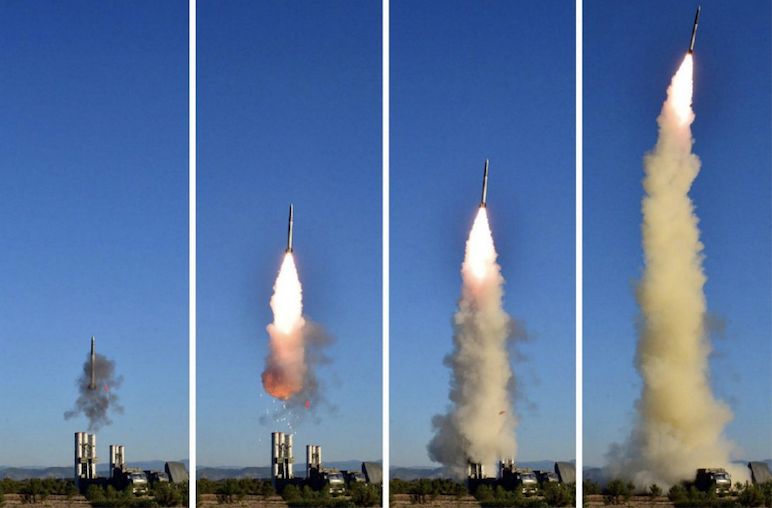
Alongside an evident lack of investment in logistics, assessment of the types of combat assets North Korea has invested in also indicates a strongly defensive orientation. The country’s submarine fleet, while large, is almost entirely comprised of light and short ranged littoral vessels designed to deny enemy warships access to Korean coastal waters. The warships’ low endurance severely limits their potential for long range offensive operations, and indicates an overwhelmingly defensive purpose. The sole exception are the high endurance Gorae Class submarines which are designed solely to house the country’s second stage deterrent in the form of nuclear tipped ballistic missiles. While North Korean tank forces are extremely numerous, the modern indigenous Pokpung Ho and older indigenous Chonma Ho platforms are both heavily optimised for warfare in the north’s far more mountainous terrain, and are equipped to form a part of the country’s air defence network. This again indicates a heavily defensive role for these assets. A similar trend can be observed throughout the branches of North Korea’s armed forces. Perhaps the most significant example are the significant investments made in underground fortifications, with the country thought to have the world’s largest tunnel and bunker network housing everything from food stores and shelters for civilians to missile factories and even airfields. Again, the value of these assets is overwhelmingly defensive. Recently developed Korean tactical assets have similarly heavily emphasised defence and anti-access area denial, with the Kumsong-3 anti ship cruise missile system and KN-06 long range surface to air missile system both tested at the height of tensions with the United States in 2017 being prime examples.
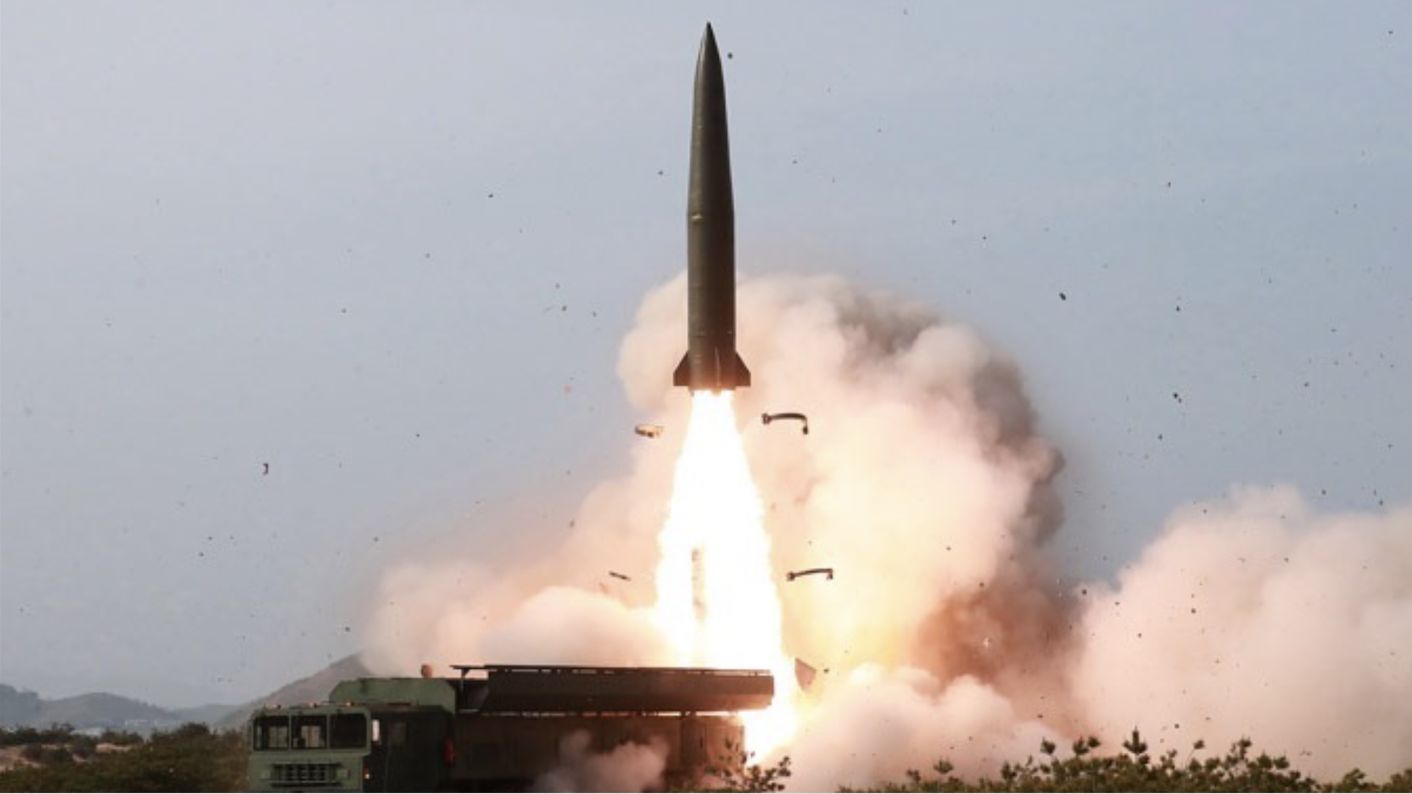
Regarding North Korea’s nuclear weapons it is evident considering both the doctrine for use of these weapons and the way in which a nuclear program has been pursued that the orientation of the program is overwhelmingly defensive. North Korea is one of just two states alongside Israel which subscribes to an existential deterrence doctrine, meaning nuclear weapons are considered wholly distinct from battlefield weapons and cannot be used unless the state’s very survival is threatened. Under this doctrine nuclear weapons cannot be used as a means to win a war, but only to preserve the state’s existence. Threats to both states’ very right to exist by larger powers with considerable assets at their borders led both to adopt such a doctrine. Where North Korea differs from Israel, however, is that it is also one of three states alongside China and India to subscribe to a nuclear non first use policy - meaning it cannot use nuclear weapons against non nuclear states and against states which do not first use nuclear weapons against it. This means North Korea’s nuclear doctrine can be said to be the most defensive in the world with the highest threshold for use. The fact that North Korea has not attempted to nuclearise its short ranged tactical assets, such as KN-23 and KN-02 short ranged ballistic missiles or even its medium ranged theatre assets such as H-5 bombers and Scud-ER missiles, further lends credence to this.
Ultimately an assessment of North Korea’s armed forces indicates an overwhelmingly defensive orientation for both its conventional and its nuclear forces, meaning that nuclearisation is highly unlikely to facilitate a North Korean invasion of South Korea or other offensive actions - and to the contrary appears intended primarily to protect the country against nuclear attack from the United States by imposing unacceptable costs on potential aggressors. The country’s high threshold for nuclear use and particularly its no first use policy are likely to make the state more acceptable internationally as a nuclear power, and undermine U.S. and European efforts to bring the international community to draw a hard line against Pyongyang based on claims its nuclearisation threatens regional and global peace.
