
North Korea Outlines Plans For Accelerated Nuclear Buildup Against the U.S. at Landmark Workers’ Party Congress
Military Watch Magazine Editorial Staff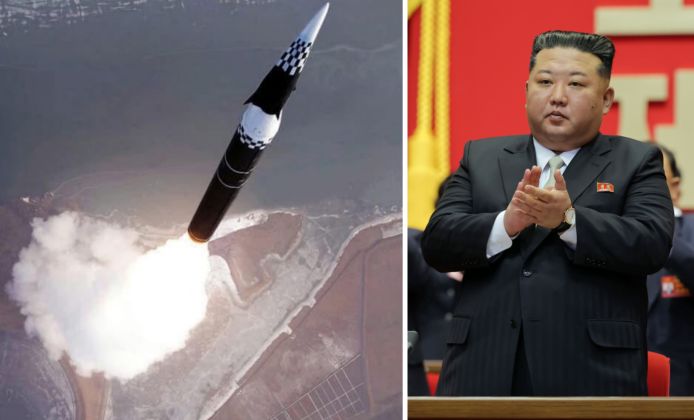
Chairman Kim Jong Un and Hwasong-16B Hypersonic Missile Launch
Chairman of the ruling Korean Workers’ Party Kim Jong Un has outlined plans for a major buildup of North Korean nuclear forces over the coming years five, as the country’s recent economic boom has fuelled speculation that financing for increases to defence spending has likely become much more readily available. The strategy has focused on strengthening and expanding the nuclear arsenal, operationalising new means of nuclear delivery, and embedding that arsenal into long-term defence policy. The Chairman reiterated that North Korea’s status as a nuclear-armed state is permanent, irreversible and central to national security, and pledged to continue to increase the number of nuclear weapons, while accelerating the production of fissile material and warheads to allow the arsenal to be expanded more quickly.
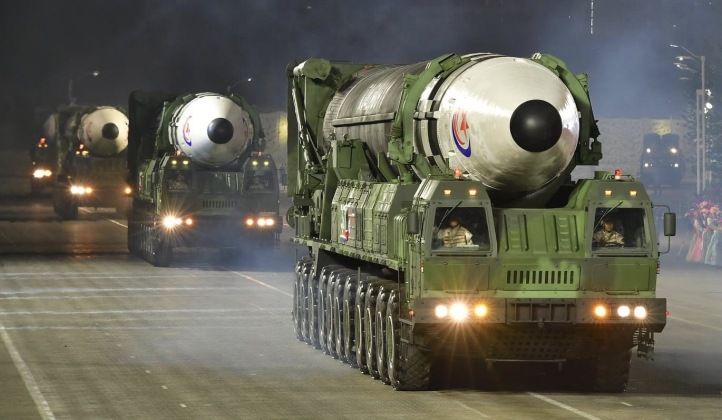
Chairman Kim highlighted the need to integrate nuclear forces into broader military doctrine, emphasising that nuclear forces are the “backbone” of deterrence and national defence and will be maintained at constant readiness, with testing and exercises to ensure effectiveness. He also stressed the importance of developing more advanced delivery systems, elaborating that plans include developing more capable types of intercontinental ballistic missile, including missiles with such ranges that can be launched from submarines. Also planned for development are more nuclear-capable submarines and sea-launched systems. The chairman revealed that these programs would be complemented by the development of AI enabled attack drones and other advanced weapons, as well as development of weapons designed to strike satellites and other space targets.
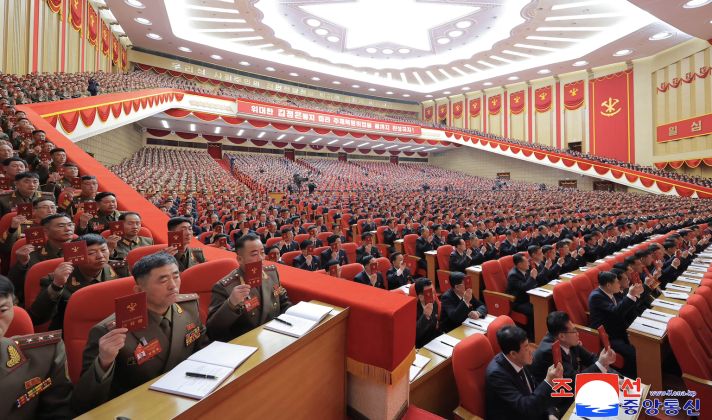
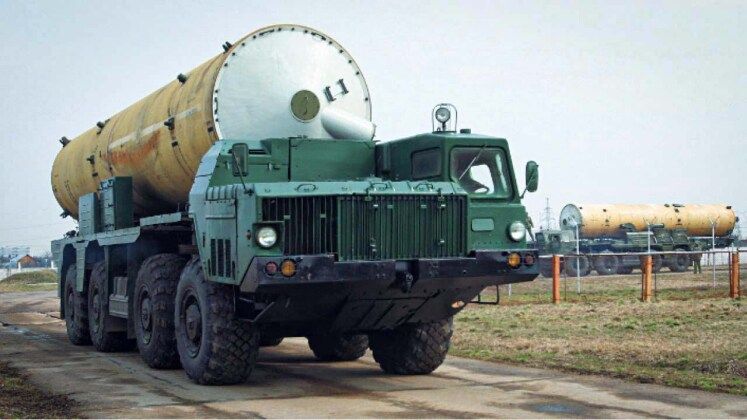
At the Ninth Congress of the Workers’ Party of Korea, a strategic plan for the next five years (2026-2030) of modernisation of the Korean People’s Army focused heavily on nuclear and strategic weapons modernisation, including conventional and unconventional capabilities undergirded by nuclear strength. The planned development of anti-satellite weapons was a particularly notable aspect of the new plan, and follows speculation that North Korea could seek technology transfers from the Russian S-500, S-550 or A-235 space warfare systems to achieve this. This would represent a clear next step for the country’s air defence network after the development of tactical systems with broadly analogous capabilities to the Russian S-400 system. North Korea’s export of tens of billions of dollars worth of armaments to Russia since 2022 has likely provided considerable capital and leverage to request access to sensitive technologies.
North Korea first demonstrated the ability to launch nuclear strikes against the United States mainland with the successful test of the new Hwasong-14 ballistic missile on July 4, 2017, in what would prove to be a pivotal moment in the East Asian state’s seven decades long conflict with the United States. The test was the first of three that year demonstrating an effective intercontinental range strike capability, which experts would consider key to pressing the United States to come to the negotiating table in 2018 and significantly revise its objectives for its conflict with Pyongyang. Vice Chairman of the Joint Chiefs of Staff and former Commander of the U.S. Strategic Command John Hyten would be among several to later stress the pivotal significance of North Korea’s achievement, observing during an assessment in early 2020 that this had “changed the entire structure of the world,” for the first time allowing a small state to deter a superpower without relying on its own superpower protector.
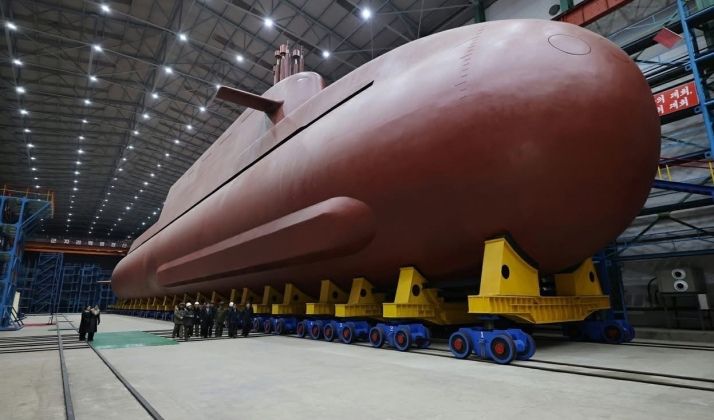
North Korea has continued to significantly improve its missile deterrent, most recently with test launches of the Hwasong-17 from March 2022, and the solid fuelled Hwasong-18 from April 2023, and the larger solid fuelled Hwasong-19 from October 2024. The latest ICBM type, the Hwasong-20, was unveiled in October 2025. North Korean state media in December 2025 published the first images of the country’s long anticipated first nuclear powered submarine, revealing that the ship is currently under construction. A nuclear submarine fleet is expected to revolutionise the country’s second stage nuclear deterrent. The development of an airborne nuclear delivery capability to form a fully nuclear triad has been speculated, with the possibility having been widely raised of exports of Russian Su-34 strike fighters or Su-57 stealth fighters to help cover the costs of mass imports of North Korean ground forces equipment. Either of these aircraft would provide a long range nuclear delivery capability against U.S. bases across much of the Pacific, and in the Su-34’s case as far as Hawaii or even the U.S. mainland depending on its missile loadout.
