
North Korea Brings Cutting Edge New Destroyer Into Service: Navy Combat Capabilities Rapidly Transforming
Military Watch Magazine Editorial Staff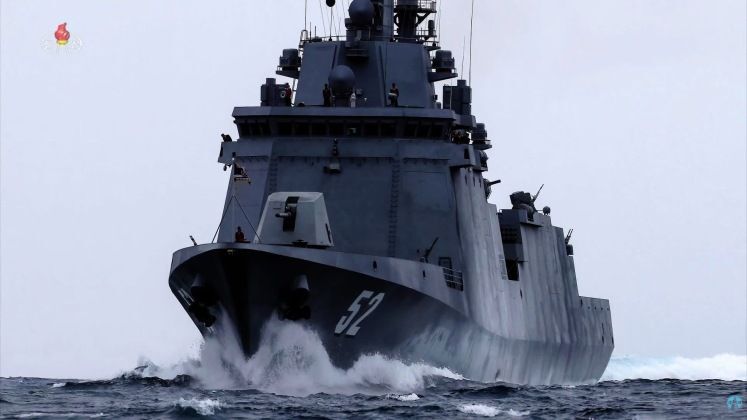
North Korean Destroyer Kang Kon During First Sea Trials
North Korea has formally commissioned its second Choe Hyon class destroyer, the warship Kang Kon, at the eastern port of Wonsan on September 6, marking another significant step in efforts to transform its largely coastal defence-oriented navy into an advanced power projection capable force. The first ship of the class, the Choe Hyon, was commissioned in late June. The class represents a major qualitative departure from previous North Korean surface combatants, and incorporate multirole vertical launch systems and phased-array radar.s The vessels are estimated to displace approximately 5,000 tons, and are considerably larger and more heavily armed than the frigates and corvettes that have traditionally formed the core of the Korean People’s Navy.
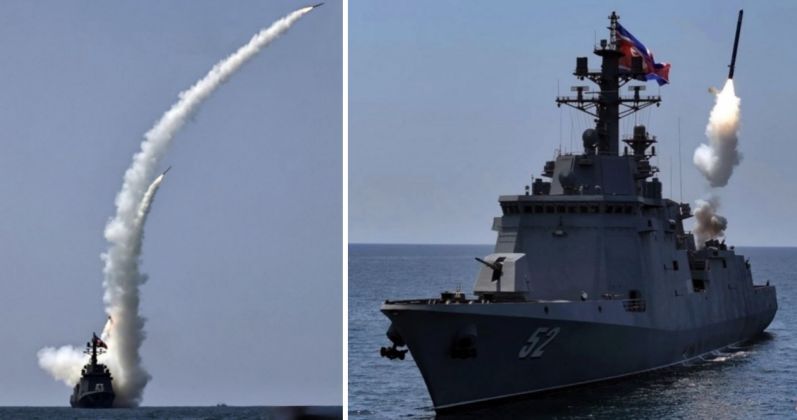
Commenting on the new ship’s commissioning, Chairman of the ruling Korean Workers’ Party Kim Jong Un stated that the destroyer would contribute to “annihilating retaliatory strikes,” and would become part of the country’s state nuclear response system. This suggests that Pyongyang increasingly views surface combatants as potential components of its broader nuclear force rather than limiting nuclear delivery capabilities to ballistic-missile submarines, land-based missiles and aircraft. The ships integrate multiple types of cruise and ballistic missiles capable of nuclear delivery against enemy warships and land targets.
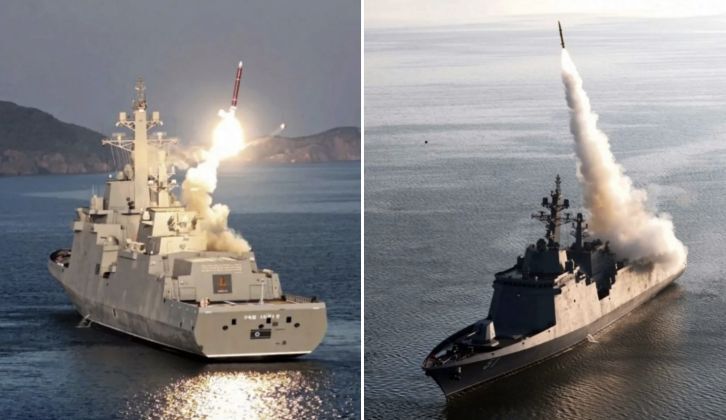
The Kang Kon was confirmed on June 6 to have begun its maiden sea trials, over a year after its launch on May 21, 2025. Each Choe Hyon class ship integrates 74 vertical launch cells, compared to 96 on the U.S. Navy Alreigh Burke class, 80 on the Zumwalt class, and 64 on the Russian Udaloy class. Built at the Chongjin Shipyard, the Kang Kon suffered a problematic launch in May 2025 that saw it capsize, although the North Korean shipbuilding industry managed to defy analysts’ expectations by re-floating the vessel the following month. On June 8 it was transported Rajin Shipyard for dry dock repairs, before being relaunched in June 12.
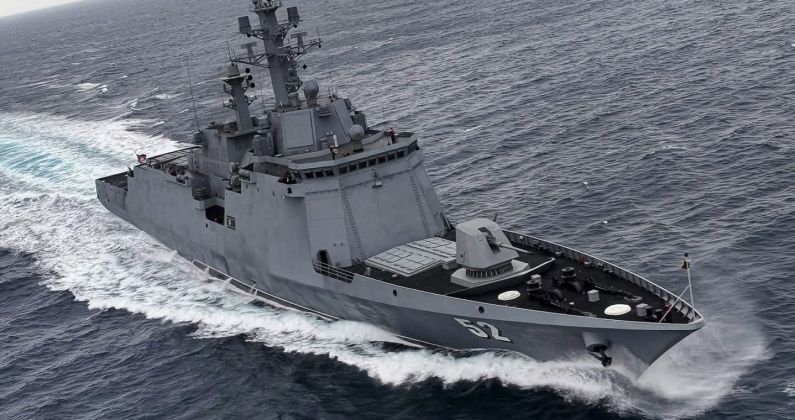
In July footage released by the state run Korean Central News Agency showed the Kang Kon, launching the largest salvo of cruise missiles ever seen in a peacetime exercises, with consecutive launches of 12 missiles from its vertical launch system. The launches were conducted as part of the most comprehensive known naval weapons trial in the history of the North Korean surface fleet. North Korean shipyards are projected to launch two destroyers per year over the next five years, representing the second highest construction rate worldwide after China. It was revealed in March 2026 that a larger class of 8,000 ton destroyers was under development, while in early June a 10,000 ton destroyer class was announced. These future heavier destroyers will integrate significantly larger arsenals.
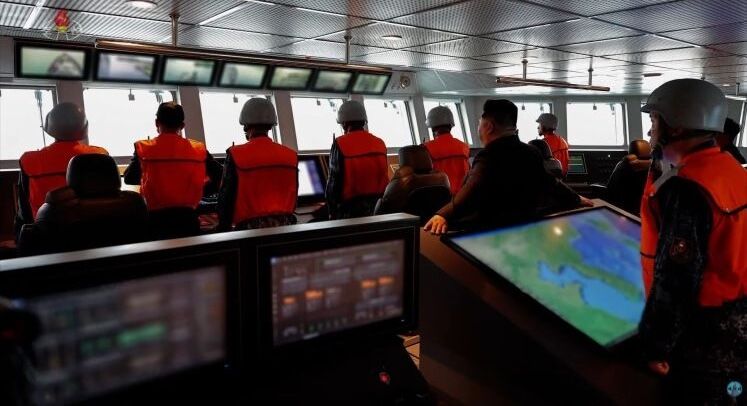
The timing of the Kang Kon’s commissioning is also notable. The ceremony took place as the United States, South Korea and Japan began the Freedom Edge trilateral military exercise, which Pyongyang regards as a major security threat. North Korean officials have repeatedly portrayed such exercises as preparation for military action against the country, providing a political context for Kim’s decision to emphasise the new destroyer’s nuclear role. The nuclear armed destroyers are expected to be complemented by the commissioning of North Korea’s first nuclear powered submarine around 2030, which is expected to also integrate nuclear weapons.
