
New Zealand Deploys Army Platoon 20 Kilometres From North Korea’s Border For Combined Assault Exercises
Military Watch Magazine Editorial Staff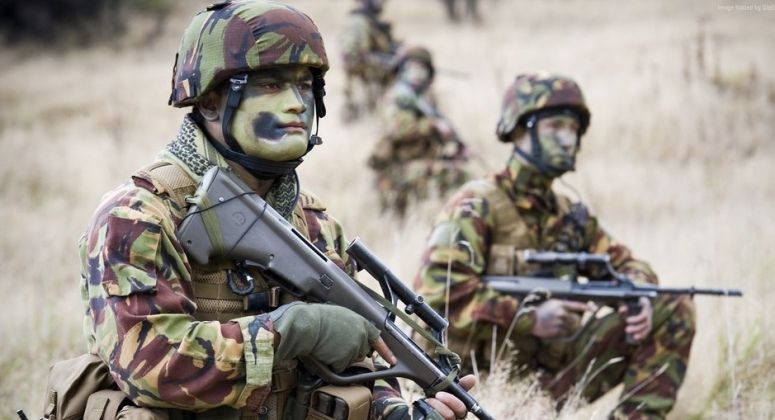
New Zealand Army Personnel
The New Zealand Army has deployed infantry platoon to South Korea for a three-month rotation, which was designed to improve interoperability with both the Republic of Korea (ROK) Armed Forces and the United States Army, exposing personnel to operational scenarios and force structures that are significantly larger and more technologically advanced than those normally available at home. Stationed primarily at Camp Casey alongside the U.S. Army’s 2nd Infantry Division, under 20 kilometres from the inter-Korean Demilitarised Zone and 20-25 kilometres from the North Korea’s borders. The contingent from New Zealand is training to operate as part of multinational formations, improving its ability to integrate into coalition command structures during high-intensity conflict with North Korean forces.
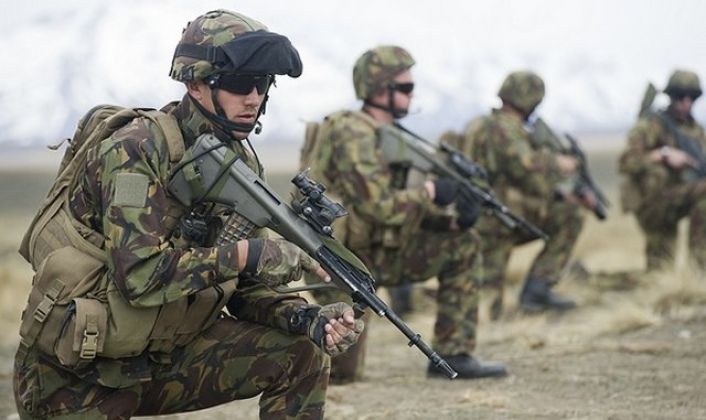
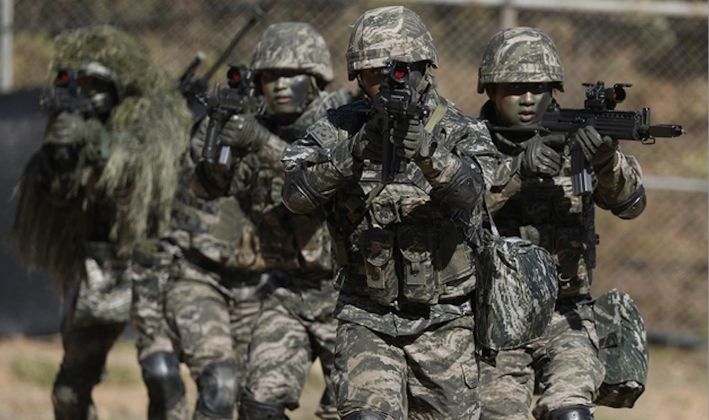
One of the most significant aspects of the deployment of New Zealand Army units has been their participation in amphibious assault training with the Republic of Korea Marine Corps, which simulated landings on North Korean soil as part of large scale offensives. This marks the first time New Zealand personnel were attached to a South Korean Marine landing battalion, and saw them rehearse a simulated assault landing near Pohang. The exercise involved embarking and disembarking from South Korean Amphibious Assault Vehicles, before advancing inland with the support of simulated naval gunfire and aviation assets. This type of operation is among the most complex in modern warfare because it requires precise coordination between naval, air, and ground forces while troops transition from vulnerable landing craft into combat ashore. For an army with very limited amphibious capabilities of its own, the experience provided valuable exposure to expeditionary operations alongside one of the world’s most capable marine forces.
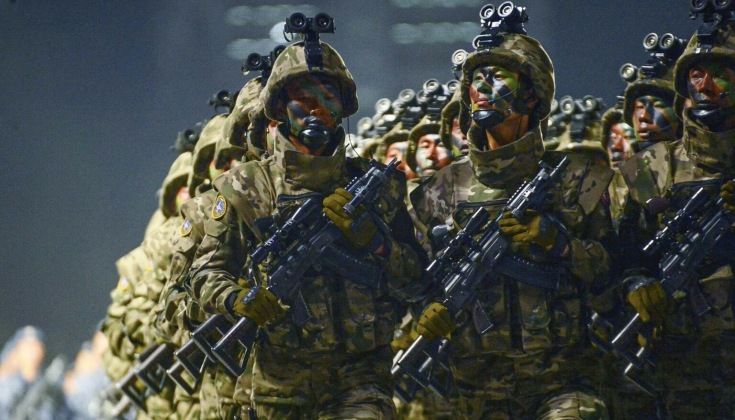
While the Korean People’s Army is heavily structured towards defensive warfare, with limited investments in logistical capabilities to invade hostile territory, U.S and South Korean forces are heavily oriented towards launching an invasion of North Korea. This was a primary factor leading North Korea to develop nuclear weapons, one of the world’s foremost ballistic missile arsenals and other high impact asymmetric assets, although major growth of its economy over the past decade, and particularly since 2020, has also allowed for the rapid modernisation of conventional forces. The capabilities of Korean People’s Army units and its equipment have been commented on highly favourably by both Russian and Ukrainian forces, after deployments from 2024, and possibly earlier, to support the Russian war effort in the theatre, often drawing a contrast to the more limited training of local units on both sides. In June 2025 an assessment by the U.S. Defence Intelligence Agency concluded that North Korea had reached its “strongest strategic position” in decades, elaborating that the country was confident in “possessing the military means to hold at risk U.S. forces and U.S. allies in Northeast Asia while continuing to improve its capability to threaten the U.S. homeland,” which marked the culmination of decades of investments.
By embedding with South Korean Marines during littoral warfare exercises, New Zealand Army personnel learned procedures for loading assault vehicles, establishing beachheads, clearing coastal objectives, and coordinating movement from sea to land under simulated combat condition, which are considered vital for Western Bloc states’ operations throughout the Pacific theatre. New Zealand Army units were also involved in large-scale armoured manoeuvres with U.S. forces, working with formations centred on the U.S. Army’s 2nd Infantry Division, and trained in environments featuring mechanised infantry, armoured vehicles, and integrated reconnaissance assets. Rather than operating as an isolated light infantry unit, the platoon practiced supporting armoured advances, securing flanks, clearing urban areas for mechanised forces, and coordinating movement with units possessing significantly greater firepower and mobility. Such training is thought to provided invaluable experience in combined arms warfare.
