
North Korea Demonstrates Modern Hypersonic Strike Capability in Show of Force After U.S. Attack on Venezuela
Military Watch Magazine Editorial Staff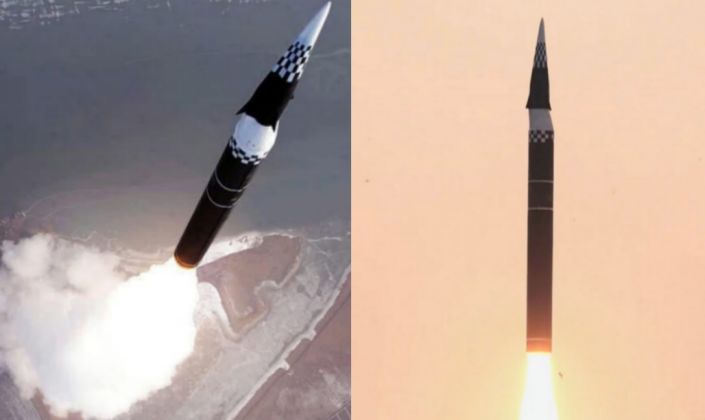
North Korean Hwasong-16 Hypersonic Missile Launch
North Korea has launched a nuclear-capable ballistic missile with a hypersonic glide vehicle from Pyongyang’s Ryokpho District, which traveled 1,000 kilometers before hitting a target in the Sea of Japan. State media noted that the test represented an operational evaluation of the country’s strategic weapons, which was framed as a show of force hours after the United States launched an attack on Venezuela and abducted its president, Nicolas Maduro. Overseeing the launch, Chairman of the ruling Korean Workers’ Party Kim Jong Un referred to the exercise as a “very important strategic task” to maintain and expand a “powerful and reliable nuclear deterrent.” The missile in question appears to be the new Hwasong-11Ma short to medium range design intended to engage tactical targets in South Korea and Japan, which was developed as a successor to the KN-23B that lacked similar penetrative capabilities.
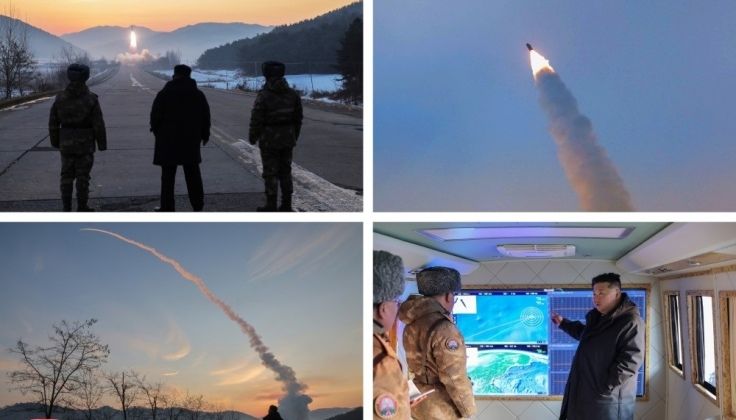
Reports on the launch were closely juxtaposed with a harsh denouncement of a U.S. assault on Venezuela, which the Democratic People’s Republic of Korea Foreign Ministry slammed as “the most serious form of encroachment on sovereignty” and proof of Washington’s “rogue and brutal nature.” The ministry warned that the attack set a highly concerning precedent in international relations, and “caused a catastrophic consequence to ensuring the identity of the regional and international relations structure." North Korea and the United States remain in a state of war, with Washington refusing to recognise Pyongyang’s existence despite its status as a UN member state, and having repeatedly come close to launching large scale attacks on the country from the 1950s to 2017.
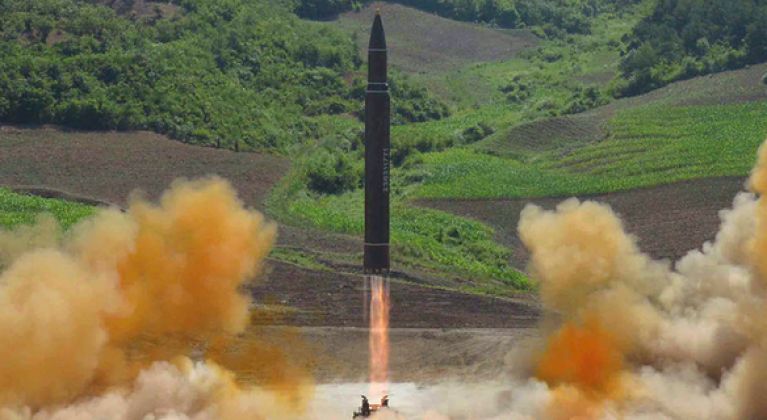
Commenting on the missile launch, Chairman Kim observed: “Our activity is clearly aimed at gradually putting the nuclear war deterrent on a high-developed basis. Why it is necessary is exemplified by the recent geopolitical crisis and complicated international events.” He praised the launch for “playing the prelude of the first combat drill in the new year.” He extended New Year greetings to the country’s missile forces, calling them a “reliable shield for defending sovereignty and security.” North Korea is thought to have first begun fielding nuclear weapons in the early 1990s, although its arsenal was only sufficiently capable to largely take U.S. military options off the table in 2017 when it began to field intercontinental range nuclear-capable missiles. The country has since progressed to field increasingly capable missile types including several with hypersonic glide vehicles, and in December unveiled its first nuclear powered ballistic missile submarine which is intended to revolutionise its second stage deterrent.
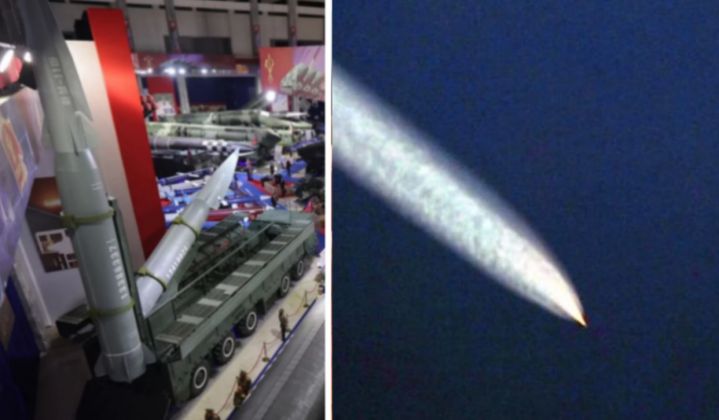
The Korean People’s Army on October 22 tested a new type of tactical ballistic missile that uses a terminal stage with a hypersonic glide vehicle, after the missile was unveiled in the first week of October. The country’s peacetime industry for production short range ballistic missiles is among the very largest in the world, potentially being rivalled only by that of China, which allows new designs to be brought into service very rapidly after completing testing. Designated the Hwasong-11Ma, the new system’s use of a hypersonic glide vehicle is expected to pose significant further challenges, making it nearly impossible to intercept. It appears to use the same transporter-erector-launcher as the KN-23 and same lower section, while the upper section integrates a glide vehicle. The system’s development follows the first launch of a hypersonic glide vehicle on a medium range ballistic missile in September 2021, and the first testing of such a vehicle on an intermediate range ballistic missile, the Hwasong-16B, in March 2024.
