
1000 KN-24 Nuclear-Capable Missiles Received By North Korean Frontline Forces: Unprecedented Firepower Display Near DMZ
Military Watch Magazine Editorial Staff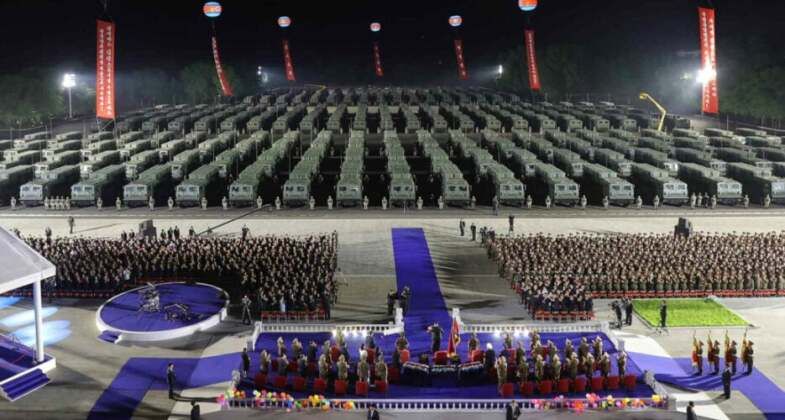
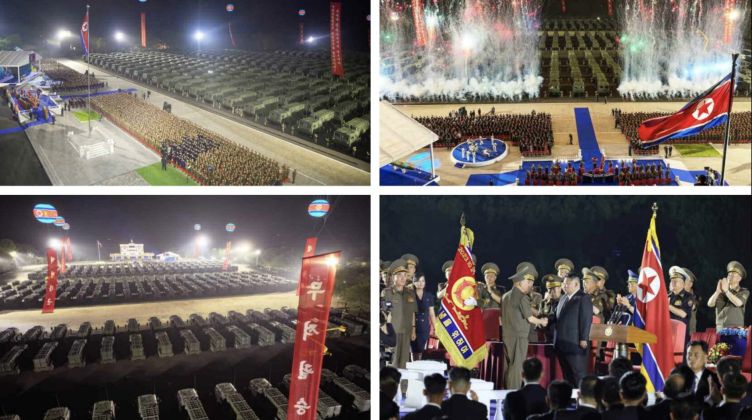
Ceremony For the Handover of 1000 KN-24 Missiles
The North Korean leadership headed by the chairman of the ruling Korean Workers’ Party Kim Jong Un handed over 1000 new KN-24 tactical ballistic missiles to Korean People’s Army “frontline units” near the inter-Korean demilitarised zone on August 4, according to state media. The arsenal represent “new core offensive weapon of our armed forces,” according to the chairman, who stressed the importance of strengthening nuclear capabilities to defend against American threats. The KN-24 is a nuclear-capable short ranged ballistic missile, and serves as a lighter, cheaper and shorter ranged counterpart to the KN-23 and much heavier KN-23B systems. While KN-23s have been exported to Russia in significant numbers, the KN-24 is thought to be produced exclusively for the Korean People’s Army. The solid fuelled and highly compact missiles can be carried in sets of four on transporter erector launcher vehicles, with 250 of the vehicles seen at the handover ceremony.
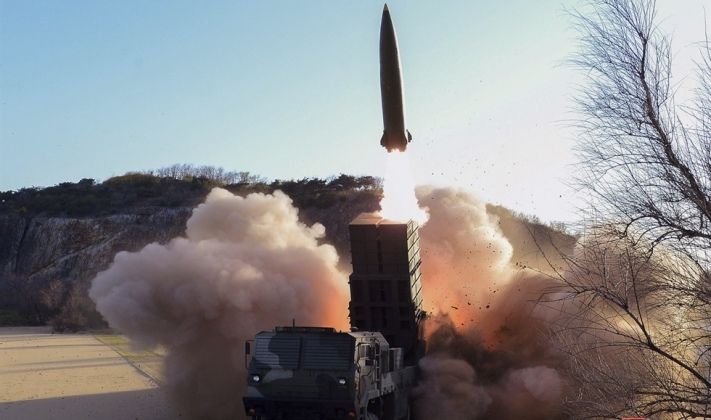
The KN-24 was referred to in a 2020 U.S. Congressional Research Service reported as an asset which “demonstrates the guidance system and in-flight manoeuvrability to achieve precision strikes.” The display of 1000 of the missiles represents a significant expansion from the previously shown display of 396 missiles three months prior in May, where they were seen in a warehouse. North Korean industry has shown growing signs of being able to produce new generations of missiles on massive scales, including strategic intermediate and intercontinental range missiles such as the Hwasong-12 and Hwasong-17. The KN-24 is expected to integrate the highly compact Hwasan-31 tactical nuclear warhead, which is also reported to be deployed from KN-23 missiles and KN-25 rocket artillery systems, allowing the missile system to be used to launch precise low yield nuclear attacks on American and allied positions. The U.S. Armed Forces first deployed tactical nuclear weapons in South Korea in 1956, with the arsenal peaking at 950 warheads, although U.S. sources stated that these were withdrawn in the 1990s - something Pyongyang claimed was never verified by international inspectors.
North Korea’s construction of new nuclear facilities, paired with the evident massive expansion in its capacity to produce ballistic and cruise missiles, places the country in a stronger position to deter and if necessary repel a potential military offensive by the United States. Washington came close to authorising attacks against the country on multiple occasions, including under the Lyndon Johnson, Richard Nixon, Bill Clinton, George W. Bush, Barak Obama and Donald Trump administrations, with several of these offensive plans including options for nuclear strikes. Use of nuclear weapons against North Korea had been widely advocated since 1950, on the basis that the significant conventional potency of the country’s ground forces would be optimally defeated by employing such assets. Such arguments continued to be made under the Clinton and George W. Bush administrations, until Pyongyang was confirmed in the mid-2000s to have developed a basic nuclear deterrent. According to then-Defence Secretary James Mattis, war plans under the Donald Trump administration in 2017 involved killing millions of North Koreans with nuclear weapons by dropping up to 80 warheads on the country. With Pyongyang and Washington remaining technically in a state of war, the former has accordingly strongly prioritised the development of its nuclear arsenal.
