
Moscow Fortified with a New Network of Pantsir Air Defence Towers to Enhance Anti-Drone Capabilities
Military Watch Magazine Editorial Staff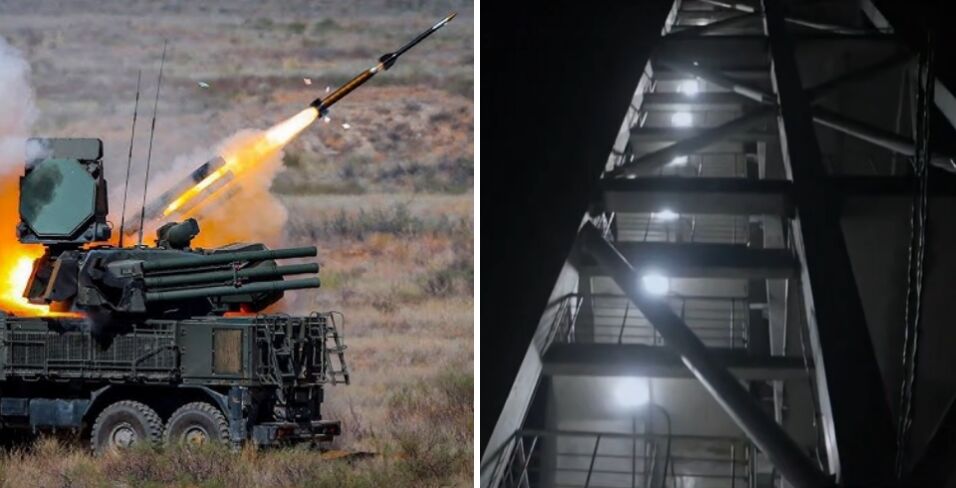
Patnsir Vehicle (left) and Air Defence Tower Near Moscow
The Russian Armed Forces are rapidly constructing numerous towers that integrated Pantsir short range air defence systems, with additional positions appearing on smaller scales elsewhere in the country. The development reflects how Russia is adapting to the growing scale of Ukrainian long-range drone attacks, which are historically unprecedented worldwide, and have forced the country to adopt novel solutions. The towers complement the deployment of Patnsir systems on rooftops across several parts of Moscow, the expansion of air defence artillery units around the city, and the procurement of Chinese anti-drone laser weapons.
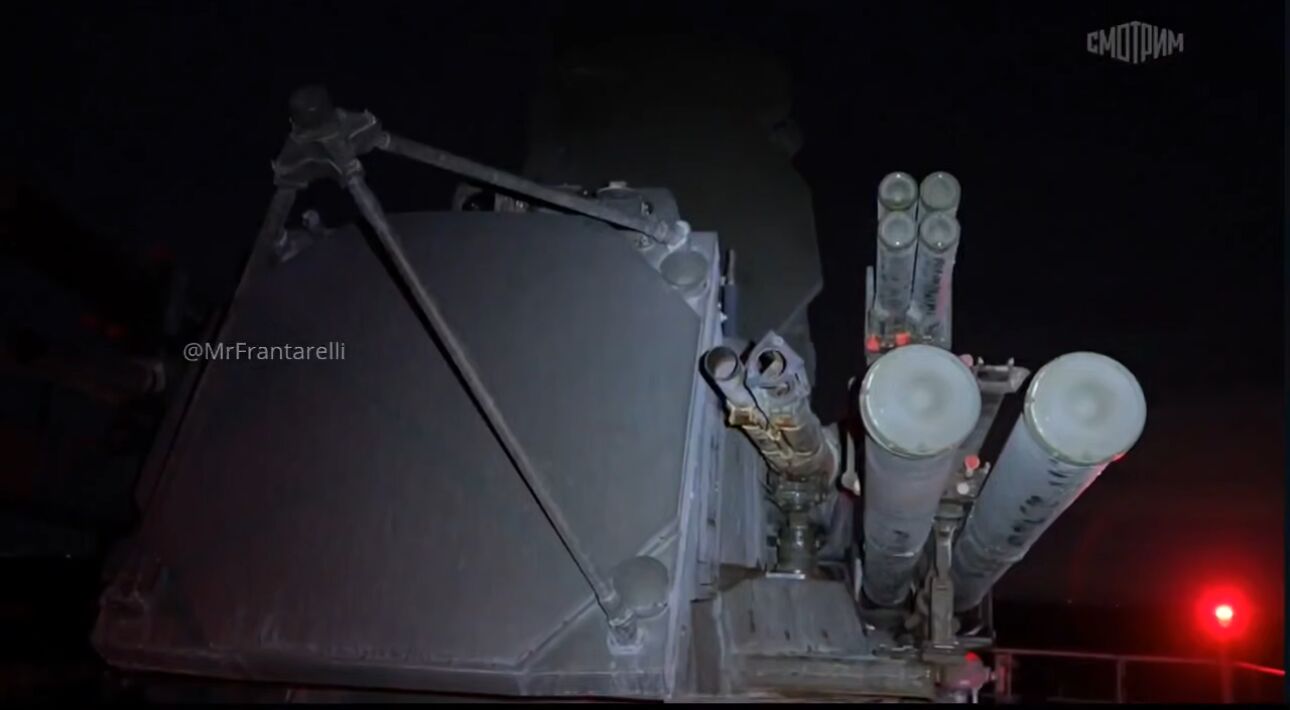
While short-range air defence system positioned on the ground can have its radar view obstructed by buildings, trees and terrain, raising the system tens of metres can improve its line of sight against targets flying at low altitude. This allows radars to lock onto a drones and systems to fire earlier. This is particularly relevant since long-range Ukrainian strike drones frequently fly at relatively low altitudes in an effort to reduce hostile detection ranges, with elevated Pantsirs helping to eliminate the low-altitude blind spots surrounding Moscow.

The Pantsir family has increasingly evolved from a general short-range air-defence system into a major counter-drone platform. The original Pantsir-S1 combines missiles with twin 30-mm automatic cannons and was designed to protect military and strategic installations from a variety of airborne threats. Russia’s newer Pantsir-S1M is intended to engage aircraft, helicopters, cruise missiles, precision-guided weapons and unmanned aircraft. Rostec states that the S1M can detect targets at ranges of up to 80 km, while its principal missile has a stated engagement range extending to 20 km.
One of the most important developments is the introduction of the TKB-1055 Gvozd surface-to-air missile designed for short-range engagements. With a 7 kilometre range, the missile is substantially smaller than the standard Pantsir interceptor, allowing a much larger number to be carried. The Pantsir-SMD-E’s combat module can accommodate up to 48 of the missiles. This is crucial for dealing with drone swarms. Its much lower cost also makes air defence operations more cost effective, complementing both more costly longer range missile types, and the Patnsir systems’ autocannon which are highly effective at closer ranges.

Mobile variants of the Pantsir have been intensively combat tested in Libya, Syria and Ukraine. By the beginning of the 2020s the had already shot down over 100 drones and at least one fighter Their ability to provide a defence against Western radar evading cruise missiles such as the Storm Shadow reported to have been enhanced significantly based on combat experience in the Ukrainian theatre. Russian government sources have issued explicit warnings regarding European production and supplies of long range weapons to Ukraine, and in particular unmanned attack aircraft. In late March Secretary of the Russian Security Council Secretary Sergei Shoigu confirmed that Ukrainian long-range drones had begun to pose a direct threat to regions deep inside Russia, including the strategically critical Ural industrial area. These attacks are expected to continue to expand.
