
F-35’s ‘Little Brother’: New KF-21 Stealth Fighter Receives First Clearance For Active Combat
Military Watch Magazine Editorial Staff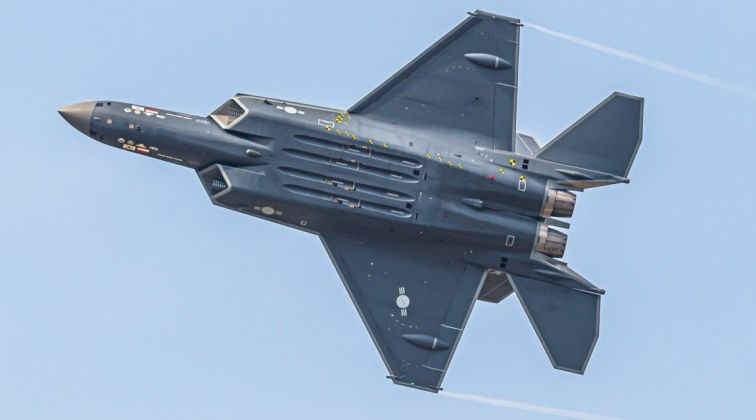
KF-21 Fighter Prototype
The South Korean KF-21 Boramae fighter has received final combat suitability approval from the country’s defence ministry, clearing it for operational deployment as it is poised to replace the F-5 and F-16 as the new backbone of the country’s combat fleet. The approval process required the Defense Acquisition Program Administration to submit evaluation results to the Defense Ministry, and followed more than a decade of development and flight testing covering more than 13,000 conditions. The variant approved for service was the KF-21 Block I, which is not considered a fully fifth generation fighter, and will be produced in limited numbers as a stopgap until the much more capable KF-21 Block II, which has internal weapons carriage and is a fully fifth generation aircraft, can be brought into production.
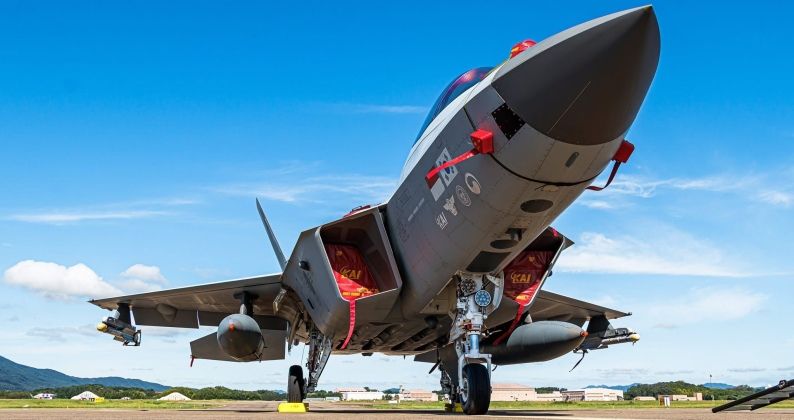
Designed primarily for air-to-air combat, the KF-21 Block I’s stealth capabilities are considered sufficient to provide an advantage in engagements against most other fighter types, but insufficient to launch penetration strikes into well defended airspace, such as that of North Korea. The fighters will nevertheless integrate an enhanced local variant of the Taurus cruise missile, which can destroy underground fortifications over long ranges without placing them in range of hostile fire. The KF-21 program represents a significant milestone in South Korea’s continued rise to develop one the world’s leading defence sectors, and one of the two leading producers of NATO-standard armaments alongside the United States. Noh Ji-man, head of the KF-21 program office, described the granting of combat suitability approval as having demonstrated: “that Korea has fully secured its own fighter jet development capability,” reflecting the country’s transition from a near-total dependence on imported defence equipment, to become a leading defence producer.
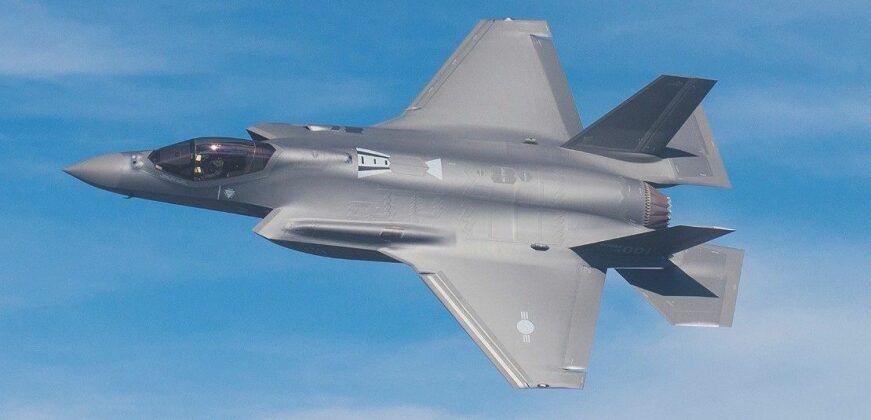
The KF-21 program is expected to make South Korea one of just four countries to produce fifth generation fighters alongside China, the United States and Russia. The fighter is nevertheless considered far simpler and less capable than the latest Chinese and U.S. designs such as the J-20 and F-35, and to a lesser extent also less capable than the Russian Su-57. The significant barriers to entry into fifth generation combat aviation, however, have made South Korea’s position unique, with its fighter being far less costly and easier to maintain than the F-35, allowing it to be marketed and operated as a lower end counterpart as part of a high-low combination. Although Turkey is seeking to develop a fifth generation fighter under the TF-X program, the serious limitations of the country’s tech sector and industrial base mean that even if this is achieved, not only will it be a much less capable aircraft, but it will also be very heavily reliant on support and inputs from other NATO members. As a far more developed country with a much larger and healthier industrial base and a world leading tech sector, South Korea is in a much better position to develop advanced fighter aircraft.
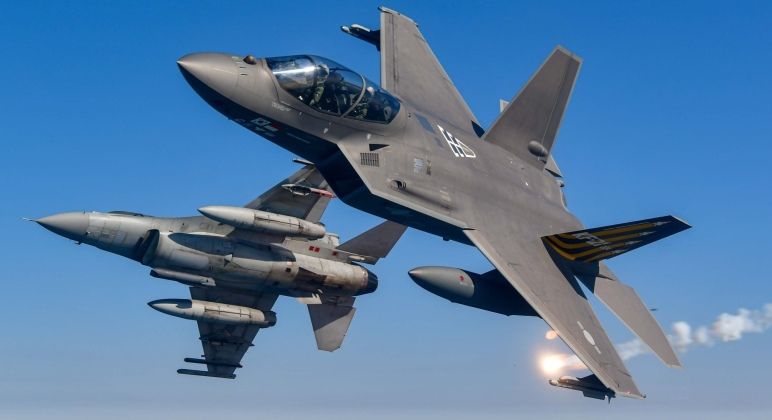
The KF-21 is expected to be considered for procurement by a number of operators of the F-35, and while overall having a more limited combat potential, its much lower lifetime costs and the greater ease at which it can be sustained at high availability rates make it highly complementary. The F-35’s very high maintenance requirements have resulted in availability rates that have consistently been criticised as unacceptably low, while its sustainment costs have far exceeded the program’s earlier projections which have made fielding large numbers unaffordable. Although a number of fighter types have been marketed to serve as more maintenance friendly and less costly counterparts to the F-35 as part of high-low combinations, however, such as the F-16 Block 70 and Eurofighter, they have all been criticised as far too limited in their combat potentials and failed to gain considerable traction among F-35 operators, in particular due to their lack of stealth capabilities. Thus although the KF-21 is less stealthy and lacks comparable sensor fusion or passive sensor capabilities to the F-35, when compared to ‘4+ generation’ fighters it appears to be far more capable and cost effective. This had led a number of local analysts to dub it a ‘little brother’ to the F-35 within the fifth generation, rather than a competitor, as it is primarily expected to compete with fourth generation fighters for market share.
