
Canada’s Best Option to Diversify From U.S. F-35s is the New Korean KF-21 Stealth Fighter
Military Watch Magazine Editorial Staff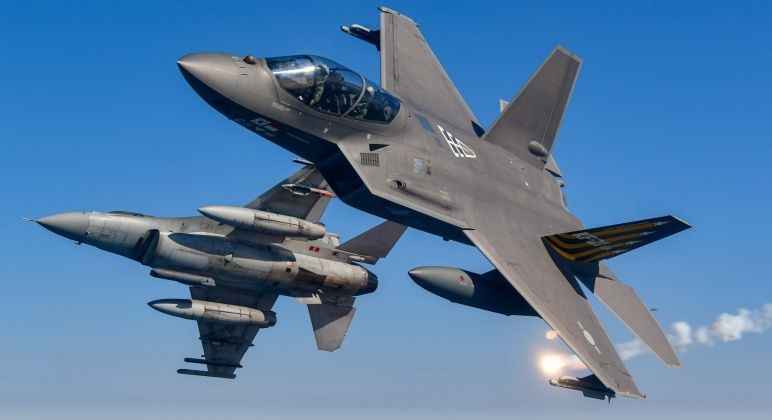
KF-21 (front) and F-16 Fighters
In late April Canadian Defense Minister David McGuinty confirmed that a review of plans to procure 88 F-35 fighters from the United States remained ongoing, despite this review originally having been scheduled to be concluded six months prior around September 2025, with with no timeline given for a final decision. While McGuinty noted that procurements from non-U.S. sources were under consideration, at a time when public opinion and much of the political leadership have supported reducing reliance on the U.S. for Canada’s defence, no indication was given as to which fighter types could be selected as alternatives. Although there have been multiple signs that Canada is considering both the Swedish Gripen E/F and the British-Japanese GCAP fighters, an evaluation of the Royal Canadian Air Force’s requirements indicates that the South Korean KF-21 is likely to represent the optimal aircraft.
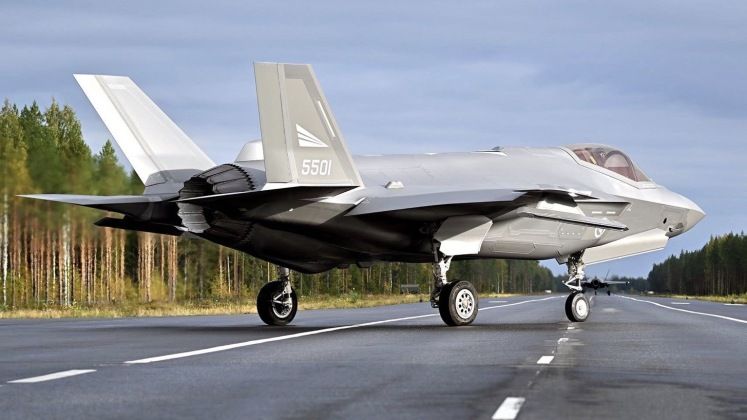
The KF-21 Block 2 is set to become one of just two NATO standard fifth generation fighter types in serial production in the early 2030s, providing a unique ability to compete with the F-35 on export markets. A primary attraction of the Gripen E/F is its outstandingly low procurement and sustainment costs and low maintenance needs, allowing fleets to be sustained at high availability rates. The KF-21, although much larger, was also designed to prioritise affordability and low maintenance requirements, and was conceptualised specifically to operate alongside the F-35 as part of a high-low combination. Although more costly and maintenance intensive than the Gripen, it is still very significantly less so than the F-35, and has an inordinately superior combat potential than the Swedish fighter. It thus strikes an optimal balance where the Gripen has been criticised for its very limited combat capabilities.
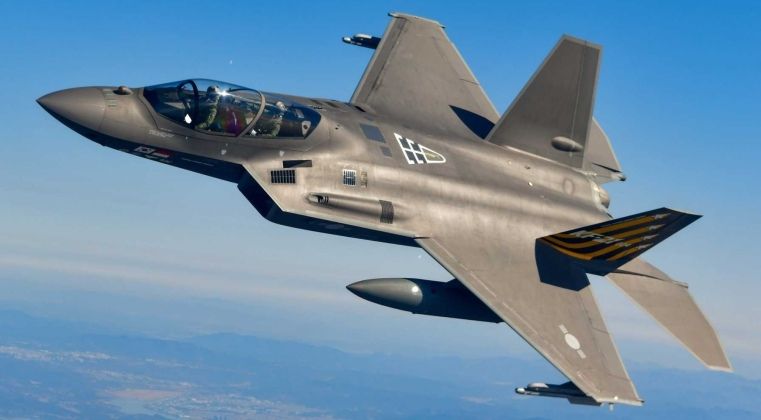
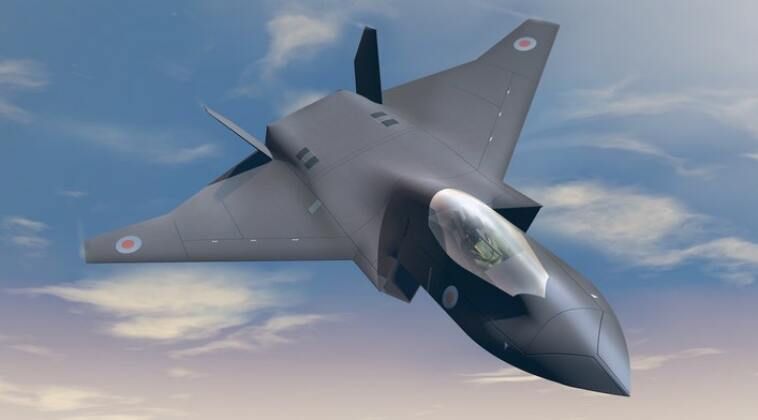
The KF-21 has a significant advantage over the GCAP in that it is a far more mature design that is already in serial production, and has been in flight testing since 2022. The GCAP program, by contrast, has already faced delays, with prevailing trends in European defence industries indicating that the fighter it produces will likely suffer from very considerable further delays and cost overruns. The program is likely to produce a fighter that is far more costly than the F-35, and at least in some respects, particularly in regards to its avionics, less capable. Assessments of European fighter aviation and broader defence production indicates that it is almost certain that the GCAP will produce a much less cost effective fighter type than the KF-21, and at a far later date, with delays potentially forcing Canada to further extend the service lives of its obsolete F-18 fighters should it commit to procurements.
The KF-21 program has very considerable potential to provide expanded capabilities that would be highly valuable to the Royal Canadian Air Force as both an interceptor and a strike fighter. The aircraft was designed to integrate the Meteor missile as its primary air-to-air armament, with this missile’s advanced performance having bene a primary selling point of the Gripen E/F. It also integrates an indigenous derivative of the Taurus cruise missile with advanced penetrative capabilities. The program is also planned to gradually reduce reliance on inputs from the United States, including by relying on an alternative to the F414 engine, which Rolls Royce has offered to provide support with developing. Although the South Korean fighter’s combat potential will likely remain much more limited than that of the F-35 in most roles, its cost effectiveness may well be the highest in the world for a NATO standard fighter type once the heavily enhanced Block 2 variant becomes available for export. With South Korean ground warfare equipment having taken NATO markets by storm, the KF-21 program appears poised to potentially do the same in the air domain, very comfortably outcompeting European aircraft such as the Rafale and Eurofighter with a far lower cost and significantly higher combat performance.
