
New Details Emerge of Russian Plans for Su-57 Equipped Medium-Weight Aircraft Carrier
Military Watch Magazine Editorial Staff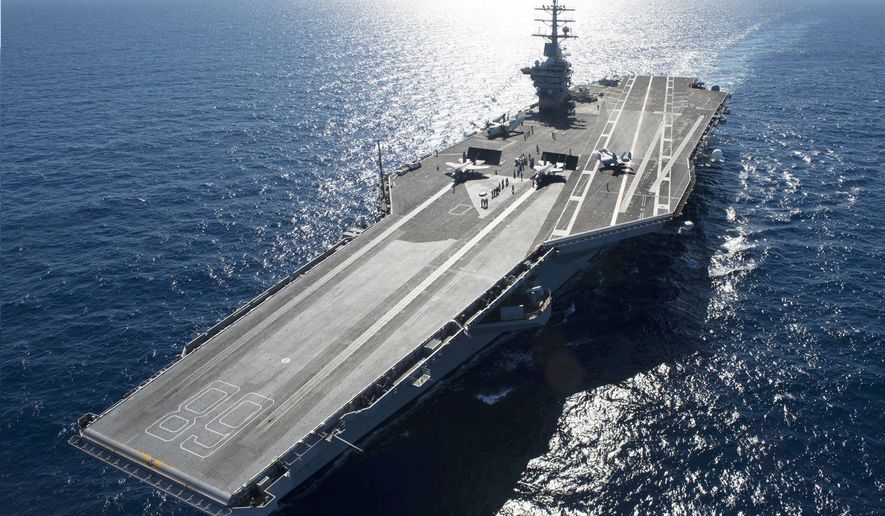
U.S. Navy Supercarrier with Electromagnetic Catapult System
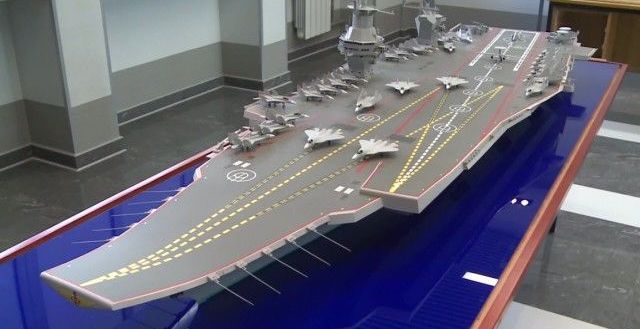
New details of a medium sized non-nuclear aircraft carrier for the Russian Navy have emerged following the recent development of a model by the Krylov State Research Centre state owned shipbuilding research and development institute. Pavel Filippov, director general and developer of the model, stated that the design could be built for an estimated $3.13 billion (200 billion roubles) and construction could be completed within just five years. The new light carrier is the fourth carrier design which has been proposed in Russia in recent years, alongside two helicopter carrying amphibious assault ships which can deploy specialised vertical landing capable fighters and a 100,000 ton nuclear powered supercarrier under the SHTORM program. Russia’s defence sector has meanwhile invested in the development of new nuclear propulsion systems, thrust vectoring technologies for vertical landings, and electromagnetic catapult systems to launch fighters more efficiently.
The considerable cost of the SHTORM carrier design both to acquire and to operate, at a time when Russia’s defence budget has continued to contract, has made a smaller non-nuclear platform capable of deploying conventional fixed wing aircraft and integrating electromagnetic catapult systems a potentially attractive choice for the Russian Navy. Director Filippov stated regarding the new lighter design: "According to our concept, the aircraft carrier will be able to house around 40 aircraft and jets, or even more.” Regarding the type of fighters the new carrier would deploy, he indicated that the new Su-57 heavyweight fifth generation air superiority fighter was a likely candidate - likely accompanied by new Okhotnik sea drones. "Theoretically, we could place a certain number of these [Su-57] fighters on board if a naval version is created, with the weight reduced and some elements of construction changed,” he said.
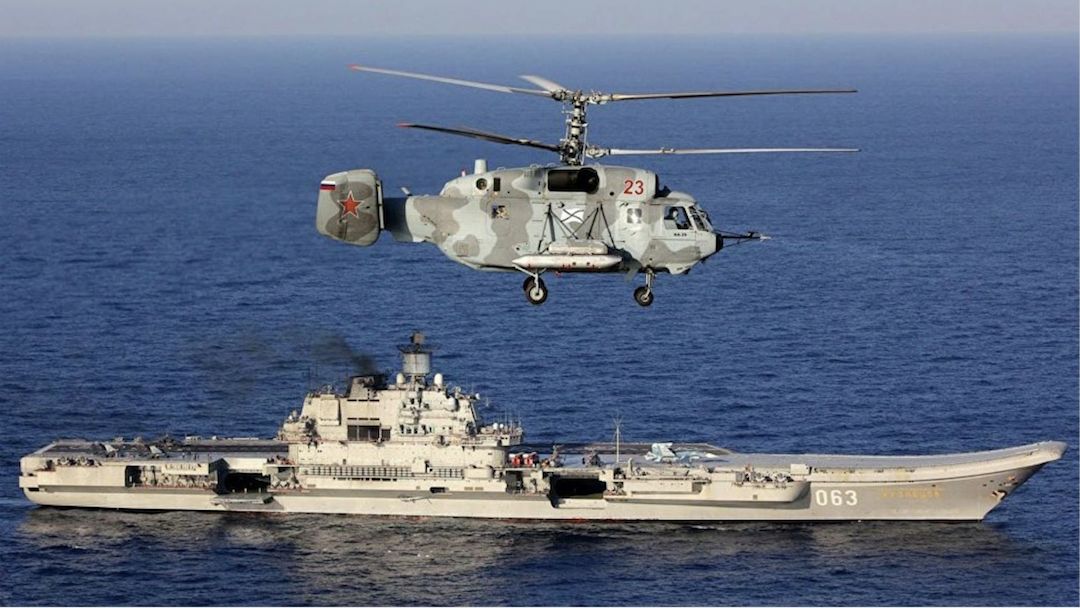
While lighter that the SHTORM design, Russia’s new carrier will still deploy a sizeable complement of over 40 aircraft - more than the Navy’s sole existing carrier Admiral Kuznetsov. According to the Scientific Head of the Krylov State Research Centre Valery Polovinkin, the warship will have a similar displacement to the British Queen Elizabeth Class ships at approximately 65,000 tons, but will benefit from the ability to launch aircraft at a faster rate due to parallel takeoff positions. Whether the warship will integrate multiple electromagnetic catapult systems remains uncertain, but given investment in developing such technologies and their significant benefits over steam and ski jump launch systems it remains a considerable possibility. The British carrier class was developed without catapult launch systems or arresting gear to reduce costs, which compromises the effectiveness of the warships and restricts them to deploying only a single class of fixed wing aircraft - the vertical landing capable F-35B.
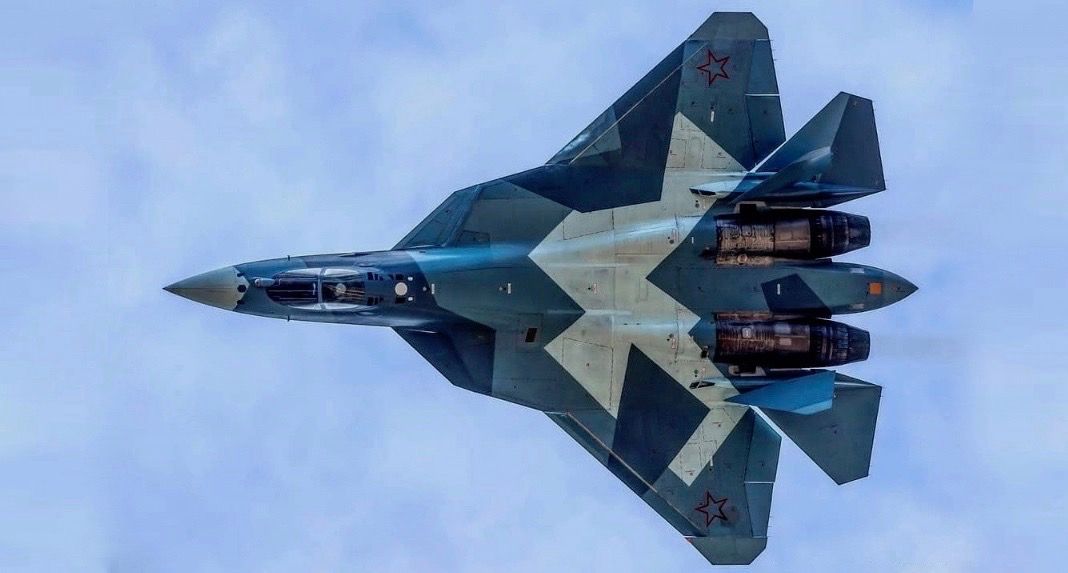
It is unclear whether the Russian Navy will place an order for the Krylov State Research Centre’s light carrier, or will instead opt for the heavier SHTORM design which is expected to cost around $5.6 billion more to build - not including the higher operational costs and costs of a larger fighter complement. Moves by the Russian Defence Ministry to begin drafting of the statement of objectives for a new nuclear-powered aircraft carrier however indicate that the SHTORM design is still under serious consideration. Whichever warship is developed however, it is almost certain that they will benefit from many the same technologies whether it be Pantsir defence systems, EMALS systems or Su-57 fighters. It is also unclear whether the warships are intended to carry offensive weapons such as cruise missiles as Soviet Kiev and Kuznetsov Class ships did, or whether they will instead be specialised in a carrier role. In March 2018 Russia’s United Aircraft Corporation issued a statement that it was ready to begin development of a carrier based variant of the Su-57, which could give Russia the world’s first carrier based fifth generation heavyweight fighter. The aircraft’s powerful sensors and access to advanced hypersonic weapons for both ship hunting and air to air roles makes it a potential force multiplier for the Russian fleet even if a relatively small carrier design is chosen.
