
World’s Longest Range Fighters Delivered to Russian Air Units: Su-34M Continues to Receive Upgrades
Military Watch Magazine Editorial Staff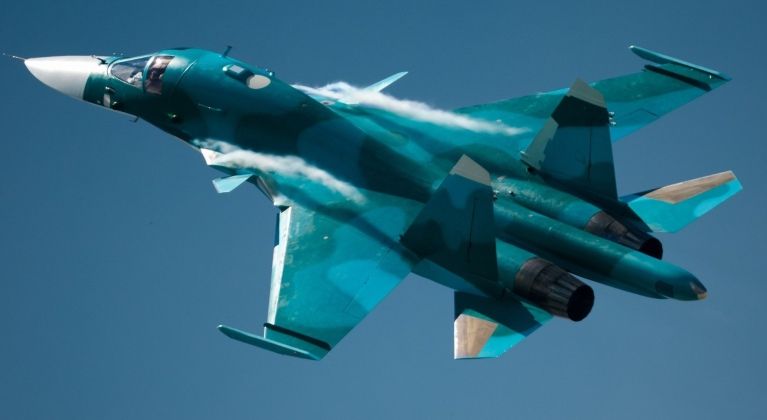
Su-34M with New Antennas Produced in Mid-2025
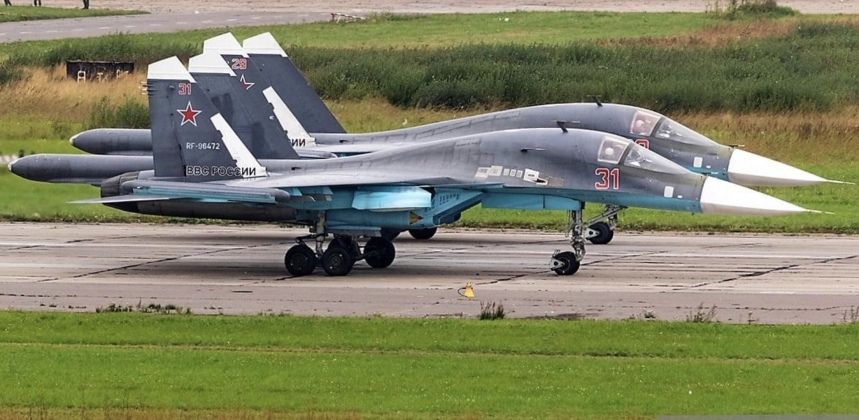
The Russian Aerospace Forces have received a new batch of Su-34M long range strike fighters, which were delivered by the state run United Aircraft Corporation after completing their entire cycle of required ground and flight factory tests. The corporation stressed that the Su-34 was “designed to engage ground and air targets, as well as infrastructure protected by air defence systems and located at significant distances from its base.” “The aircraft can also be used for aerial reconnaissance missions,” the corporation’s statement added. The Su-34 has been procured by the Russian Defence Ministry in larger numbers than any other fighter type since the end of the Cold War.
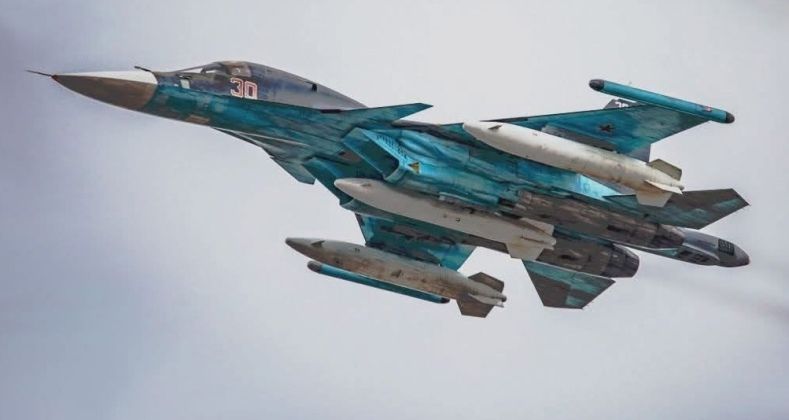
The Su-34 is currently the longest range tactical combat aircraft operational anywhere in the world, with its endurance being comparable to those of many types of strategic bombers. When carrying three 3,000 litre drop tanks, the Su-34’s ferry range can be increased to an estimated 8,000 kilometres when accounting for the penalties of the tanks’ additional weight and drag, which allows the aircraft to fly from Moscow to Washington DC. Alongside a significant range of bombs and missiles, the aircraft can also integrate a wide range of pods for electronic, radar and photo reconnaissance. Commenting on the latest delivery, an unnamed Su-34 pilot of the Russian Aerospace Forces observed that it was “an excellent aircraft system with significant potential for the future, it has a wide range of weapons with the ability to employ advanced weapons to perform its missions.”
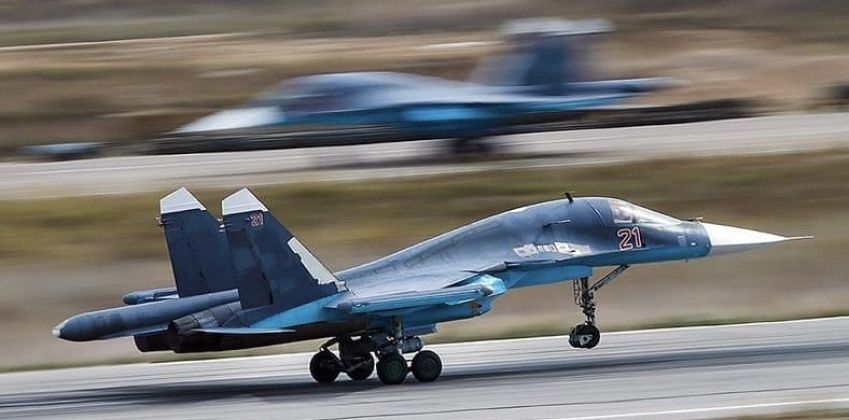
In April 2025 the Chkalov Aircraft Factory in Novosibirsk, Siberia, which produces all Su-34 strike fighters, was reported to have reached double the production rates seen before 2022, with production estimated at close to 30 fighters per year. Despite its larger size, this was more straightforward to achieve for the Su-34 than for the more expensive and complex Su-35 or Su-57 due to its greater simplicity. Although a portion of production has been allocated to meeting Algerian orders, with the first deliveries to the country confirmed in early 2026, output is still sufficient both to replenish losses in the Ukrainian theatre, and to significantly expand the Russian combat fleet. The aircraft are procured primarily to phase the older Su-24M strike fighter and Su-24R reconnaissance fleets out of service.
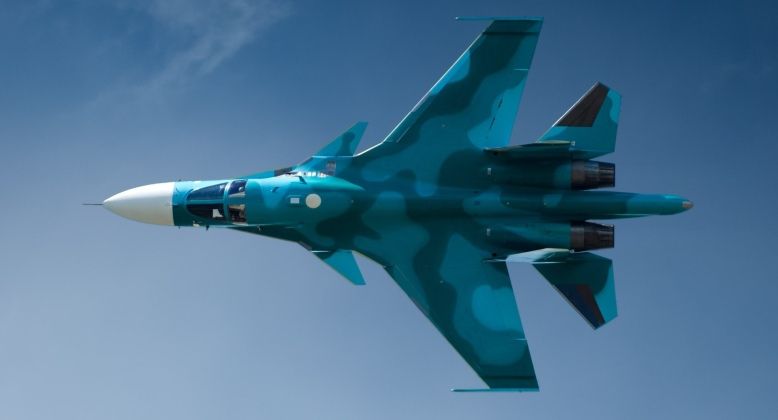
Su-34 squadrons were in October 2025 reported to have begun to utilise a new type of very long range glide bomb, which has been a game changer for the ability of aviation assets to launch low cost mass strikes on targets far deeper behind Ukrainian lines. Ukraine’s Main Directorate of Intelligence Vadim Skibitsky reported an extreme range of 193 kilometres. Following escalated Ukrainian drone strikes, Su-34s were deployed on June 20 for attacks on Ukrainian drone control points, with footage from Russia’s own unmanned aircraft confirming the targets’ destruction. Ukrainian Army frontline personnel speaking to various Western media outlets have widely singled out the effects of mass glide bomb attacks, at times stressing that such attacks using bombs with up to 500 kilograms of explosives were obliterating their underground bunkers.
