
New Abrams Tank Exercises Highlight Republic of China Army’s Rapidly Adapting Defence Doctrine
Military Watch Magazine Editorial Staff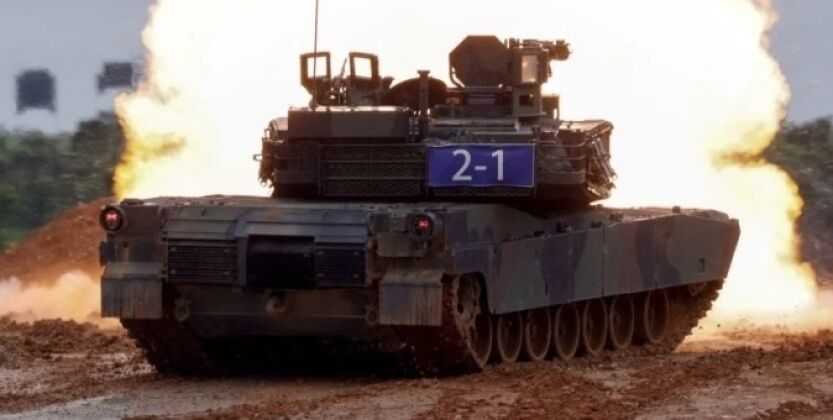
Republic of China Army M1A2 Abrams Tank
The first deployment of M1A2 Abrams tanks during the Republic of China Army’s Han Kuang 42 exercises has represented a landmark in the modernisation of the service’s armoured warfare units, and drew particular attention after the vehicles were deployed to defend Taoyuan International Airport. The Abrams began deliveries to the Army in December 2024, and were the first new tanks procured in almost 30 years. The way the vehicles were deployed reflected the Army's evolving operational doctrine, adapting armoured units to a defence strategy that places increasing emphasis on decentralised command, rapid counter-manoeuvre and the defence of critical national infrastructure under realistic wartime conditions.
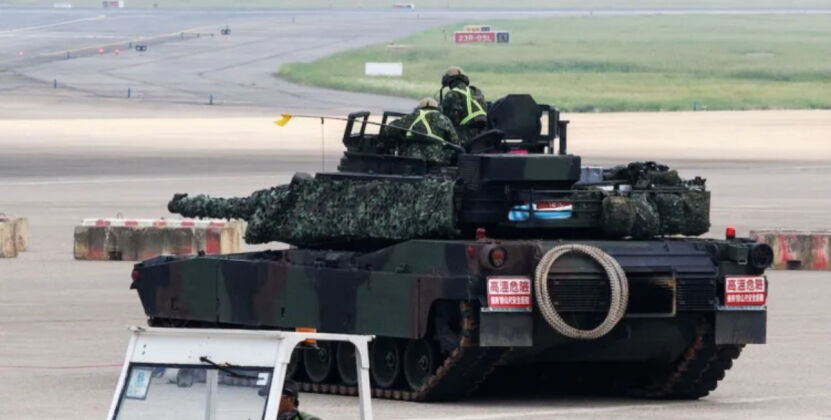
Han Kuang 42 differs markedly from earlier iterations of the annual exercises, and introduced greater uncertainty into battlefield decision making. Units were required to react to changing situations rather than follow predetermined sequences, while commanders were given greater authority to make tactical decisions independently. Rather than serving solely as heavily protected breakthrough vehicles, the Abrams fleet is increasingly being integrated into a more flexible command structure in which local commanders can rapidly concentrate armoured firepower wherever hostile forces achieve tactical success. This represents a departure from earlier concepts that placed greater emphasis on fixed defensive positions and pre-planned responses, with the Army demonstrating that new equipment is being accompanied by reforms in command philosophy, training methods and operational planning.
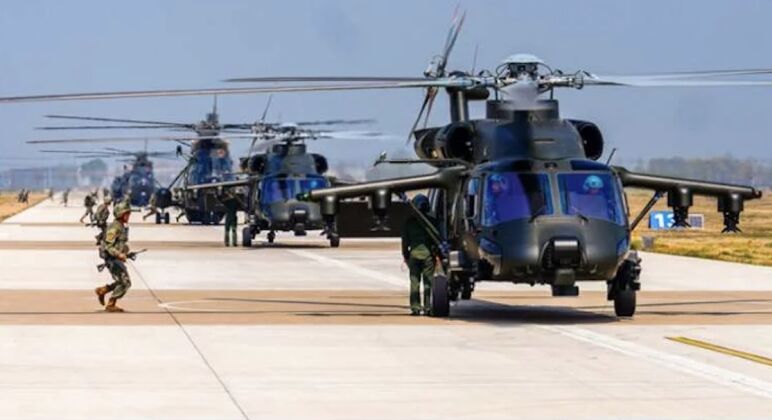
The exercise also reflects the Republic of China Army’s growing appreciation of operational tempo, as the risks of hostile airborne assaults, helicopter insertions and special operations remains high. The appropriate response to such operations is not necessarily static defence, but the rapid concentration of mobile combat power capable of restoring control before an initial success develops into an operational breakthrough. Abrams tanks remains well suited to this mission, as hostile airborne formations are constrained by the weight limitations of their transport aircraft and helicopters, preventing them from deploying heavy armour in significant numbers during initial assaults. This gives defenders using their own heavy armour a potential advantage.
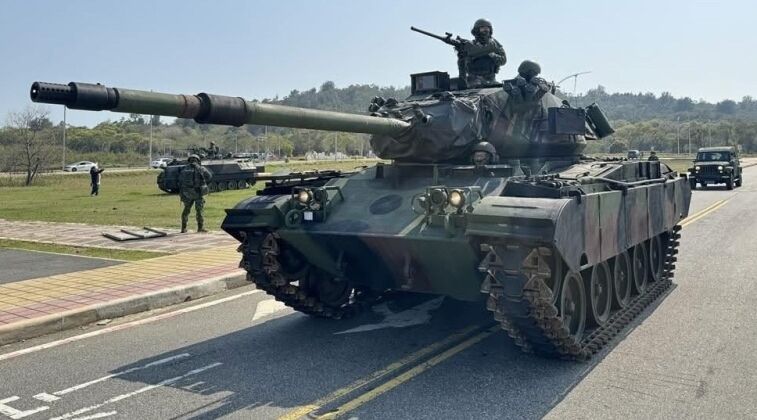
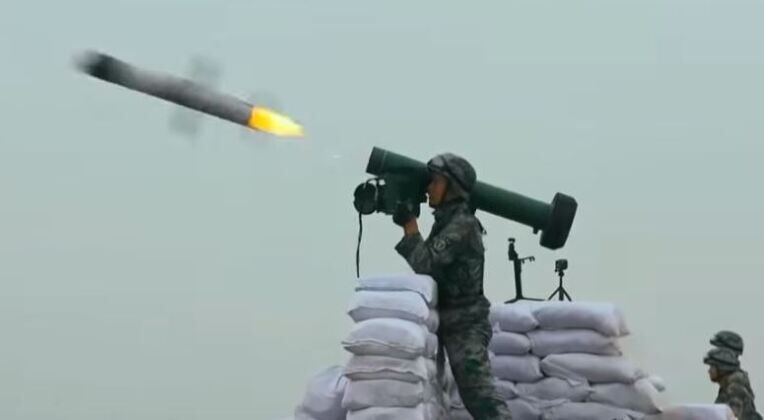
Although the Republic of China Army deploys over 800 other main battle tanks, these are largely obsolete, including M41 tanks which are the least well armoured in the world, as well as ageing M48, CM-11, and M60 tanks, which are all highly vulnerable to modern man-portable anti-tank weapons. The Abrams’ superior armour protection could make it viable to counter lightly equipped airborne forces, delivering overwhelming direct firepower against forces that may initially possess only light vehicles and portable anti-armour weapons. Nevertheless, with the tanks lacking active protection systems, and the adversary, the Chinese People’s Liberation Army, fielding some of the world’s most capable man-portable anti-tank weapons such as the HJ-12, the survivability of the new U.S.-supplied tanks remains in question.
The Republic of China Army appears to be integrating its new armoured capability into combined-arms operations rather than treating tanks as independent battlefield assets. Recent Han Kuang exercises have increasingly emphasised cooperation between engineers, reserve units, logistics formations, civilian agencies and regular combat forces. The Abrams consequently becomes one component within a larger defensive system designed to delay, isolate and destroy invading forces through coordinated action rather than through armoured combat alone. This mirrors broader trends in modern warfare, where battlefield success depends less on individual weapon systems than on their ability to operate as part of an integrated network.
