
Republic of China Army Deploys New U.S. Abrams Tanks to Secure Taiwan’s Largest Airport in Landmark Exercise
Military Watch Magazine Editorial Staff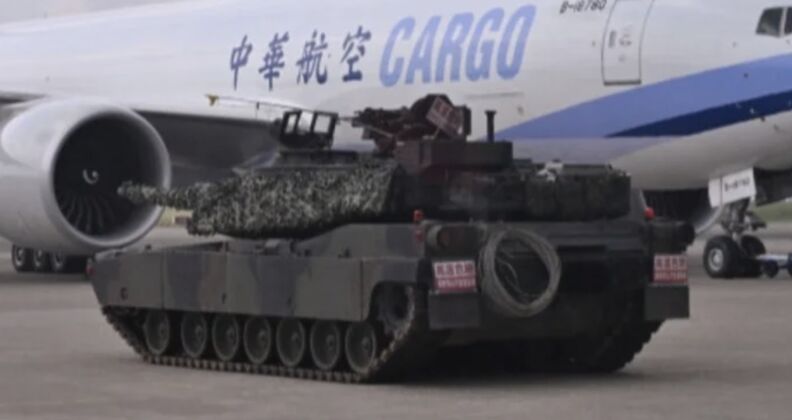
Republic of China Army M1A2 Abrams Tank at Taoyuan International Airport in Front of China Airlines Cargo Plane
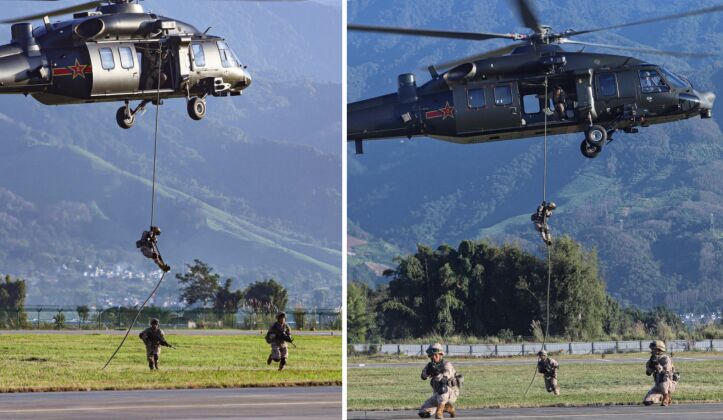
The Republic of China Army has for the first time deployed newly supplied M1A2 Abrams main battle tanks to defend Taoyuan International Airport, as part of the annual Han Kuang military exercises, highlighting growing concern that the Chinese People's Liberation Army, with which the Republic of China remains in a state of civil war, could attempt to seize the key aviation hub during the opening stages of a potential hot war. Four Abrams tanks and six CM-34 Yunpao wheeled infantry fighting vehicles participated in the exercise, which simulated a hostile airborne assault intended to capture the airport and rapidly convert it into a logistics hub for follow-on forces.
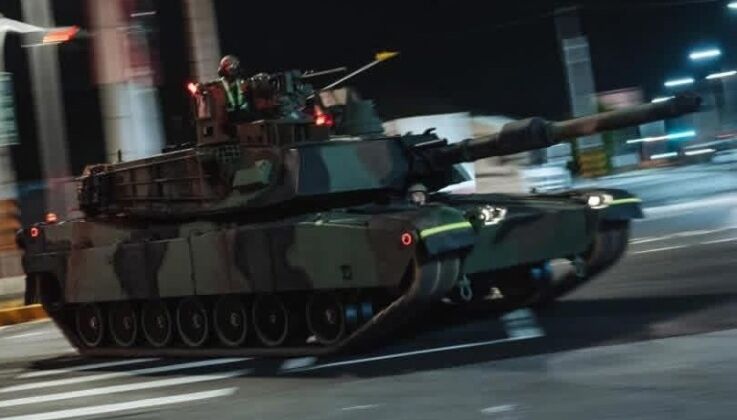
The service entry of the M1A2 represents the most significant modernisation of Republic of China Army armoured units since the 1990s, with the service’s CM-11 Brave Tiger and M60A3 tanks procured that decade being long past obsolescence and based on 1960s American designs. Whether heavy tanks would play a decisive role in a Taiwan Strait war has long been debated, with critics having argued that the island's mountainous terrain, dense urban development and limited road network reduce the usefulness of 70 ton main battle tanks. Analysts at the Australian Strategic Policy Institute (ASPI) in June assessed the vehicles were prime examples of “dead weight” procurements, because they were optimised for a kind of conventional land warfare that is far removed from the Army’s likely conflict scenarios.
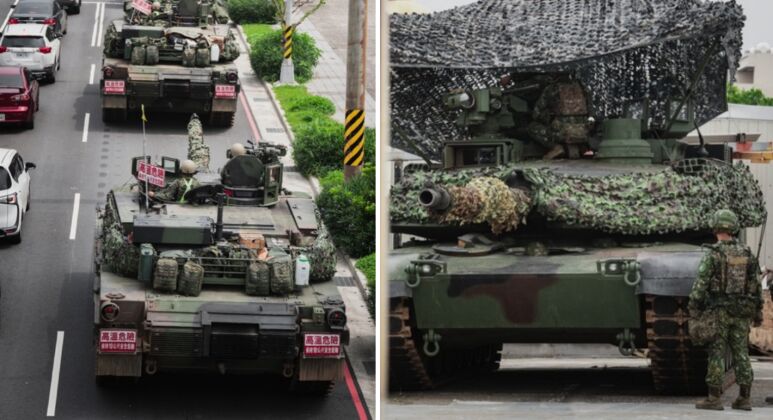
Although claiming to be the sole government of the Chinese nation, the Republic of China controls only Taiwan Island and surrounding islets. As by far the largest airport on the island, Taoyuan International Airport occupies a uniquely important position in Republic of China Armed Forces defence planning. Located less than 40 kilometres from Taipei, the republic’s temporary capital, it possesses long runways capable of accommodating heavy military transport aircraft. Should hostile airborne or heliborne forces succeed in capturing the facility intact, it could provide a valuable staging point for reinforcements, heavy equipment and logistics. The exercise saw engineer units train to render the runways unusable by deliberately destroying key infrastructure, denying its use to both sides rather than allowing it to support an invading force.
Abrams tanks began deliveries to the Republic of China Army in December 2024, with 38 arriving in a first batch which was assigned to the 3rd Combined Arms Battalion of the 584th Armoured Brigade. Training for crews at the Hukou Armor Training Command began in early 2025, while a second batch of 42 tanks arrived in July that year. The vehicles entered frontline service on October 31. The final batch of Abrams tanks built for the Republic of China Army consisted of 28 vehicles, and was reported on February 2 to have completed production, with deliveries completed in April. Local analysts have singled out their very significantly improved firepower and protection levels compared to the much older tanks that were previously relied on.
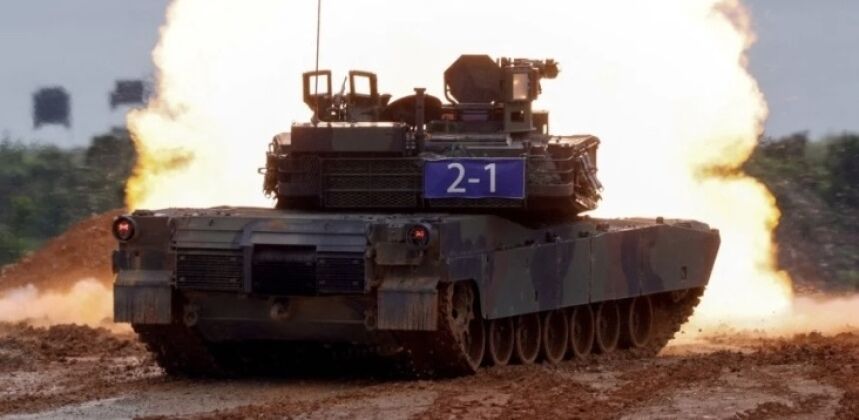
The Abrams is the heaviest tank type in service worldwide, with the M1A2T variant procured by the Republic of China Army weighing approximately 74 tons. The vehicles require substantial fuel, maintenance, recovery vehicles, transporters, and spare parts. In a Taiwan Strait conflict where missile strikes could disrupt local infrastructure and logistics networks, keeping heavy armoured units supplied and operational could be difficult. Former Republic of China Armed Forces chief of general staff Lee Hsiang-chou has described the procurement as one the most questionable made in recent years. He argued that many bridges across Taiwan Island were not originally designed to accommodate 70 ton vehicles, potentially limiting operational mobility, while also questioning the sustainability of fuel consumption during prolonged combat.
